The primary process advantages of using Vacuum Induction Melting (VIM) for Fe-Cr-Zr alloys are the precise preservation of reactive elements and the achievement of exceptional chemical homogeneity.
By melting in a controlled vacuum, you effectively prevent the oxidative loss of zirconium, while the electromagnetic nature of the equipment actively stirs the melt to ensure the iron, chromium, and zirconium mix perfectly.
Core Insight: The success of Fe-Cr-Zr alloy preparation hinges on protecting Zirconium—a highly active element—from oxidation. VIM solves this by creating a protective vacuum environment while simultaneously using induction currents to force-mix the alloy, yielding a material foundation reliable enough for advanced oxidation research.
Preserving Chemical Integrity
Preventing Zirconium Loss
The most critical challenge in preparing Fe-Cr-Zr alloys is the high reactivity of zirconium. In standard melting environments, zirconium rapidly reacts with oxygen, leading to significant material loss and the formation of unwanted oxides.
The Role of the Vacuum Environment
VIM equipment operates in a high-vacuum environment (often less than 100 Pa). This effectively eliminates oxygen from the melting chamber, ensuring that active elements like zirconium and chromium remain in their metallic state rather than burning off.
Removal of Volatile Impurities
Beyond protecting the main alloy components, the vacuum facilitates the evaporation of harmful low-melting-point impurities. Elements such as lead (Pb), bismuth (Bi), and copper (Cu) can be effectively removed, significantly increasing the alloy's purity.
Achieving Structural Uniformity
The Power of Induction Stirring
Unlike static melting processes, VIM utilizes an induction field that generates currents within the molten metal. This creates a rigorous, automatic stirring effect within the melt pool.
Eliminating Segregation
This continuous movement ensures that the iron, chromium, and zirconium components are thoroughly mixed. The result is an ingot with a uniform composition throughout, avoiding the segregation issues often seen in static casting.
Reducing Interstitial Defects
The process actively reduces interstitial elements such as oxygen ($O_2$), nitrogen ($N_2$), and hydrogen ($H_2$). By minimizing these non-metallic inclusions, the final alloy exhibits far fewer structural defects, which is essential for studying intrinsic material properties.
Understanding the Operational Requirements
Strict Vacuum Maintenance
The advantages of VIM are entirely dependent on maintaining vacuum integrity. If the pressure rises above the target threshold (e.g., >100 Pa), the protective atmosphere is compromised, and active elements like zirconium will immediately oxidize.
Complexity vs. Purity
While VIM offers superior purity compared to standard arc melting, it requires precise control systems. Unlike arc melting, which may require manual flipping and re-melting to ensure uniformity, VIM relies on the physics of the furnace itself to achieve homogeneity in a single controlled cycle.
Making the Right Choice for Your Goal
To ensure your project selects the correct processing route, consider your specific end-goals:
- If your primary focus is fundamental research: Choose VIM to ensure high chemical purity and precise composition, which are requisite for studying intrinsic effects like radiation damage or oxidation behavior.
- If your primary focus is high-temperature performance: Rely on VIM to remove low-melting-point impurities and gases, which allows the alloy's maximum operating temperature to potentially increase to the 980-1090 °C range.
By utilizing VIM, you convert a volatile mixture of reactive metals into a stable, high-performance alloy suitable for rigorous scientific analysis.
Summary Table:
| Feature | Advantage in Fe-Cr-Zr Preparation | Benefit to Material Properties |
|---|---|---|
| High Vacuum Environment | Prevents oxidative loss of reactive Zirconium (Zr) | Maintains precise chemical composition |
| Induction Stirring | Electromagnetic forced-mixing of the melt pool | Eliminates segregation for uniform structure |
| Degassing Capacity | Removes volatile impurities (Pb, Bi, Cu) and gases ($O_2, N_2, H_2$) | Increases purity and high-temperature stability |
| Controlled Environment | Precise pressure management (<100 Pa) | Reduces non-metallic inclusions and defects |
Elevate Your Alloy Research with KINTEK Precision
Achieving the perfect Fe-Cr-Zr ferritic alloy requires more than just heat—it requires a controlled environment and advanced mixing technology. KINTEK specializes in high-performance laboratory equipment, providing researchers with cutting-edge induction melting systems designed to eliminate oxidation and ensure chemical homogeneity.
From high-temperature vacuum furnaces to specialized crushing and milling systems, KINTEK offers the comprehensive tools you need for advanced materials science. Whether you are focused on radiation damage studies or oxidation behavior, our equipment delivers the purity your research demands.
Ready to optimize your alloy preparation? Contact KINTEK today for expert guidance and tailored solutions!
References
- Shenghu Chen, Lijian Rong. Oxidation Behavior of Intermetallic Phase and Its Contribution to the Oxidation Resistance in Fe-Cr-Zr Ferritic Alloy. DOI: 10.3390/met12050827
This article is also based on technical information from Kintek Solution Knowledge Base .
Related Products
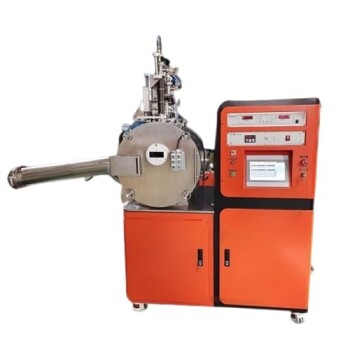
- Lab-Scale Vacuum Induction Melting Furnace
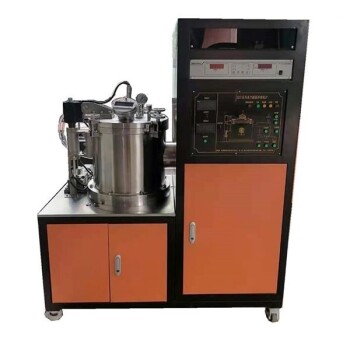
- Vacuum Induction Melting Spinning System Arc Melting Furnace
- Non Consumable Vacuum Arc Induction Melting Furnace
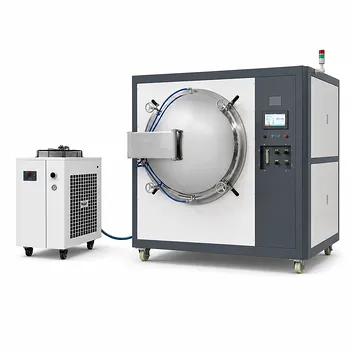
- Vacuum Heat Treat Furnace and Levitation Induction Melting Furnace
- Vacuum Arc Induction Melting Furnace
People Also Ask
- How do vacuum induction or arc melting furnaces facilitate the synthesis of U-Al-C MAX phases? Precision Heat & Purity
- What is the primary function of a vacuum induction melting furnace in Ni-Mo-Cr-Fe master alloy prep? Ensure High Purity
- What types of metals are typically processed in a vacuum induction melting furnace? High-Purity Alloys for Critical Applications
- Why use VIM for rare earth steel? Essential Precision for Melting Reactive Lanthanum and Cerium
- What are the advantages of a vacuum induction melting furnace? Achieve High-Purity Alloys with Precision VIM