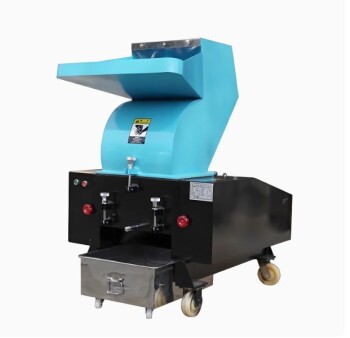
The primary roles of mechanical crushing and electrostatic separation in PCB recycling are to maximize material reactivity and isolate valuable components. Mechanical crushing breaks down complex board structures into micron-scale powders to increase the surface area for bio-leaching. Electrostatic separation then refines this mix, stripping metallic components from non-metallic waste to reduce the processing load for downstream stages.
Core Takeaway These two processes function as a critical preparation phase, transforming a complex composite object (the PCB) into a uniform, enriched feedstock. Without this physical pretreatment, subsequent chemical or biological recovery methods would be inefficient due to poor surface contact and high contamination from non-metallic materials.
The Function of Mechanical Crushing
Breaking Down Complex Structures
Printed Circuit Boards differ from simple waste because of their laminated, multi-material construction. Mechanical crushing systems apply intense collision and shear forces to pulverize these complex structures.
This process reduces the physical board fragments into a uniform micron-scale powder. This uniformity is essential for creating a predictable input for the next stages of recycling.
Maximizing Reactive Surface Area
The most critical objective of crushing is increasing the specific surface area of the material. By reducing the particle size, the system exposes a significantly larger amount of the metallic components.
This expanded surface area provides an ample contact surface for bio-leaching reactions. It ensures that the chemical or biological agents used later can interact effectively with the metals, preventing the reaction from being "choked" by surrounding plastic or ceramic material.
The Function of Electrostatic Separation
Stripping Metals from Non-Metals
Once the PCB material is reduced to a powder, it is still a mix of valuable and waste materials. Electrostatic separation equipment is used to effectively strip metallic components from non-metallic byproducts.
This process specifically targets and removes waste materials such as thermosetting resins and glass fibers, which have no value in the metal recovery phase.
Preliminary Enrichment and Load Reduction
By isolating the metals early in the process, electrostatic separation achieves preliminary enrichment. This concentrates the valuable material before it enters the more expensive chemical processing stages.
Crucially, this reduces the processing load for subsequent industrial steps. The system ensures that downstream bio-leaching or chemical processes are not wasting energy and reagents on inert glass or plastic.
Understanding the Operational Trade-offs
Energy Intensity vs. Particle Fineness
Achieving micron-scale powder requires high-energy inputs to generate the necessary collision and shear forces. While finer powder increases reactivity, it also increases the energy cost per ton of recycled material.
material Homogeneity Requirements
Electrostatic separation relies heavily on the success of the mechanical crushing stage. If the crushing system fails to produce uniform powder particles, the electrostatic separation may be inefficient, leading to the loss of metals into the waste stream or contamination of the metal fraction.
Optimizing Your Pretreatment Strategy
How to Apply This to Your Project
- If your primary focus is process efficiency: Prioritize high-quality electrostatic separation to ensure you are strictly processing metals downstream, minimizing reagent waste on non-metallic slag.
- If your primary focus is recovery rate (yield): Invest heavily in mechanical crushing capabilities to achieve the finest possible micron-scale powder, maximizing the surface area available for bio-leaching.
Effective PCB recycling relies on balancing physical liberation (crushing) with efficient isolation (separation) to create a pure, reactive feedstock.
Summary Table:
| Process Step | Primary Mechanism | Key Objective | Output Characteristic |
|---|---|---|---|
| Mechanical Crushing | Collision & Shear Forces | Maximize surface area for leaching | Micron-scale uniform powder |
| Electrostatic Separation | Electrical Charge Diff. | Strip metals from resins/glass fibers | Enriched metallic feedstock |
| Synergy | Physical Pretreatment | Reduce downstream processing load | High-purity reactive input |
Maximize Your Recovery Efficiency with KINTEK
Transform your PCB recycling workflow with KINTEK’s industry-leading crushing and milling systems and sieving equipment. We specialize in providing laboratory and industrial solutions designed to achieve the precise micron-scale uniformity required for optimal material reactivity.
Whether you are refining metal recovery via bio-leaching or scaling up electronic waste processing, our portfolio—including high-performance hydraulic presses, PTFE products, and specialized ceramics—ensures your lab maintains the highest standards of purity and yield.
Ready to optimize your pretreatment strategy? Contact our experts today to discover how KINTEK can enhance your laboratory’s efficiency and recovery rates.
References
- Mohammed Sultan, Birgül Benli. Recent sustainable trends for e-waste bioleaching. DOI: 10.37190/ppmp/167375
This article is also based on technical information from Kintek Solution Knowledge Base .
Related Products
People Also Ask
- What is the primary purpose of using an industrial-grade grinder for flax straw? Optimize Biomass Pretreatment Now
- What is the primary function of a crushing system? Optimize Rice Husk Fractionation with Precise Size Reduction
- What is the primary function of industrial crushers in battery dismantling? Optimize Your Recovery Feedstock
- What are the contaminants in plastic pyrolysis oil? Manage Impurities for Commercial Success
- Why is it necessary to use an ultrasonic cell disruptor before yeast flow cytometry? Ensure Data Accuracy