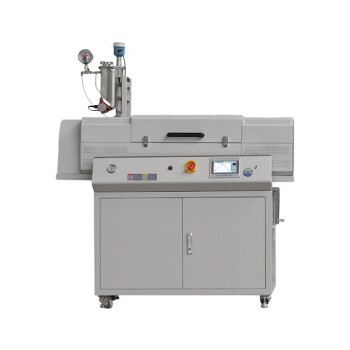
Knowledge What are the steps of chemical vapour deposition? A Guide to the 7-Step CVD Process
Author avatar

Tech Team · Kintek Solution

Updated 1 week ago

What are the steps of chemical vapour deposition? A Guide to the 7-Step CVD Process


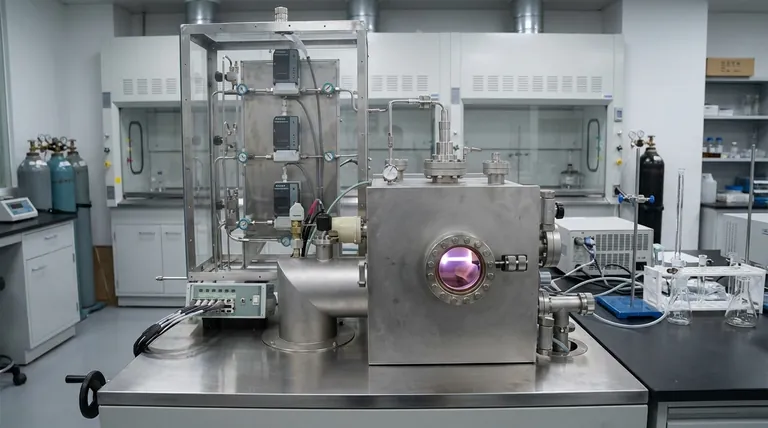
In essence, Chemical Vapor Deposition (CVD) is a highly controlled process that builds a solid thin film on a surface from a chemical reaction in the gas phase. It involves transporting reactant gases (precursors) to a substrate, where they react and deposit a new material, followed by the removal of the gaseous byproducts.

The entire CVD process can be understood as a molecular assembly line. It meticulously manages the journey of gas molecules as they are delivered to a surface, chemically transformed into a solid film, and have their waste products efficiently exhausted.
What are the steps of chemical vapour deposition? A Guide to the 7-Step CVD Process

The CVD Journey: From Gas to Solid Film

To truly understand CVD, we must break down the process into its fundamental sequence of events. Each step is a critical control point that determines the quality and properties of the final film.

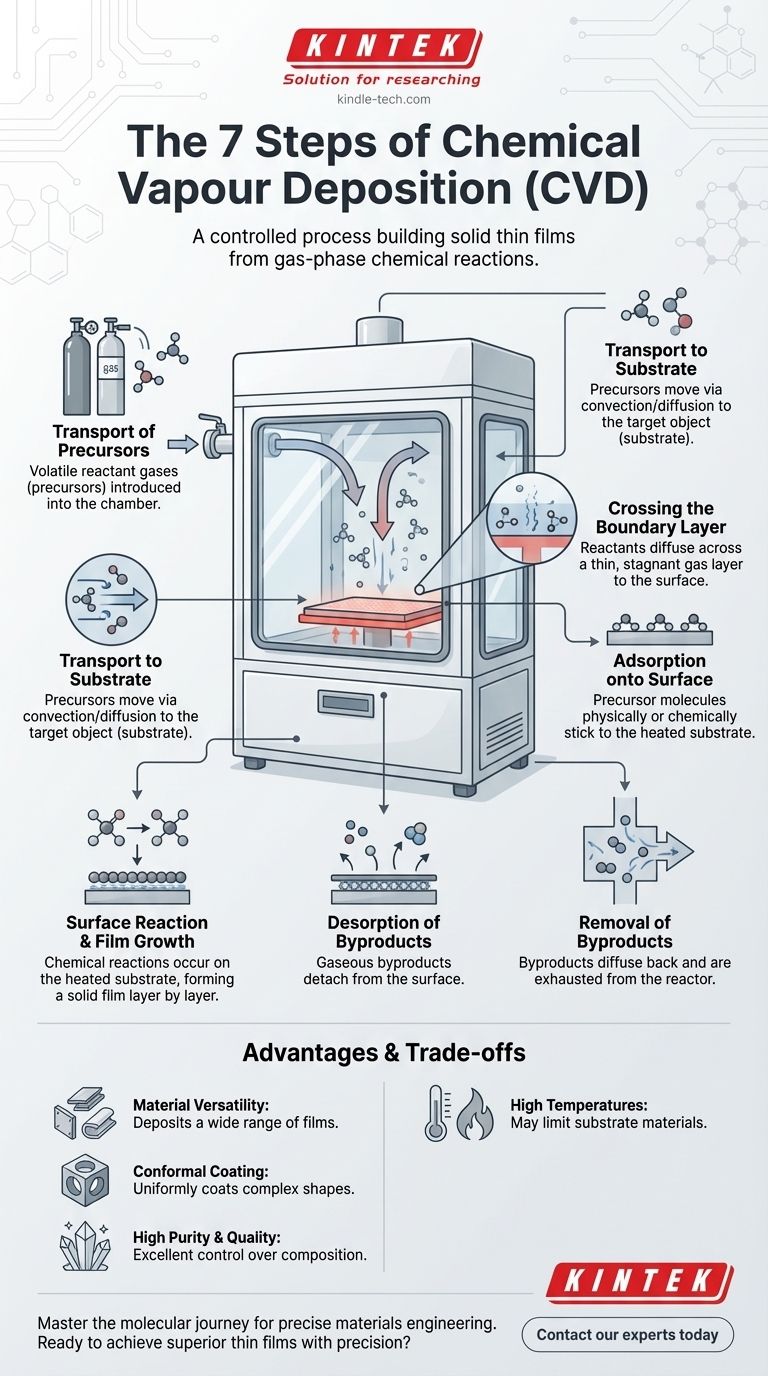
Step 1: Transport of Precursors into the Reactor

The process begins by introducing precise amounts of one or more volatile reactant gases, known as precursors, into the reaction chamber. These gases are the chemical building blocks for the final film.

Step 2: Transport to the Substrate

Once inside the chamber, the precursor molecules travel through the main gas stream via convection and diffusion toward the target object, called the substrate. This substrate is the surface where the film will be grown.

Step 3: Crossing the Boundary Layer

Directly above the substrate surface exists a thin, relatively stagnant layer of gas known as the boundary layer. Reactant molecules must diffuse across this layer to reach the surface, a step that can often be the slowest and most critical part of the entire process.

Step 4: Adsorption onto the Surface

When a precursor molecule successfully reaches the substrate, it physically or chemically sticks to the surface. This process is called adsorption.

Step 5: Surface Reaction and Film Growth

With the precursor adsorbed onto the heated substrate, chemical reactions occur. These reactions break down the precursors and form a stable, solid material, creating the thin film layer by layer through nucleation and growth.

Step 6: Desorption of Byproducts

The chemical reactions that form the film also create unwanted gaseous byproducts. These byproduct molecules must detach, or desorb, from the surface to make room for new reactants to arrive.

Step 7: Removal of Byproducts from the Reactor

Finally, the desorbed byproducts diffuse back across the boundary layer and are carried away by the main gas flow, exiting the chamber through an exhaust system.

Understanding the Trade-offs and Advantages

CVD is a powerful technique, but its use is governed by a distinct set of characteristics and limitations. Understanding these is key to deciding if it's the right process for a specific application.

Advantage: Material Versatility

CVD is not limited to one type of material. It can be used to deposit a vast range of films, including metals, multi-component alloys, and complex ceramic or compound layers.

Advantage: Conformal Coating

One of the most significant strengths of CVD is its ability to produce highly conformal coatings. This means it can uniformly coat complex, three-dimensional shapes, a property often described as having good "wrap-around."

Advantage: High Purity and Quality

The process allows for excellent control over the chemical composition, resulting in films that are exceptionally pure, dense, and well-crystallized.

Trade-off: High Temperatures and Substrate Limitations

Traditional CVD processes often require very high temperatures to provide the necessary energy for the chemical reactions. This can limit the types of substrate materials that can be used without being damaged.

Making the Right Choice for Your Goal

A detailed understanding of these steps allows you to control and troubleshoot the process effectively. Your primary goal will determine which steps demand the most attention.

  • If your primary focus is film quality and uniformity: Concentrate on the transport through the boundary layer (Step 3) and the surface reaction kinetics (Step 5), as these control the growth rate and structure.
  • If your primary focus is creating a specific material: Your main concern will be the selection of precursors (Step 1) and the precise control of temperature and pressure to drive the desired surface reaction (Step 5).
  • If your primary focus is troubleshooting defects: Investigate byproduct removal (Steps 6 & 7), as trapped byproducts can cause impurities, and unwanted reactions in the gas phase (Step 2) can create particles that fall onto the film.

Ultimately, mastering the CVD process means controlling each stage of this molecular journey to engineer materials with precision.

Summary Table:

Step Key Action Purpose
1 Transport of Precursors Introduce reactant gases into the chamber
2 Transport to Substrate Move gases toward the target surface
3 Cross Boundary Layer Diffuse through stagnant gas layer to surface
4 Adsorption Precursor molecules stick to substrate
5 Surface Reaction Chemical transformation creates solid film
6 Desorption Gaseous byproducts detach from surface
7 Byproduct Removal Exhaust waste gases from reactor

Ready to achieve superior thin films with precision? KINTEK specializes in advanced lab equipment and consumables for Chemical Vapor Deposition processes. Our solutions help you control every step—from precursor delivery to byproduct removal—ensuring high-purity, conformal coatings for your most demanding applications.

Contact our experts today to discuss how our CVD systems can enhance your laboratory's capabilities and accelerate your materials research.

Visual Guide
What are the steps of chemical vapour deposition? A Guide to the 7-Step CVD Process Visual Guide

Related Products

People Also Ask

Related Products

Inclined Rotary Plasma Enhanced Chemical Vapor Deposition PECVD Equipment Tube Furnace Machine

Inclined Rotary Plasma Enhanced Chemical Vapor Deposition PECVD Equipment Tube Furnace Machine

Upgrade your coating process with PECVD coating equipment. Ideal for LED, power semiconductors, MEMS and more. Deposits high-quality solid films at low temps.

Chemical Vapor Deposition CVD Equipment System Chamber Slide PECVD Tube Furnace with Liquid Gasifier PECVD Machine

Chemical Vapor Deposition CVD Equipment System Chamber Slide PECVD Tube Furnace with Liquid Gasifier PECVD Machine

KT-PE12 Slide PECVD System: Wide power range, programmable temp control, fast heating/cooling with sliding system, MFC mass flow control & vacuum pump.

RF PECVD System Radio Frequency Plasma-Enhanced Chemical Vapor Deposition RF PECVD

RF PECVD System Radio Frequency Plasma-Enhanced Chemical Vapor Deposition RF PECVD

RF-PECVD is an acronym for "Radio Frequency Plasma-Enhanced Chemical Vapor Deposition." It deposits DLC (Diamond-like carbon film) on germanium and silicon substrates. It is utilized in the 3-12um infrared wavelength range.

Customer Made Versatile CVD Tube Furnace Chemical Vapor Deposition Chamber System Equipment

Customer Made Versatile CVD Tube Furnace Chemical Vapor Deposition Chamber System Equipment

Get your exclusive CVD furnace with KT-CTF16 Customer Made Versatile Furnace. Customizable sliding, rotating, and tilting functions for precise reactions. Order now!

Split Chamber CVD Tube Furnace with Vacuum Station Chemical Vapor Deposition System Equipment Machine

Split Chamber CVD Tube Furnace with Vacuum Station Chemical Vapor Deposition System Equipment Machine

Efficient split chamber CVD furnace with vacuum station for intuitive sample checking and quick cooling. Up to 1200℃ max temperature with accurate MFC mass flowmeter control.

Microwave Plasma Chemical Vapor Deposition MPCVD Machine System Reactor for Lab and Diamond Growth

Microwave Plasma Chemical Vapor Deposition MPCVD Machine System Reactor for Lab and Diamond Growth

Get high-quality diamond films with our Bell-jar Resonator MPCVD machine designed for lab and diamond growth. Discover how Microwave Plasma Chemical Vapor Deposition works for growing diamonds using carbon gas and plasma.

Cylindrical Resonator MPCVD Machine System Reactor for Microwave Plasma Chemical Vapor Deposition and Lab Diamond Growth

Cylindrical Resonator MPCVD Machine System Reactor for Microwave Plasma Chemical Vapor Deposition and Lab Diamond Growth

Learn about Cylindrical Resonator MPCVD Machine, the microwave plasma chemical vapor deposition method used for growing diamond gemstones and films in the jewelry and semi-conductor industries. Discover its cost-effective advantages over traditional HPHT methods.

Vacuum Hot Press Furnace Machine for Lamination and Heating

Vacuum Hot Press Furnace Machine for Lamination and Heating

Experience clean and precise lamination with Vacuum Lamination Press. Perfect for wafer bonding, thin-film transformations, and LCP lamination. Order now!

1200℃ Split Tube Furnace with Quartz Tube Laboratory Tubular Furnace

1200℃ Split Tube Furnace with Quartz Tube Laboratory Tubular Furnace

KT-TF12 split tube furnace: high-purity insulation, embedded heating wire coils, and max. 1200C. Widely used for new materials and chemical vapour deposition.

Vacuum Sealed Continuous Working Rotary Tube Furnace Rotating Tube Furnace

Vacuum Sealed Continuous Working Rotary Tube Furnace Rotating Tube Furnace

Experience efficient material processing with our vacuum-sealed rotary tube furnace. Perfect for experiments or industrial production, equipped with optional features for controlled feeding and optimized results. Order now.

Mini SS High Pressure Autoclave Reactor for Laboratory Use

Mini SS High Pressure Autoclave Reactor for Laboratory Use

Mini SS High Pressure Reactor - Ideal for medicine, chemical, and scientific research industries. Programmed heating temp and stirring speed, up to 22Mpa pressure.

Customizable High Pressure Reactors for Advanced Scientific and Industrial Applications

Customizable High Pressure Reactors for Advanced Scientific and Industrial Applications

This laboratory-scale high-pressure reactor is a high-performance autoclave engineered for precision and safety in demanding research and development environments.

High Temperature Muffle Oven Furnace for Laboratory Debinding and Pre Sintering

High Temperature Muffle Oven Furnace for Laboratory Debinding and Pre Sintering

KT-MD High temperature debinding and pre-sintering furnace for ceramic materials with various molding processes. Ideal for electronic components such as MLCC and NFC.

High Pressure Laboratory Autoclave Reactor for Hydrothermal Synthesis

High Pressure Laboratory Autoclave Reactor for Hydrothermal Synthesis

Discover the applications of Hydrothermal Synthesis Reactor - a small, corrosion-resistant reactor for chemical labs. Achieve rapid digestion of insoluble substances in a safe and reliable way. Learn more now.

Laboratory Vacuum Tilt Rotary Tube Furnace Rotating Tube Furnace

Laboratory Vacuum Tilt Rotary Tube Furnace Rotating Tube Furnace

Discover the versatility of Laboratory Rotary Furnace: Ideal for calcination, drying, sintering, and high-temperature reactions. Adjustable rotating and tilting functions for optimal heating. Suitable for vacuum and controlled atmosphere environments. Learn more now!

Multi Zone Laboratory Quartz Tube Furnace Tubular Furnace

Multi Zone Laboratory Quartz Tube Furnace Tubular Furnace

Experience precise, efficient thermal testing with our Multi Zone Tube Furnace. Independent heating zones and temperature sensors allow for controlled high-temperature gradient heating fields. Order now for advanced thermal analysis!

Vacuum Heat Treat and Molybdenum Wire Sintering Furnace for Vacuum Sintering

Vacuum Heat Treat and Molybdenum Wire Sintering Furnace for Vacuum Sintering

A vacuum molybdenum wire sintering furnace is a vertical or bedroom structure, which is suitable for withdrawal, brazing, sintering and degassing of metal materials under high vacuum and high temperature conditions. It is also suitable for dehydroxylation treatment of quartz materials.

1800℃ Muffle Oven Furnace for Laboratory

1800℃ Muffle Oven Furnace for Laboratory

KT-18 muffle furnace with Japan Al2O3 polycrystalline fibe and Silicon Molybdenum heating element, up to 1900℃, PID temperature control and 7" smart touch screen. Compact design, low heat loss, and high energy efficiency. Safety interlock system and versatile functions.

1700℃ Controlled Atmosphere Furnace Nitrogen Inert Atmosphere Furnace

1700℃ Controlled Atmosphere Furnace Nitrogen Inert Atmosphere Furnace

KT-17A Controlled atmosphere furnace: 1700℃ heating, vacuum sealing technology, PID temperature control, and versatile TFT smart touch screen controller for laboratory and industrial use.

Vertical High Temperature Graphite Vacuum Graphitization Furnace

Vertical High Temperature Graphite Vacuum Graphitization Furnace

Vertical high temperature graphitization furnace for carbonization and graphitization of carbon materials up to 3100℃.Suitable for shaped graphitization of carbon fiber filaments and other materials sintered in a carbon environment.Applications in metallurgy, electronics, and aerospace for producing high-quality graphite products like electrodes and crucibles.


Leave Your Message