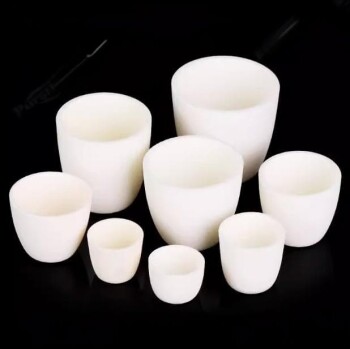
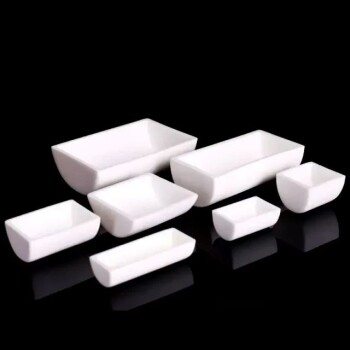
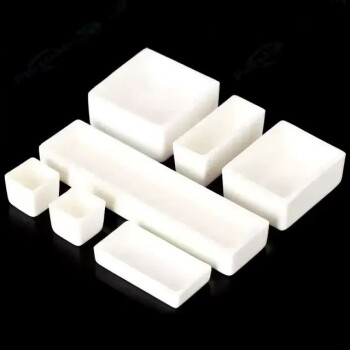
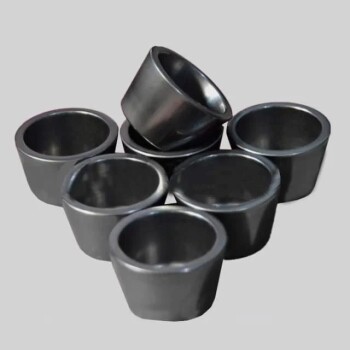
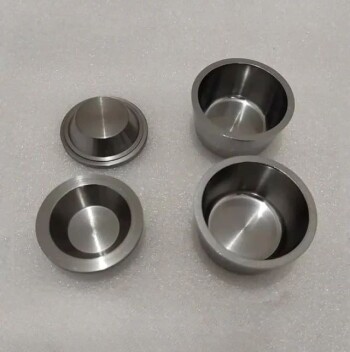
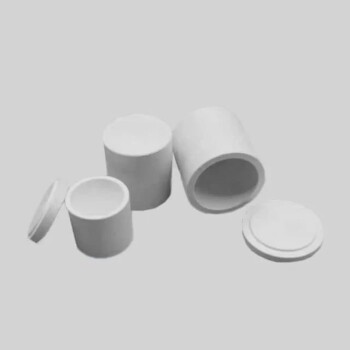
The use of an alumina crucible for holding silicone oil is technically sound and highly recommended due to its exceptional chemical stability and high-temperature resistance. In this setup, the crucible functions as a non-reactive vessel located in the furnace's low-temperature zone, allowing for the controlled release of volatile silicon monomers without contaminating the experiment.
The core advantage of using alumina is its ability to guarantee a stable supply of the silicon source. By preventing chemical reactions between the container, the oil, and the corrosive atmosphere, it ensures the integrity of the vapor deposition process.
The Role of Material Stability
Preventing Chemical Contamination
The primary technical consideration in vapor deposition is purity. Alumina ensures that no reaction occurs between the container and the silicone oil.
This inertness is critical because any interaction between the oil and the crucible would alter the chemical composition of the silicon source. By using alumina, you ensure that only the intended volatile monomers are generated.
Resisting Corrosive Atmospheres
Vapor deposition environments often contain corrosive gases or byproducts. An alumina crucible is chemically stable enough to withstand these harsh conditions.
This stability protects the crucible from degrading over time. It ensures the container remains intact throughout the experiment, preventing leaks or structural failure.
Mechanism of Vapor Transport
Strategic Placement in the Low-Temperature Zone
Technically, the crucible must be placed in the low-temperature zone of the furnace. This placement is specific and intentional.
By heating the silicone oil in this cooler zone, the system generates stable volatile silicon monomers. This controlled heating prevents the oil from decomposing too rapidly or reacting prematurely.
Facilitating Carrier Gas Flow
The setup relies on a carrier gas flowing over the heated surface of the crucible. The design of the crucible must allow for this airflow.
As the gas passes over the oil, it captures the volatile monomers. It then transports them from the low-temperature storage zone into the high-temperature reaction zone where the deposition occurs.
Understanding the Operational Constraints
Dependency on Thermal Zoning
While the material itself is robust, the success of this application relies heavily on thermal positioning.
The crucible is strictly a vessel for the source material in the low-temperature zone. It is not intended to hold the oil within the high-temperature reaction zone itself.
Managing Source Stability
The "stability" provided by the alumina is only effective if the furnace zones are correctly calibrated.
If the crucible is exposed to temperatures exceeding the oil's volatile limits, the stable supply of monomers will be disrupted regardless of the crucible's quality.
Making the Right Choice for Your Goal
To maximize the effectiveness of your vapor deposition experiment, consider your specific experimental priorities:
- If your primary focus is Chemical Purity: Rely on alumina’s inert properties to prevent any leaching or reaction between the silicone oil and the container walls.
- If your primary focus is Process Consistency: Ensure the crucible is positioned strictly in the low-temperature zone to maintain a steady, non-turbulent release of silicon monomers.
By utilizing alumina, you secure a reliable, non-reactive foundation for transporting silicon monomers to the reaction zone.
Summary Table:
| Technical Parameter | Benefit of Alumina Crucible | Operational Consideration |
|---|---|---|
| Material Stability | Chemically inert; prevents contamination of silicone oil. | Ensures high-purity monomer generation. |
| Corrosion Resistance | Withstands harsh atmospheres and volatile byproducts. | Increases crucible lifespan and experiment reliability. |
| Thermal Management | High-temperature resistance for stable source heating. | Must be placed in the furnace's low-temperature zone. |
| Vapor Transport | Facilitates smooth airflow for carrier gases. | Requires calibrated thermal zoning for steady flow. |
Elevate Your Thin-Film Research with KINTEK Precision
Achieving flawless vapor deposition requires high-purity materials and precise thermal control. KINTEK specializes in providing the high-performance laboratory equipment and consumables necessary for advanced material science, including alumina crucibles, tube furnaces, and CVD systems.
Whether you are performing silicon-based deposition or complex battery research, our range of muffle furnaces, vacuum systems, and ceramic consumables is designed to meet the most rigorous experimental standards. Our technical experts are ready to help you optimize your setup for maximum purity and process consistency.
Ready to upgrade your laboratory capabilities? Contact KINTEK today for a consultation and quote!
References
- Thuan Dinh Nguyen, David J. Young. Effect of Volatile Species on Chemical Vapour Deposition of SiO2 During Corrosion of Chromia- and Alumina-Formers. DOI: 10.1007/s11085-023-10166-2
This article is also based on technical information from Kintek Solution Knowledge Base .
Related Products
- Arc-Shaped Alumina Ceramic Crucible High Temperature Resistant for Engineering Advanced Fine Ceramics
- Alumina Al2O3 Ceramic Crucible Semicircle Boat with Lid for Engineering Advanced Fine Ceramics
- Engineering Advanced Fine Ceramics Alumina Crucibles (Al2O3) for Thermal Analysis TGA DTA
- Engineering Advanced Fine Ceramics Alumina Al2O3 Crucible With Lid Cylindrical Laboratory Crucible
- Engineering Advanced Fine Alumina Al2O3 Ceramic Crucible for Laboratory Muffle Furnace
People Also Ask
- Why Use Alumina Crucibles & Powder Burial for NaSICON? Ensure Phase Purity and Prevent Elemental Volatilization
- What is the primary purpose of using alumina crucibles for LLTO ceramics? Optimize Your High-Temperature Sintering
- Why are alumina crucibles and mother powder essential for LATP sintering? Optimize Your Solid Electrolyte Performance
- Why are high-purity alumina crucibles used for liquid lead corrosion experiments? Ensure Data Accuracy at 550°C
- Primary considerations for choosing alumina crucibles and quartz tubes in indium intercalation: Ensure Material Purity