The fundamental mechanism of Chemical Vapour Deposition (CVD) operates through a precise sequence of three critical stages. First, the reaction gas must undergo diffusion to travel from the main gas stream to the substrate surface. Second, the gas molecules must successfully adsorb onto that surface. Finally, a chemical reaction occurs to form the desired solid deposit, necessitating the immediate release of volatile by-products back into the vapour phase.
Regardless of the specific tool used—whether Atmospheric Pressure CVD or Plasma Enhanced CVD—successful thin-film deposition relies on balancing these three phases: gas transport, surface attachment, and chemical transformation.
The Mechanics of Deposition
To control film quality and uniformity, you must understand what happens at the microscopic level during these three stages.
Stage 1: Gas Diffusion
The process begins with mass transport. The precursor gases are introduced into the reaction chamber and must move from the bulk gas flow to the substrate.
This involves diffusion through the boundary layer—a stagnant layer of gas often found just above the substrate. The efficiency of this stage determines how much reactant is actually available for the process.
Stage 2: Surface Adsorption
Once the gas molecules penetrate the boundary layer, they reach the substrate.
Here, the reaction gas undergoes adsorption, physically or chemically adhering to the substrate surface. This step is critical because the molecules must reside on the surface long enough for the subsequent reaction to occur.
Stage 3: Reaction and Release
The final stage is the transformation. The adsorbed molecules react chemically on the heated surface to form the permanent solid deposit.
Crucially, this reaction also creates vapour phase by-products. These by-products must detach and be released from the surface immediately to prevent contamination of the new film.
Understanding the Trade-offs
While the process sounds linear, in practice, these stages compete with one another, creating limitations you must manage.
Rate-Limiting Steps
The overall speed of your deposition is dictated by the slowest of the three stages.
If diffusion is slow (mass-transport limited), the process depends heavily on gas flow dynamics. If the surface reaction is slow (reaction-rate limited), the process becomes highly sensitive to temperature changes.
By-Product Management
The release of by-products in the third stage is often overlooked but vital.
If the by-products generally fail to desorb or are trapped by incoming gas, they become impurities within the film. This compromises the structural integrity and electrical properties of the material.
Making the Right Choice for Your Goal
Understanding which stage is dominant in your specific setup helps you troubleshoot defects and optimize throughput.
- If your primary focus is uniformity across complex shapes: Prioritize conditions that favor surface-reaction limited regimes, ensuring gas access (diffusion) is not the bottleneck.
- If your primary focus is material purity: Ensure high temperatures or efficient pumping to facilitate the rapid release and removal of vapour phase by-products.
Mastering these three stages transforms CVD from a "black box" process into a predictable, tunable engineering tool.
Summary Table:
| Stage | Process Name | Key Mechanism | Importance in Deposition |
|---|---|---|---|
| Stage 1 | Gas Diffusion | Precursor transport from bulk gas to substrate | Determines reactant availability and boundary layer penetration. |
| Stage 2 | Surface Adsorption | Adhering of molecules to the substrate | Ensures molecules reside long enough for the chemical transformation. |
| Stage 3 | Reaction & Release | Chemical transformation and by-product removal | Forms the solid deposit; efficient by-product release prevents contamination. |
Elevate Your Thin-Film Research with KINTEK
Precise control over the three stages of CVD requires high-performance equipment designed for stability and purity. KINTEK specializes in advanced laboratory solutions, providing a comprehensive range of CVD, PECVD, and MPCVD systems, as well as high-temperature furnaces and vacuum technology tailored for demanding material research.
Whether you are optimizing for mass-transport or reaction-rate limited regimes, our expert team is here to support your laboratory's efficiency and output quality. From specialized PTFE and ceramic consumables to high-pressure reactors and cooling solutions, we provide everything you need to master the mechanics of deposition.
Ready to optimize your CVD process? Contact KINTEK today for a consultation!
Related Products
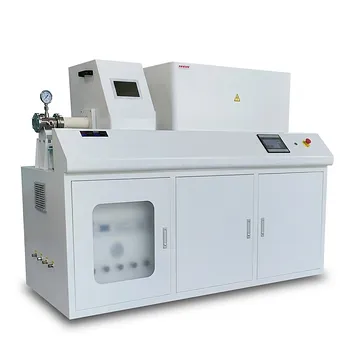
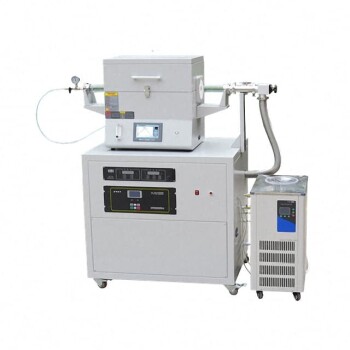
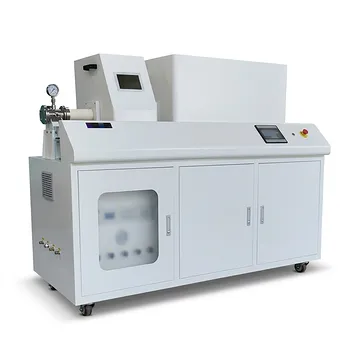
- Chemical Vapor Deposition CVD Equipment System Chamber Slide PECVD Tube Furnace with Liquid Gasifier PECVD Machine
- Customer Made Versatile CVD Tube Furnace Chemical Vapor Deposition Chamber System Equipment
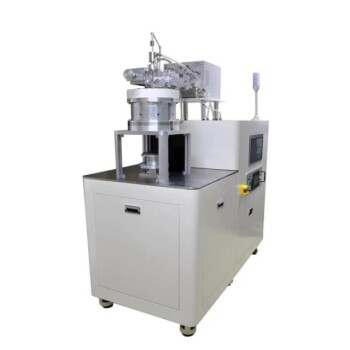
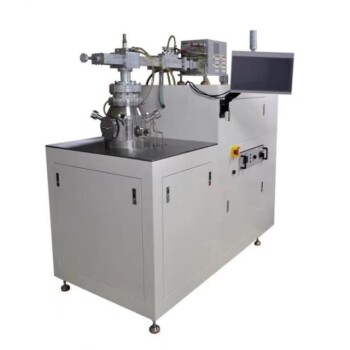
- Microwave Plasma Chemical Vapor Deposition MPCVD Machine System Reactor for Lab and Diamond Growth
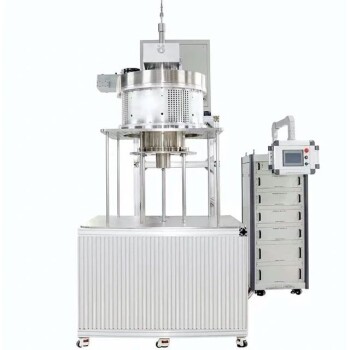
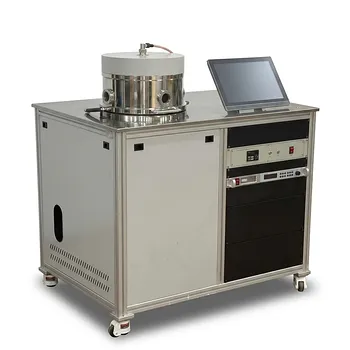
- 915MHz MPCVD Diamond Machine Microwave Plasma Chemical Vapor Deposition System Reactor
- Custom CVD Diamond Coating for Lab Applications
People Also Ask
- What are the advantages of chemical vapor deposition? Achieve Superior Thin Films for Your Lab
- What types of substrates are used in CVD to facilitate graphene films? Optimize Graphene Growth with the Right Catalyst
- What is the chemical vapor deposition growth process? Build Superior Thin Films from the Atom Up
- How expensive is chemical vapor deposition? Understanding the True Cost of High-Performance Coating
- Why is Chemical Vapor Deposition (CVD) equipment uniquely suited for constructing hierarchical superhydrophobic structures?