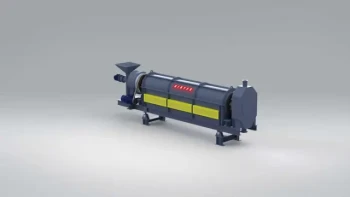
The synthesis of oxygen-enriched hierarchically porous carbon (HPOC) requires a highly regulated thermal and chemical environment to prevent material degradation. During the carbonization process, an industrial tube furnace provides a precise high-temperature environment (typically 750 °C) and a stable inert atmosphere, often using argon or nitrogen. These conditions ensure the controlled pyrolysis of precursors and the activation of chemical templates without the risk of unwanted oxidation.
Core Takeaway: The industrial tube furnace acts as a closed-system reactor that manages temperature precision and atmospheric purity to transform precursors into porous carbon structures. By facilitating specific redox reactions and chemical decompositions, it determines the final porosity and oxygen enrichment of the material.
Thermal Precision and Atmospheric Stability
Maintaining High-Temperature Isothermal Conditions
The tube furnace provides a precise high-temperature environment, typically maintained at 750 °C for HPOC synthesis. This heat is necessary to trigger the thermal degradation of organic precursors while maintaining a stable environment for long-duration reactions.
Creating a Stable Inert Shield
A continuous flow of inert gases, such as argon or nitrogen, is used to purge the heating chamber of oxygen. This stable atmosphere is critical to ensure pyrolysis without oxidation, which prevents the carbon precursors from burning or losing functional oxygen groups at high temperatures.
Controlled Temperature Ramping
Industrial furnaces allow for programmed temperature ramping, often at rates between 1-10°C per minute. This gradual increase ensures the thorough removal of volatiles and promotes the pyrolytic polymerization of macromolecules, establishing a stable initial carbon skeleton.
Facilitating Complex Chemical Transformations
Decomposition of Precursors and Templates
The furnace environment facilitates the decomposition of chemical additives, such as potassium permanganate (KMnO4). Under these specific thermal conditions, KMnO4 breaks down into manganese oxide (MnO) templates and potassium carbonate (K2CO3) activators.
Inducing Internal Stress and Redox Reactions
As the furnace maintains heat, it drives multiple redox reactions between the precursors and the newly formed activators. These reactions induce internal stress within the material, which is the primary mechanism for forming the specific nanoporous structures required for high-performance HPOC.
In Situ Pore Formation
The environment allows metal salts to be reduced to nano-templates directly within the carbon matrix. These templates build hierarchical pores in situ, ensuring that the porosity is deeply integrated into the material rather than just being a surface-level feature.
Understanding the Trade-offs and Pitfalls
The Risk of Sealing Failure
The effectiveness of the carbonization process depends entirely on the sealing integrity of the tube furnace. Even minor leaks can introduce oxygen, leading to the oxidative loss of biomass and significantly reducing the specific surface area of the final product.
Balancing Temperature and Porosity
While higher temperatures (up to 900 °C) can increase carbon content, they may also cause the collapse of certain pore structures. Conversely, temperatures that are too low (e.g., 400 °C) may result in incomplete carbonization, leaving behind unwanted organic residues that block pore access.
Gas Flow Rate Sensitivities
The rate of inert gas flow must be carefully balanced. If the flow is too low, volatile byproducts may settle back onto the material; if too high, it can lead to thermal gradients across the tube, causing non-uniform carbonization.
How to Apply These Conditions to Your Project
When utilizing an industrial tube furnace for HPOC synthesis, your operational parameters should align with your specific material requirements:
- If your primary focus is Maximum Surface Area: Prioritize the use of chemical templates like calcium carbonate or KMnO4 and maintain a steady isothermal dwell time to allow for complete activation.
- If your primary focus is Structural Integrity: Use a slower temperature ramping rate (e.g., 5°C/min) to ensure volatiles are removed gently without fracturing the carbon skeleton.
- If your primary focus is Oxygen Enrichment: Use argon as the inert gas rather than nitrogen to minimize potential side reactions and carefully control the 750 °C threshold to preserve functional groups.
Mastering the interplay between atmospheric purity and thermal precision is the definitive factor in producing high-quality hierarchically porous carbon.
Summary Table:
| Critical Condition | Functional Role in Carbonization | Impact on HPOC Quality |
|---|---|---|
| 750°C Isothermal Heat | Triggers thermal degradation of organic precursors | Ensures complete carbonization without structural collapse |
| Inert Atmosphere | Purges oxygen using Argon or Nitrogen | Prevents oxidation and preserves functional oxygen groups |
| Programmed Ramping | Controlled volatile removal (1-10°C/min) | Establishes a stable carbon skeleton and prevents fracturing |
| Sealed Environment | Closed-system redox reaction management | Protects specific surface area and ensures template activation |
Elevate Your Material Synthesis with KINTEK Precision
Achieving the perfect hierarchical pore structure in HPOC requires absolute control over thermal and atmospheric variables. KINTEK specializes in high-performance laboratory equipment designed for rigorous research environments. Whether you need a precise tube furnace, CVD/PECVD system, or high-temperature high-pressure reactors, our solutions ensure the stability and repeatability your breakthroughs demand.
Why partner with KINTEK?
- Comprehensive Range: From muffle and rotary furnaces to hydraulic presses and electrolytic cells.
- Advanced Control: Specialized systems for carbonization, battery research, and chemical vapor deposition.
- Reliable Consumables: High-quality PTFE products, ceramics, and crucibles to support your daily operations.
Ready to optimize your carbonization process? Contact KINTEK today to discuss your specific requirements with our technical experts!
References
- Yanzhen Li, Gongyuan Zhao. Boosting the Capacitance of Aqueous Zinc-Ion Hybrid Capacitors by Engineering Hierarchical Porous Carbon Architecture. DOI: 10.3390/batteries9080429
This article is also based on technical information from Kintek Solution Knowledge Base .
Related Products
- Customer Made Versatile CVD Tube Furnace Chemical Vapor Deposition Chamber System Equipment
- Graphite Vacuum Furnace Bottom Discharge Graphitization Furnace for Carbon Materials
- Multi Heating Zones CVD Tube Furnace Machine Chemical Vapor Deposition Chamber System Equipment
- Vertical Laboratory Tube Furnace
- High Temperature Alumina (Al2O3) Furnace Tube for Engineering Advanced Fine Ceramics
People Also Ask
- What is a CVD tube furnace? A Complete Guide to Thin-Film Deposition
- What is the function of a high-temperature CVD tube furnace in 3D graphene foam prep? Master 3D Nanomaterial Growth
- How does a CVD tube furnace inhibit the sintering of silver supports? Boost Membrane Durability and Performance
- What is the function of a tube furnace in CVD SiC synthesis? Achieving Ultra-Pure Silicon Carbide Powders
- What is the difference between hot wall CVD and cold wall CVD? Choose the Right System for Your Process