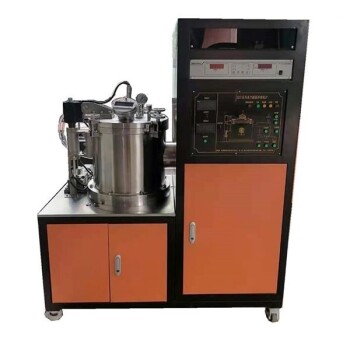
A vacuum atmosphere resistance furnace creates a specialized dual-environment characterized by precise high-temperature heating (exceeding 1473 K) and a tunable atmosphere utilizing either vacuum or inert gas like argon. These conditions are engineered specifically to lower the partial pressure of magnesium vapor, which is the primary driver for facilitating silicothermic reduction and enabling detailed evaporation kinetic studies.
The core value of this apparatus lies in its ability to manipulate pressure and temperature simultaneously; by reducing magnesium vapor partial pressure through vacuum or carrier gas, it actively promotes the reduction reaction and provides the hardware necessary to measure reaction kinetics.
Creating the Ideal Reaction Environment
The Necessity of High Temperature
The furnace acts as a high-temperature heating zone, capable of sustaining temperatures above 1473 K.
This thermal baseline is non-negotiable for metallic magnesium experiments. It provides the energy required to initiate and sustain the endothermic reduction reactions involved in the process.
Controlling the Atmosphere
Beyond heat, the furnace allows for an adjustable vacuum or inert gas environment.
Operators can introduce inert gases, such as argon, or pull a vacuum to alter the internal atmospheric conditions. This flexibility allows the system to switch between static low-pressure environments and flowing carrier gas setups.
The Physics of Magnesium Production
Reducing Partial Pressure
The primary objective of the vacuum or flowing gas is to reduce the partial pressure of magnesium vapor.
In a standard environment, high vapor pressure can inhibit the reaction. By lowering this pressure, the furnace shifts the chemical equilibrium, encouraging the formation of magnesium vapor from the solid reactants.
Promoting the Reduction Reaction
The reduction of partial pressure directly promotes the reduction reaction.
By continuously removing magnesium vapor or maintaining a low-pressure threshold, the system drives the reaction forward, ensuring higher efficiency in the silicothermic reduction process.
Research and Analysis Capabilities
Facilitating Kinetic Studies
The hardware is designed to support the study of evaporation kinetics.
Because the pressure levels are adjustable, researchers can observe how magnesium evaporates under different environmental stresses. This data is critical for understanding the rates of reaction and the physical behavior of magnesium during phase changes.
Understanding the Operational Variables
Vacuum vs. Flowing Gas
While both methods achieve the goal of reducing partial pressure, they represent distinct operational modes.
A pure vacuum environment relies on pressure differentials to manage vapor. In contrast, a flowing carrier gas (like argon) physically sweeps the vapor away to lower partial pressure. The choice between these modes depends on whether the specific experiment requires static conditions or active transport of the vapor.
Optimizing Your Experimental Setup
To get the most out of a vacuum atmosphere resistance furnace, align the environmental settings with your specific research outcomes.
- If your primary focus is maximizing reaction rates: Prioritize settings that aggressively lower the partial pressure of magnesium vapor to drive the reduction reaction forward.
- If your primary focus is kinetic analysis: Utilize the adjustable pressure features to run multiple experiments at varying pressure levels to map evaporation behavior.
Control the pressure environment, and you control the efficiency of the magnesium reduction.
Summary Table:
| Feature | Environmental Condition | Impact on Magnesium Experiments |
|---|---|---|
| Temperature | > 1473 K | Provides energy for endothermic silicothermic reduction. |
| Atmosphere | Vacuum or Inert Gas (Argon) | Enables tunable environments for specific research goals. |
| Pressure | Low Partial Pressure | Lowers magnesium vapor pressure to drive chemical equilibrium. |
| Function | Dual-Environment Control | Facilitates precise kinetic studies and evaporation analysis. |
Elevate Your Metallurgical Research with KINTEK
Precise control over high-temperature and vacuum environments is essential for advancing magnesium evaporation and reduction studies. KINTEK specializes in high-performance laboratory equipment, offering a comprehensive range of vacuum atmosphere resistance furnaces, tube furnaces, and CVD systems designed to meet the rigorous demands of material science.
From high-temperature high-pressure reactors to specialized ceramics and crucibles, our solutions empower researchers to achieve superior accuracy in kinetic analysis and material production.
Ready to optimize your experimental setup? Contact our technical experts today to find the perfect equipment for your lab's unique requirements.
Related Products
- 1200℃ Controlled Atmosphere Furnace Nitrogen Inert Atmosphere Furnace
- 1700℃ Controlled Atmosphere Furnace Nitrogen Inert Atmosphere Furnace
- 1400℃ Controlled Atmosphere Furnace with Nitrogen and Inert Atmosphere
- Controlled Nitrogen Inert Hydrogen Atmosphere Furnace
- Vacuum Arc Induction Melting Furnace
People Also Ask
- What are the two primary purposes of using a controlled atmosphere? Master Protection vs. Material Modification
- What is the role of the furnace atmosphere? Master Precise Metallurgical Control for Your Heat Treatment
- Can you braze copper to brass without flux? Yes, but only under these specific conditions.
- What is a controlled atmosphere furnace for heat treatment? Master Surface Chemistry and Metallurgy
- What is a controlled atmosphere furnace? Achieve Purity and Precision in High-Temp Processing