In the context of a deposition system, flexibility is defined by the breadth of its operational capabilities and its ability to handle diverse processing requirements. It acts as a measure of how easily a single tool can adapt to various inputs—such as different materials and substrate sizes—and operating conditions like temperature and pressure ranges.
True system flexibility is not just about feature count; it is about adaptability. In dynamic environments like R&D, a flexible system mitigates risk by allowing you to adjust to changing priorities, effectively future-proofing your investment against evolving research needs.
Evaluating Material and Substrate Versatility
Handling Diverse Materials
A flexible deposition system allows you to work with a wide variety of source materials.
It ensures that your process is not locked into a single specific chemistry.
This capability is essential for environments where testing new compounds or alloys is a regular requirement.
Substrate Adaptability
Flexibility also refers to the physical dimensions of the object being coated.
The system should be compatible with multiple substrate sizes.
It should accommodate these changes without requiring significant hardware modifications or prolonged downtime.
Operational Range and Control
Temperature and Pressure Windows
A truly flexible tool offers broad operating regimes for critical environmental factors.
It allows you to run processes across a wide spectrum of temperatures.
Similarly, it supports a significant range of pressure settings, enabling different types of film growth mechanics.
Tuning Deposition Dynamics
Control over ion flux and deposition rates is a key indicator of a system's versatility.
High flexibility means the ability to switch between slow, precise growth for delicate structures and faster rates for bulk layers.
This granular control allows researchers to fine-tune the physical properties of the deposited film.
Endpoint Detection
Advanced flexibility often includes multiple or adaptable endpoint detection methods.
This ensures the system can accurately stop processes based on different criteria.
It is particularly useful when switching between standard routines and experimental runs.
The Strategic Value of Flexibility
Supporting R&D Environments
Research environments are defined by uncertainty and frequent pivots.
A flexible system is designed to accommodate these shifts without the need for new capital equipment.
It allows teams to test hypotheses quickly using the existing hardware.
Future-Proofing the Lab
Organizational priorities change over time.
Investing in a flexible system ensures the tool remains relevant even as project goals evolve.
It serves as a hedge against obsolescence, providing value long after the initial project is completed.
Understanding the Trade-offs
Complexity vs. Usability
Systems designed for maximum flexibility are often inherently more complex.
They may require more skilled operators to manage the various configurations.
The learning curve is typically steeper compared to a "push-button" dedicated tool.
"Jack of All Trades" Syndrome
A system that does everything reasonably well may not perform one specific task perfectly.
There is often a compromise between extreme flexibility and the optimized performance of a purpose-built tool.
Cost Considerations
Flexibility usually requires more sophisticated hardware and control software.
This often results in a higher initial capital cost compared to a streamlined, single-process system.
Making the Right Choice for Your Goal
To determine if a flexible system is right for you, weigh your immediate production needs against your long-term research goals.
- If your primary focus is R&D and Experimentation: Prioritize a system with the widest possible range of materials, temperatures, and substrate sizes to accommodate unknown future projects.
- If your primary focus is High-Volume Manufacturing: Limit flexibility to only what is necessary, as excessive versatility can introduce complexity that hampers throughput and repeatability.
Choose the level of flexibility that solves your current technical challenges while leaving the door open for future innovation.
Summary Table:
| Aspect of Flexibility | Key Features & Indicators | Strategic Value |
|---|---|---|
| Material & Substrate | Handles diverse chemistries; multiple substrate sizes | Enables testing of new compounds without hardware changes |
| Operational Range | Broad temperature & pressure windows; tunable ion flux | Supports diverse film growth mechanics and granular control |
| Process Control | Advanced endpoint detection; variable deposition rates | Allows switching between precise growth and high-throughput |
| Future-Proofing | Adaptable to shifting R&D priorities | Reduces risk of obsolescence; saves long-term capital costs |
Future-Proof Your Research with KINTEK’s Flexible Deposition Solutions
Don’t let rigid equipment limit your innovation. KINTEK specializes in high-performance laboratory equipment designed for the dynamic needs of modern research. Whether you are exploring new thin-film chemistries or scaling complex processes, our versatile range of CVD, PECVD, and vacuum furnaces, alongside our precision crushing, milling, and hydraulic press systems, provides the adaptability your lab demands.
Why partner with KINTEK?
- Versatility: Systems engineered to handle diverse materials and substrate sizes.
- Precision: Granular control over temperature, pressure, and deposition dynamics.
- Comprehensive Support: From dental and atmosphere furnaces to high-pressure reactors and autoclaves, we equip your entire workflow.
Ready to enhance your lab's efficiency and adapt to any research challenge? Contact KINTEK today to find the perfect system for your goals!
Related Products
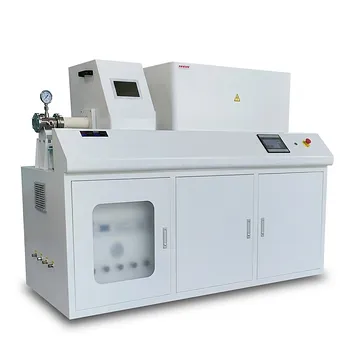
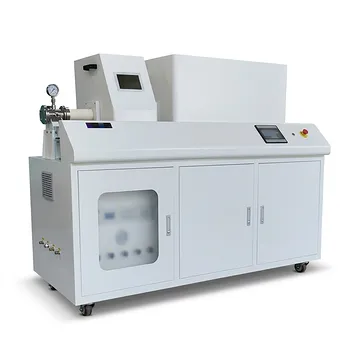
- Chemical Vapor Deposition CVD Equipment System Chamber Slide PECVD Tube Furnace with Liquid Gasifier PECVD Machine
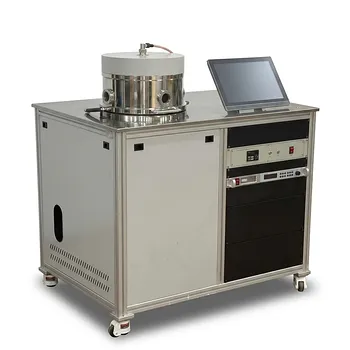
- RF PECVD System Radio Frequency Plasma-Enhanced Chemical Vapor Deposition RF PECVD
- Customer Made Versatile CVD Tube Furnace Chemical Vapor Deposition Chamber System Equipment
- Inclined Rotary Plasma Enhanced Chemical Vapor Deposition PECVD Equipment Tube Furnace Machine
- Inclined Rotary Plasma Enhanced Chemical Vapor Deposition PECVD Equipment Tube Furnace Machine
People Also Ask
- What are the advantages of chemical vapor deposition? Achieve Superior Thin Films for Your Lab
- What types of substrates are used in CVD to facilitate graphene films? Optimize Graphene Growth with the Right Catalyst
- What is the chemical vapor deposition growth process? Build Superior Thin Films from the Atom Up
- How expensive is chemical vapor deposition? Understanding the True Cost of High-Performance Coating
- Why is Chemical Vapor Deposition (CVD) equipment uniquely suited for constructing hierarchical superhydrophobic structures?