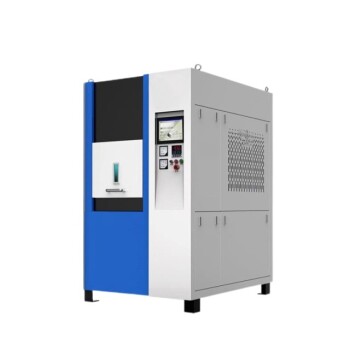
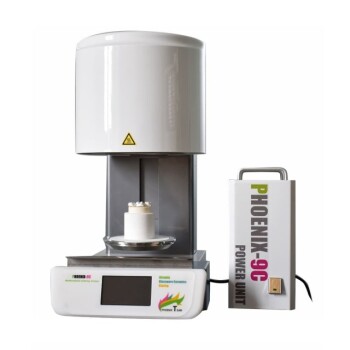
A tube sintering furnace provides the critical combination of precise thermal energy and chemical isolation required to process Oxide Dispersion Strengthened (ODS) 304L stainless steel. Specifically, it maintains a strictly controlled high-temperature environment, typically around 1150°C, while enveloping the material in a stable, inert protective atmosphere like high-purity argon.
The furnace serves as a controlled reactor that drives solid-state diffusion for densification while simultaneously facilitating the uniform precipitation of nano-oxides within the alloy's grain structure.
The Critical Environmental Conditions
Precise Thermal Management
To successfully sinter ODS 304L, the furnace must generate and maintain a specific high-temperature setpoint.
The primary reference highlights 1150°C as a standard operating temperature for this process.
During the isothermal holding period, this thermal energy is the primary driver for metallurgical change. It provides the activation energy necessary to transform the "green compact" (the pressed powder shape) into a solid, cohesive part.
Inert Atmosphere Protection
Temperature alone is insufficient; the chemical environment is equally critical.
The tube furnace must provide a stable inert protective atmosphere.
High-purity argon is typically used to flood the chamber. This prevents oxidation of the steel matrix and ensures that the chemical reactions remain restricted to the intended strengthening mechanisms.
Metallurgical Mechanisms at Work
Driving Solid-State Diffusion
The environment created by the furnace promotes solid-state diffusion.
This mechanism causes atoms to migrate across particle boundaries, closing the pores inherent in the green compact.
The result is significant densification, transforming loose powder particles into a robust, high-performance bulk alloy.
Controlling Nano-Oxide Precipitation
The unique strength of ODS steel comes from the addition of nano-oxides, such as Y2O3 or TiO2.
The furnace's thermal conditions allow supersaturated solutes or these added oxides to precipitate.
Crucially, the furnace conditions ensure this precipitation happens uniformly. These precipitates form within recrystallized grains and at grain boundaries, which prevents grain growth and strengthens the material.
Understanding the Trade-offs
Temperature Sensitivity
While high heat is necessary, deviations from the optimal temperature (e.g., 1150°C) can compromise the material.
Insufficient heat will fail to fully densify the green compact, resulting in a porous, weak structure.
Conversely, excessive heat could lead to uncontrolled grain growth, negating the strengthening effects of the oxide dispersion.
Atmosphere Purity
The "inert" nature of the atmosphere is not a binary state; it is a gradient of purity.
If the furnace fails to maintain high-purity argon flow, trace oxygen can contaminate the 304L matrix.
This unintentional oxidation can compete with the intended nano-oxide formation, leading to unpredictable mechanical properties in the final alloy.
Making the Right Choice for Your Process
To optimize the sintering of ODS 304L, align your furnace parameters with your specific metallurgical targets.
- If your primary focus is Maximum Density: Prioritize the precise control and duration of the isothermal holding period at 1150°C to ensure complete solid-state diffusion.
- If your primary focus is Microstructural Uniformity: Focus on the stability of the inert argon atmosphere to ensure that Y2O3 or TiO2 precipitates evenly without matrix contamination.
Success relies on balancing thermal energy for density with strict atmospheric control for purity.
Summary Table:
| Essential Condition | Parameter/Agent | Role in ODS 304L Sintering |
|---|---|---|
| Sintering Temperature | ~1150°C | Drives solid-state diffusion and densification of the green compact. |
| Atmosphere Control | High-purity Argon | Prevents oxidation and ensures uniform precipitation of nano-oxides. |
| Isothermal Holding | Specified Duration | Allows for grain growth control and microstructural stabilization. |
| Strengthening Agent | Y2O3 or TiO2 | Form precipitates that prevent grain growth and enhance material strength. |
Elevate Your Advanced Material Research with KINTEK
Precise control over temperature and atmosphere is the difference between a failed sample and a high-performance alloy. KINTEK specializes in high-quality laboratory equipment, including tube furnaces, vacuum furnaces, and atmosphere-controlled systems designed specifically for the rigorous demands of ODS steel sintering and powder metallurgy.
Whether you need robust high-temperature furnaces, precision pellet presses, or specialized crucibles, our comprehensive portfolio supports every stage of your material synthesis. Ensure the integrity of your research with KINTEK’s industry-leading thermal and milling solutions.
Ready to optimize your sintering process? Contact KINTEK today for a custom consultation!
References
- Sambaraj Sravan Kumar, Swapan Kumar Karak. Development of nano-oxide dispersed 304L steels by mechanical milling and conventional sintering. DOI: 10.1590/1980-5373-mr-2015-0593
This article is also based on technical information from Kintek Solution Knowledge Base .
Related Products
- Vacuum Heat Treat and Molybdenum Wire Sintering Furnace for Vacuum Sintering
- High Temperature Alumina (Al2O3) Furnace Tube for Engineering Advanced Fine Ceramics
- Laboratory Vacuum Tilt Rotary Tube Furnace Rotating Tube Furnace
- Small Vacuum Heat Treat and Tungsten Wire Sintering Furnace
- Vacuum Heat Treat and Sintering Furnace with 9MPa Air Pressure
People Also Ask
- What is the pressure for vacuum sintering? Achieve Optimal Material Purity and Density
- How does a vacuum environment benefit the purification of matrix powders? Optimize Diamond Tool Sintering Efficiency
- What are the critical functions of the vacuum system in a sintering furnace for Cu/Ti3SiC2/C/MWCNTs composites?
- What critical process conditions does a vacuum sintering furnace provide for titanium? Expert Diffusion Bonding Guide
- What is vacuum hardness? Unlock Superior Material Performance with Vacuum Processing