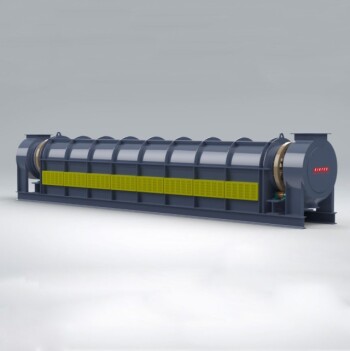
To facilitate large-scale pyrolysis for nano-packaging particles, high-temperature furnace equipment must prioritize a continuous, stable thermal environment powered by advanced sources such as laser or plasma heating. This intense heat is required to instantly vaporize or combust gaseous and liquid precursors. Furthermore, the system relies heavily on downstream infrastructure, specifically motor-driven exhaust systems and air-stage collection devices, to recover and classify nanoparticles from the byproduct flue gas.
Effective production is not just about generating heat; it requires a synchronized system that combines high-energy precursor combustion with a precise, active exhaust capability to capture and sort the resulting nanomaterials.
The Core Heating Requirements
Continuous Thermal Stability
For large-scale production, the furnace must maintain a continuous and stable high-temperature environment. Fluctuations in temperature can lead to inconsistent particle sizes, which compromises the quality of nano-packaging materials.
Advanced Energy Sources
Standard heating elements are often insufficient for this specific application. The equipment typically utilizes laser or plasma heating technologies. These high-energy sources are necessary to effectively vaporize or combust the specific gaseous or liquid precursors used in creating nanoparticles.
Particle Recovery and Classification
Integrated Air-Stage Collection
The production process generates a byproduct flue gas containing the target nanoparticles. The furnace system must be equipped with air-stage collection devices. These devices serve a dual purpose: recovering the particles from the gas and classifying them by size or type.
Active Exhaust Management
To facilitate the movement of flue gas into the collection stage, the furnace requires a robust motor-driven exhaust system. Typically mounted on the roof, this system uses specialized piping to direct the flow of combustion byproducts away from the reaction zone and into the recovery units.
Operational Access and Maintenance
Physical Accessibility
Despite the complexity of the internal heating systems, the equipment requires simple physical access for maintenance and loading. A standard configuration includes a swing door fitted with a hinge. This allows operators to easily inspect the chamber or address internal components between production runs.
Understanding the Trade-offs
Collection Efficiency vs. Flow Rate
A common pitfall in designing these systems is misaligning the exhaust velocity with the collection capability. If the motor-driven exhaust is too aggressive, valuable nanoparticles may be blown through the collection stage without being captured. Conversely, if the flow is too weak, byproduct gases may stagnate, contaminating the precursors and altering the particle chemistry.
Making the Right Choice for Your Facility
When selecting furnace equipment for nano-packaging production, prioritize features based on your specific operational constraints:
- If your primary focus is Particle Consistency: Ensure the laser or plasma heating source is rated for high stability to prevent thermal fluctuations during precursor vaporization.
- If your primary focus is Production Yield: Prioritize advanced air-stage collection devices capable of efficiently separating nanoparticles from the high-volume flue gas stream.
- If your primary focus is Facility Integration: Verify the roof-mounted exhaust piping can be seamlessly connected to your facility’s existing ventilation or filtration infrastructure.
The ideal furnace balances the intensity required for vaporization with the precision required for particle recovery.
Summary Table:
| Feature Category | Key Requirement | Purpose in Nano-Production |
|---|---|---|
| Heating Source | Laser or Plasma Heating | Provides intense heat to vaporize/combust precursors instantly |
| Thermal Stability | Continuous Environment | Ensures uniform particle size and consistent material quality |
| Collection System | Air-stage Collection | Recovers nanoparticles from flue gas and classifies by size |
| Exhaust Management | Motor-driven System | Actively directs combustion byproducts to recovery units |
| Maintenance | Hinge-mounted Swing Door | Allows easy physical access for loading and internal inspection |
Scale Up Your Nanomaterial Production with KINTEK
Precision is the difference between waste and high-yield output. KINTEK specializes in advanced laboratory and industrial solutions, providing the high-performance rotary, vacuum, CVD, and atmosphere furnaces required for complex pyrolysis processes. Whether you are producing nano-packaging particles or conducting advanced battery research, our equipment ensures the thermal stability and integrated control your facility demands.
From high-temperature high-pressure reactors to specialized crushing and milling systems, KINTEK delivers the comprehensive tools needed for end-to-end material synthesis.
Ready to optimize your large-scale pyrolysis workflow? Contact KINTEK experts today to find the perfect furnace configuration for your research or production line.
References
- Pallavi Chaudhary, Ankur Kumar. Relevance of Nanomaterials in Food Packaging and its Advanced Future Prospects. DOI: 10.1007/s10904-020-01674-8
This article is also based on technical information from Kintek Solution Knowledge Base .
Related Products
- Vacuum Heat Treat and Pressure Sintering Furnace for High Temperature Applications
- 1200℃ Muffle Furnace Oven for Laboratory
- 1400℃ Muffle Oven Furnace for Laboratory
- 1700℃ Laboratory High Temperature Tube Furnace with Alumina Tube
- 1700℃ Muffle Oven Furnace for Laboratory
People Also Ask
- What is the purpose of the heat treatment (sintering) step? Engineering Robust Electroactive Membranes
- What is a vacuum sintering furnace? Unlock Purity and Performance in Advanced Materials
- Why must green bodies produced via binder jetting undergo treatment in a vacuum sintering furnace?
- What are some alternative atmospheres to pure hydrogen for powder metallurgy sintering processes? Top Sintering Solutions
- How does the vacuum environment impact sintering of diamond-copper composites? Protect Against Thermal Damage