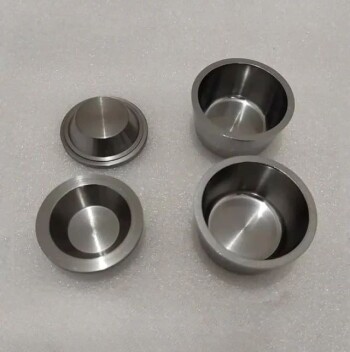
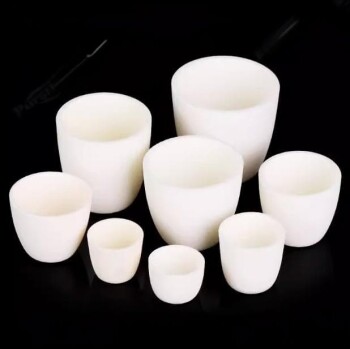
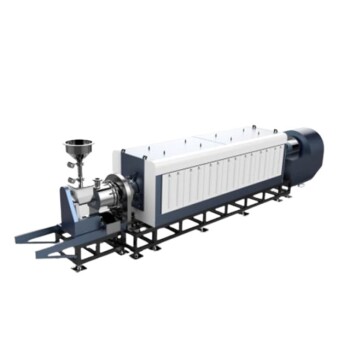
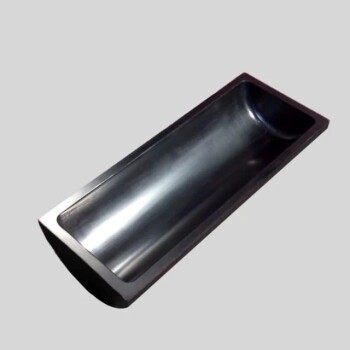
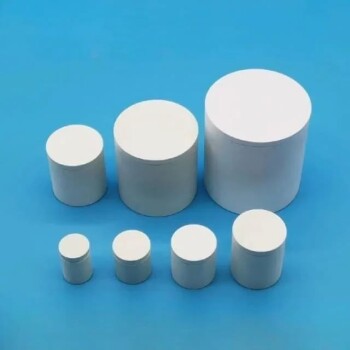
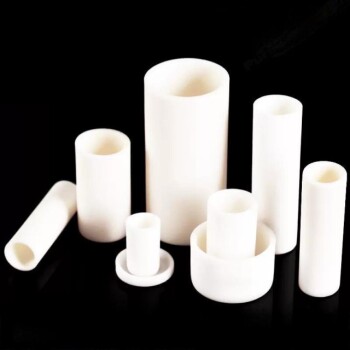
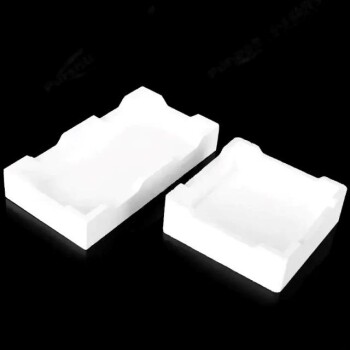
High-temperature crucibles are the fundamental containment and reaction vessels for co-pyrolysis. In the mixed pyrolysis of agricultural biomass and face mask particles, these crucibles serve as the primary transport vehicle for raw materials, a reactor space that facilitates critical synergistic reactions, and a protective barrier that ensures both product purity and the longevity of the heating equipment.
The high-temperature crucible is more than a simple container; it is a critical process enabler that facilitates chemical synergy between biomass and polymers while maintaining the controlled, oxygen-limited environment necessary for high-quality biochar production.
Facilitating Synergistic Thermochemical Reactions
Ensuring Physical Contact and Mixing
Crucibles provide the necessary physical space for the manual mixing of biomass and mask particles at precise ratios. This allows researchers to create a homogenous blend before the materials enter the core heating zone of the furnace.
Promoting Synergy Between Materials
During the heating process, the crucible ensures that different materials maintain close physical contact. This proximity is vital for promoting synergistic reactions between biomass carbon and mask polymers, which ultimately enhances the heating value and carbon content of the final product.
Supporting Phase Changes
As temperatures rise, biomass and polymers undergo significant phase changes and thermochemical decomposition. The crucible acts as a stable carrier that supports these transitions, ensuring the materials remain contained even as they liquefy or gasify.
Maintaining Process Purity and Control
Intensifying the Oxygen-Limited Environment
A high-temperature crucible can act as a secondary seal that restricts contact between the raw materials and any residual trace oxygen within the furnace. This intensifies the "oxygen-limited" environment, preventing the over-oxidation of the material surface and ensuring a consistent chemical structure in the resulting biochar.
Chemical Inertness and Thermal Stability
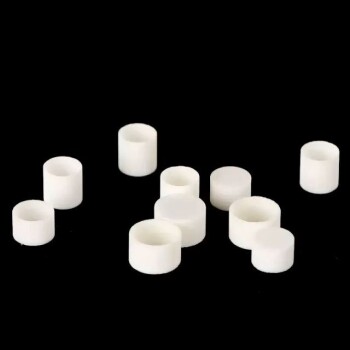
High-quality ceramic or quartz crucibles are selected for their ability to remain chemically inert at temperatures often exceeding 600°C. This ensures that the crucible itself does not react with the biomass, biochar, or chemical activators like KOH, which would otherwise introduce impurities.
Preserving Nitrogen and Micro-Environments
The crucible's ability to maintain a local "micro-hypoxic" environment is essential for specialized outcomes, such as preserving nitrogen within the biomass. This is a critical factor when attempting to form complex chemical structures like Fe-N-C during high-temperature pyrolysis.
Protecting Infrastructure and Analytical Integrity
Safeguarding the Furnace Walls
Crucibles prevent raw materials and molten mask polymers from making direct contact with the expensive quartz or ceramic tubes of the furnace. This prevents material fusion and chemical corrosion, significantly extending the service life of the laboratory equipment.
Containing Corrosive Volatiles
During pyrolysis, samples release various volatiles that can be corrosive to the inner walls of the furnace. The crucible helps manage the release of these gases, maintaining the purity of the environment and preventing the degradation of the furnace infrastructure.
Ensuring Analytical Precision
In applications involving ashing or incineration, crucibles must maintain a constant mass across multiple heating cycles. This allows for high-precision analytical balances to accurately measure trace amounts of ash weight without interference from crucible deformation or mass loss.
Understanding the Trade-offs
Material Selection Risks
Choosing the wrong crucible material can lead to catastrophic failure or contaminated results. For instance, using a low-quality ceramic in a high-temperature environment may result in thermal shock, causing the crucible to crack and spill molten polymers into the furnace.
Heat Transfer Limitations
While crucibles provide protection, they also act as a thermal barrier. If a crucible is too thick or made of material with poor thermal conductivity, it can create a temperature lag, meaning the material inside may not reach the programmed furnace temperature as quickly as expected.
Volatile Management
While crucibles contain solids and liquids, they cannot completely trap all gases unless specifically designed as sealed pressure vessels. In standard pyrolysis, gaseous products must still be managed via the furnace's ventilation or collection system to prevent pressure buildup.
How to Apply This to Your Project
Making the Right Choice for Your Goal
- If your primary focus is maximizing energy density: Prioritize crucibles that allow for tight packing of biomass and mask particles to ensure maximum physical contact and synergistic reaction.
- If your primary focus is chemical purity: Select high-purity ceramic or quartz crucibles that are verified to be inert at your specific target temperature to avoid leaching minerals into the biochar.
- If your primary focus is equipment longevity: Use deep-walled crucibles to ensure that melting mask polymers do not overflow and damage the furnace tube during the initial heating phases.
The high-temperature crucible is a silent but vital partner in the pyrolysis process, transforming a simple heating procedure into a controlled thermochemical synthesis.
Summary Table:
| Function | Key Mechanism | Impact on Research |
|---|---|---|
| Reaction Facilitation | Promotes physical contact between materials | Enhances synergy and heating value of biochar |
| Atmospheric Control | Creates a secondary oxygen-limited seal | Ensures consistent chemical structure and nitrogen retention |
| Infrastructure Safety | Shields furnace walls from molten polymers | Prevents chemical corrosion and extends furnace lifespan |
| Analytical Precision | Maintains mass stability at high temperatures | Enables high-precision measurement of ash and yields |
| Chemical Purity | Inert material composition (Ceramic/Quartz) | Prevents leaching and contamination during activation |
Elevate your thermochemical research with KINTEK’s high-performance laboratory solutions. Whether you are conducting co-pyrolysis or material synthesis, our comprehensive range of tube furnaces, muffle furnaces, and high-purity ceramic crucibles provides the thermal stability and chemical inertness your projects demand. From crushing and milling systems for sample preparation to high-temperature reactors for advanced synthesis, KINTEK specializes in equipment that ensures analytical precision and equipment longevity. Contact us today to find the perfect tools for your agricultural biomass and polymer research!
References
- Yasirah Yusoff, Firas Basim Ismail. A Comparison of Feedstock from Agricultural Biomass and Face Masks for the Production of Biochar through Co-Pyrolysis. DOI: 10.3390/su152216000
This article is also based on technical information from Kintek Solution Knowledge Base .
Related Products
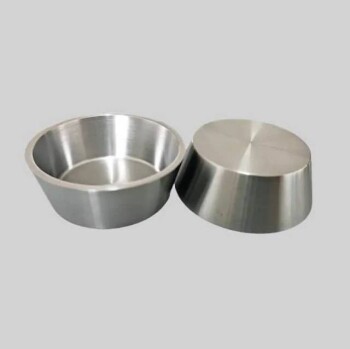
- Electron Beam Evaporation Coating Tungsten Crucible and Molybdenum Crucible for High Temperature Applications
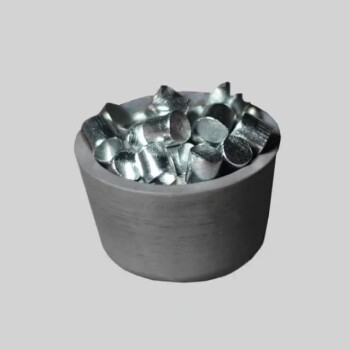
- High Purity Pure Graphite Crucible for Evaporation
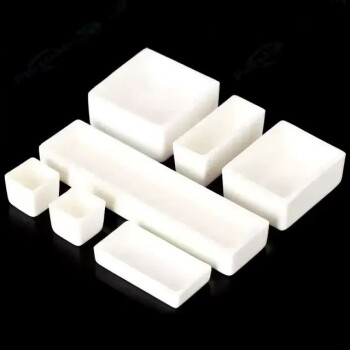
- Arc-Shaped Alumina Ceramic Crucible High Temperature Resistant for Engineering Advanced Fine Ceramics
- Electric Rotary Kiln Small Rotary Furnace Biomass Pyrolysis Plant
- Carbon Graphite Boat -Laboratory Tube Furnace with Cover
People Also Ask
- What is the container that holds the metal source material called in e-beam evaporation? Ensure Purity and Quality in Your Thin-Film Deposition
- What materials are used in electron beam evaporation? Master High-Purity Thin Film Deposition
- What is the voltage of e-beam evaporation? Achieve Precise Thin-Film Deposition
- What are the applications of e-beam evaporation? Achieve High-Purity Coatings for Optics & Electronics
- What is e-beam evaporation? Achieve High-Purity Thin Film Deposition for Your Lab