The primary function of a precision heating device in this synthesis process is to maintain a rigorous thermal environment at exactly 250°C. This specific temperature serves two critical roles: it physically transitions metallic lithium into a molten state and simultaneously provides the thermodynamic energy required to drive a chemical reaction between the molten lithium and nano-Si3N4 powder.
By stabilizing the temperature at 250°C, the heating platform supplies the necessary activation energy to generate fast-ion conducting phases. This in-situ reaction is essential for lowering the surface tension of the melt and determining the final properties of the composite.
The Dual Mechanism of Thermal Activation
To understand the necessity of a precision heating device, one must look at the specific physical and chemical changes that occur at the 250°C threshold.
Inducing Physical Phase Transition
The first immediate effect of the heating platform is the alteration of the physical state of the lithium.
At 250°C, the device forces metallic lithium to undergo a complete phase change. It transitions from a solid precursor into a molten state, creating the fluid medium necessary for the subsequent synthesis steps.
Supplying Activation Energy
Once the lithium is molten, the thermal energy serves a chemical purpose.
The heating device provides the activation energy required to initiate an in-situ chemical reaction. Without this precise thermal input, the inert nano-Si3N4 powder would not react effectively with the molten lithium.
Impact on Material Composition
The application of heat is not merely for melting; it is a synthesis tool that alters the material's fundamental composition and behavior.
Formation of Conductive Phases
The thermal process induces the creation of specific fast-ion conducting phases.
Specifically, the reaction yields Li3N (Lithium Nitride) and LiSi2N3. These compounds are synthesized directly within the melt, a result that is dependent on maintaining the 250°C environment.
Modification of Surface Tension
The introduction of these new phases fundamentally changes how the fluid behaves.
The presence of Li3N and LiSi2N3 significantly reduces the surface tension of the Li-Si-N composite melt. This modification is critical for the wetting behavior and processing capabilities of the final composite material.
The Importance of Precision Control
While the primary reference highlights the effects of heating, using a "precision" device implies specific operational requirements and potential pitfalls if ignored.
Thermal Stability vs. Reaction Inconsistency
The reaction relies on a specific activation energy threshold.
If the heating device fluctuates significantly below 250°C, the activation energy may be insufficient to fully convert the nano-Si3N4, leading to incomplete synthesis. Conversely, uncontrolled temperature spikes could alter the reaction kinetics unpredictably.
Uniformity of the Melt
A precision platform ensures that the phase change is homogeneous across the sample.
Inconsistent heating could result in localized areas where the lithium remains solid or where the surface tension is not uniformly reduced. This would lead to structural weaknesses or inconsistent conductivity in the final composite.
Optimizing Your Synthesis Strategy
To ensure successful synthesis of Li-Si-N composite melts, you must prioritize the stability of your thermal inputs.
- If your primary focus is Chemical Composition: Verify that your heating profile allows sufficient time at 250°C to maximize the yield of Li3N and LiSi2N3 phases.
- If your primary focus is Melt Processing: Monitor the surface tension reduction, as this is the direct physical indicator that the thermal activation and phase formation have occurred correctly.
The heating device is not just a heat source; it is the active driver of the physicochemical changes that define the material's utility.
Summary Table:
| Process Function | Mechanism at 250°C | Outcome for Li-Si-N Composite |
|---|---|---|
| Phase Transition | Melts metallic lithium precursor | Creates the fluid medium for synthesis |
| Chemical Activation | Provides necessary activation energy | Drives in-situ reaction with nano-Si3N4 |
| Phase Formation | Synthesizes Li3N and LiSi2N3 | Generates critical fast-ion conducting phases |
| Physical Modification | Reduces surface tension of the melt | Improves wetting behavior and processing |
Elevate your material synthesis with KINTEK’s high-precision thermal solutions. Whether you are developing next-generation Li-Si-N composites or advanced battery materials, our comprehensive range of high-temperature furnaces, vacuum systems, and battery research tools ensures the rigorous temperature stability your lab requires. From muffle furnaces to specialized electrolytic cells and reactors, we provide the precision needed to control surface tension and ion-conducting phase formation. Enhance your research efficiency—contact KINTEK today for a custom quote!
Related Products
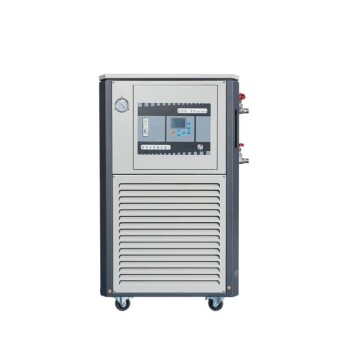
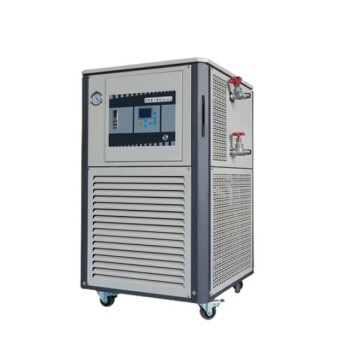
- 10L Heating Chilling Circulator Cooling Water Bath Circulator for High and Low Temperature Constant Temperature Reaction
- 5L Heating Chilling Circulator Cooling Water Bath Circulator for High and Low Temperature Constant Temperature Reaction
- 20L Heating Chilling Circulator Cooling Water Bath Circulator for High and Low Temperature Constant Temperature Reaction
- 100L Heating Chilling Circulator Cooling Water Bath Circulator for High and Low Temperature Constant Temperature Reaction
- 50L Heating Chilling Circulator Cooling Water Bath Circulator for High and Low Temperature Constant Temperature Reaction
People Also Ask
- What is the necessity of a circulating water bath in chlorate production? Optimize Yield & Purity with Precision
- Why is a circulating water chiller required for Prussian Blue nanoparticles? Ensure Stability & Batch Reproducibility
- What is the purpose of a cooling circulation water bath system in electrochemical experiments? Enhance Lab Precision
- What function does a circulating cooling chiller perform during the gas adsorption isotherm testing of nanoporous carbon?
- How does a constant temperature circulator support the leaching reaction of gold scrap? Optimize Gold Recovery Results