Knowledge What is DFT coating thickness? Ensure Quality and Performance with Precise Measurement
Author avatar

Tech Team · Kintek Solution

Updated 6 days ago

What is DFT coating thickness? Ensure Quality and Performance with Precise Measurement


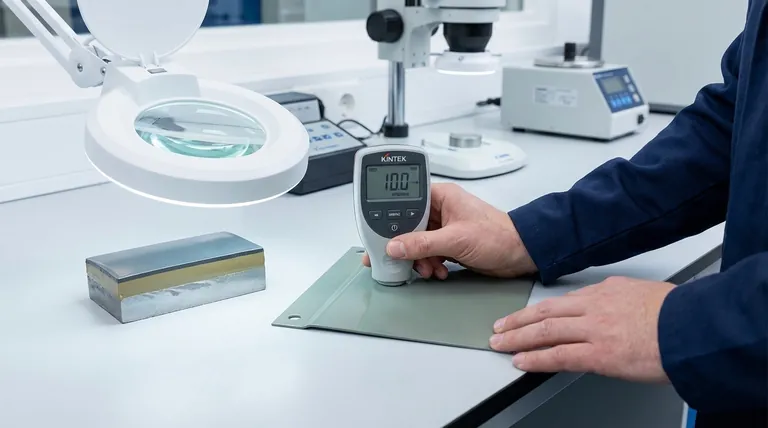
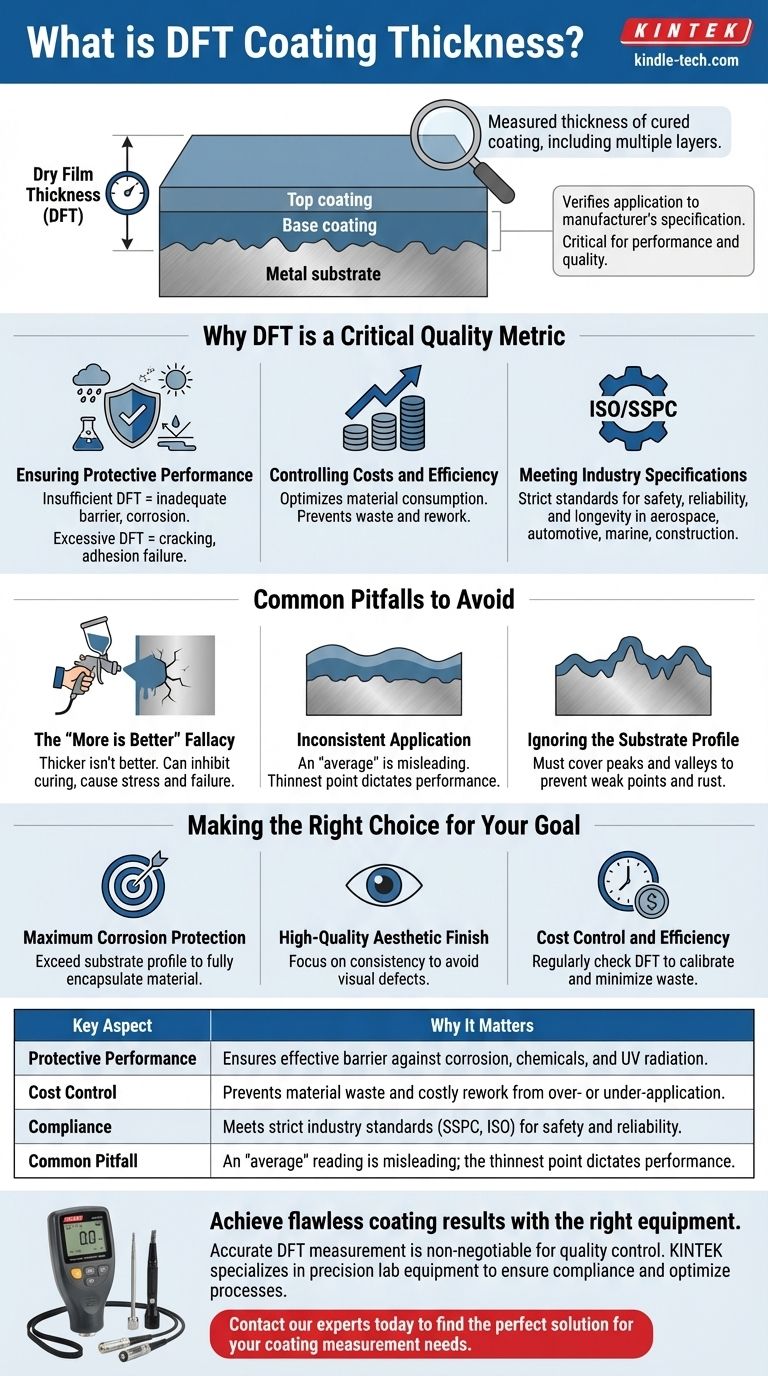
Dry Film Thickness (DFT) is the measured thickness of a coating after it has cured and dried on a substrate. This measurement represents the final, solid protective layer that remains on the surface. Whether the coating is applied in a single pass or multiple layers, DFT gauges measure the total thickness from the substrate to the final top surface.

The core purpose of measuring DFT is to verify that a coating has been applied to the manufacturer's specification. This single metric is the primary indicator of whether the coating will perform as intended, protecting the underlying material and meeting quality standards.
What is DFT coating thickness? Ensure Quality and Performance with Precise Measurement

Why DFT is a Critical Quality Metric

Simply applying a coat of paint or powder is not enough. The thickness of that coat is directly linked to its functional lifespan and performance. An incorrect DFT can lead to premature failure, warranty claims, and significant financial loss.

Ensuring Protective Performance

The primary job of most coatings is to protect the substrate from its environment. An insufficient DFT means there isn't enough material to form an effective barrier against moisture, chemicals, or UV radiation, leading to corrosion or degradation.

Conversely, an excessive DFT can be just as damaging. Overly thick coatings can become brittle, leading to cracking, chipping, or a failure to cure properly, which compromises adhesion.

Controlling Costs and Efficiency

Coating materials represent a significant project cost. Applying a coating thicker than specified is a direct waste of material and money.

Consistent DFT measurement allows for precise control over material consumption and helps optimize the application process, preventing costly rework or over-application.

Meeting Industry Specifications

Many industries, such as aerospace, automotive, marine, and construction, operate under strict standards (like those from SSPC or ISO). These standards explicitly define required DFT ranges to ensure safety, reliability, and longevity. Failure to meet these specifications can result in project rejection.

Common Pitfalls to Avoid

Achieving the correct DFT is not always straightforward. Several common misunderstandings can compromise the quality of the final product.

The "More is Better" Fallacy

It is a frequent mistake to assume a thicker coating will provide better protection. Every coating is engineered to perform within a specific DFT range. Exceeding this range can inhibit proper curing, create internal stresses, and ultimately cause the coating to fail sooner than a correctly applied one.

Inconsistent Application

An "average" DFT reading can be dangerously misleading if the application is uneven. The overall performance of the coating system is dictated by its thinnest point. A single area with insufficient thickness can become the entry point for corrosion that undermines the entire system.

Ignoring the Substrate Profile

For coatings applied over a rough or blasted surface, the DFT is measured from the "peaks" of the surface profile. You must ensure there is enough coating material to adequately cover not just the peaks but also the "valleys" to prevent weak points where rust can begin.

Making the Right Choice for Your Goal

The target DFT is not arbitrary; it is determined by the coating's technical data sheet and the specific demands of the project.

  • If your primary focus is maximum corrosion protection: You must ensure the coating thickness exceeds the substrate's surface profile to fully encapsulate the material and prevent premature rust.
  • If your primary focus is a high-quality aesthetic finish: Consistency across the entire surface is more critical than absolute thickness to avoid visual defects like sagging or "orange peel."
  • If your primary focus is cost control and efficiency: Regularly check DFT during the application process to calibrate equipment and technique, minimizing material waste and eliminating the need for rework.

Ultimately, mastering DFT control is fundamental to guaranteeing the quality, longevity, and cost-effectiveness of any coating project.

Summary Table:

Key Aspect Why It Matters
Protective Performance Ensures effective barrier against corrosion, chemicals, and UV radiation.
Cost Control Prevents material waste and costly rework from over- or under-application.
Compliance Meets strict industry standards (SSPC, ISO) for safety and reliability.
Common Pitfall An 'average' reading is misleading; the thinnest point dictates performance.

Achieve flawless coating results with the right equipment.

Accurate DFT measurement is non-negotiable for quality control. KINTEK specializes in precision lab equipment and consumables, including coating thickness gauges, to help your laboratory ensure compliance, optimize processes, and protect your investments.

Contact our experts today to find the perfect solution for your coating measurement needs.

Visual Guide
What is DFT coating thickness? Ensure Quality and Performance with Precise Measurement Visual Guide

Related Products

People Also Ask

Related Products

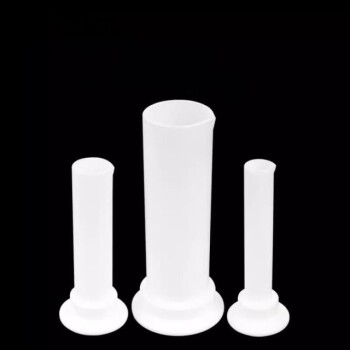
Custom PTFE Teflon Parts Manufacturer for PTFE Measuring Cylinder 10/50/100ml

Custom PTFE Teflon Parts Manufacturer for PTFE Measuring Cylinder 10/50/100ml

PTFE measuring cylinder are a rugged alternative to traditional glass cylinders. They are chemically inert over a wide temperature range (up to 260º C), have excellent corrosion resistance and maintain a low coefficient of friction, ensuring ease of use and cleaning.

Custom PTFE Teflon Parts Manufacturer for PTFE Mesh F4 Sieve

Custom PTFE Teflon Parts Manufacturer for PTFE Mesh F4 Sieve

PTFE mesh sieve is a specialized test sieve designed for particle analysis in various industries, featuring a non-metallic mesh woven from PTFE filament. This synthetic mesh is ideal for applications where metal contamination is a concern . PTFE sieves are crucial for maintaining the integrity of samples in sensitive environments, ensuring accurate and reliable results in particle size distribution analysis.

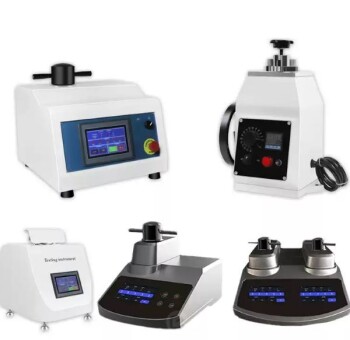
Metallographic Specimen Mounting Machine for Laboratory Materials and Analysis

Metallographic Specimen Mounting Machine for Laboratory Materials and Analysis

Precision metallographic mounting machines for labs—automated, versatile, and efficient. Ideal for sample prep in research and quality control. Contact KINTEK today!

Custom PTFE Teflon Parts Manufacturer for Three-Necked Round Bottom Flask

Custom PTFE Teflon Parts Manufacturer for Three-Necked Round Bottom Flask

PTFE flask, is a versatile laboratory container made from PTFE, offering exceptional chemical resistance, temperature stability, and non-stick properties. Ideal for handling corrosive substances and high-temperature applications, these flasks are essential in various laboratory procedures, including heating, mixing, and storage of chemicals.

Laboratory Vibratory Sieve Shaker Machine Slap Vibrating Sieve

Laboratory Vibratory Sieve Shaker Machine Slap Vibrating Sieve

KT-T200TAP is a slapping and oscillating sieving instrument for laboratory desktop use, with 300 rpm horizontal circular motion and 300 vertical slapping motions to simulate manual sieving to help sample particles pass through better.

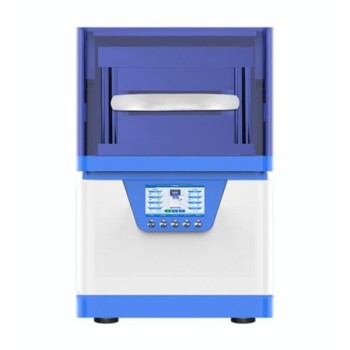
Automatic Laboratory Heat Press Machine

Automatic Laboratory Heat Press Machine

Precision automatic heat press machines for labs—ideal for material testing, composites, and R&D. Customizable, safe, and efficient. Contact KINTEK today!

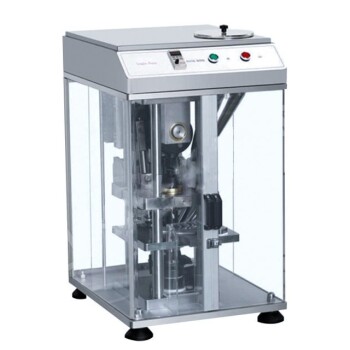
Single Punch Electric Tablet Press Machine Laboratory Powder Tablet Punching TDP Tablet Press

Single Punch Electric Tablet Press Machine Laboratory Powder Tablet Punching TDP Tablet Press

The single-punch electric tablet press is a laboratory-scale tablet press suitable for corporate laboratories in pharmaceutical, chemical, food, metallurgical and other industries.

Vacuum Hot Press Furnace Machine for Lamination and Heating

Vacuum Hot Press Furnace Machine for Lamination and Heating

Experience clean and precise lamination with Vacuum Lamination Press. Perfect for wafer bonding, thin-film transformations, and LCP lamination. Order now!

Custom Machined and Molded PTFE Teflon Parts Manufacturer for Laboratory ITO FTO Conductive Glass Cleaning Flower Basket

Custom Machined and Molded PTFE Teflon Parts Manufacturer for Laboratory ITO FTO Conductive Glass Cleaning Flower Basket

PTFE cleaning racks are mainly made of tetrafluoroethylene. PTFE, known as the "King of Plastics", is a polymer compound made of tetrafluoroethylene.

Infrared Heating Quantitative Flat Plate Press Mold

Infrared Heating Quantitative Flat Plate Press Mold

Discover advanced infrared heating solutions with high-density insulation and precise PID control for uniform thermal performance in various applications.

RRDE rotating disk (ring disk) electrode / compatible with PINE, Japanese ALS, Swiss Metrohm glassy carbon platinum

RRDE rotating disk (ring disk) electrode / compatible with PINE, Japanese ALS, Swiss Metrohm glassy carbon platinum

Elevate your electrochemical research with our Rotating Disk and Ring Electrodes. Corrosion resistant and customizable to your specific needs, with complete specifications.

Platinum Auxiliary Electrode for Laboratory Use

Platinum Auxiliary Electrode for Laboratory Use

Optimize your electrochemical experiments with our Platinum Auxiliary Electrode. Our high-quality, customizable models are safe and durable. Upgrade today!

CVD Diamond Cutting Tool Blanks for Precision Machining

CVD Diamond Cutting Tool Blanks for Precision Machining

CVD Diamond Cutting Tools: Superior Wear Resistance, Low Friction, High Thermal Conductivity for Non-Ferrous Materials, Ceramics, Composites Machining

Cylindrical Resonator MPCVD Machine System Reactor for Microwave Plasma Chemical Vapor Deposition and Lab Diamond Growth

Cylindrical Resonator MPCVD Machine System Reactor for Microwave Plasma Chemical Vapor Deposition and Lab Diamond Growth

Learn about Cylindrical Resonator MPCVD Machine, the microwave plasma chemical vapor deposition method used for growing diamond gemstones and films in the jewelry and semi-conductor industries. Discover its cost-effective advantages over traditional HPHT methods.

Small Vacuum Heat Treat and Tungsten Wire Sintering Furnace

Small Vacuum Heat Treat and Tungsten Wire Sintering Furnace

The small vacuum tungsten wire sintering furnace is a compact experimental vacuum furnace specially designed for universities and scientific research institutes. The furnace features a CNC welded shell and vacuum piping to ensure leak-free operation. Quick-connect electrical connections facilitate relocation and debugging, and the standard electrical control cabinet is safe and convenient to operate.

Molybdenum Disilicide (MoSi2) Thermal Elements Electric Furnace Heating Element

Molybdenum Disilicide (MoSi2) Thermal Elements Electric Furnace Heating Element

Discover the power of Molybdenum Disilicide (MoSi2) Heating Element for high-temperature resistance. Unique oxidation resistance with stable resistance value. Learn more about its benefits now!

Conductive Carbon Fiber Brush for Static Removal and Cleaning

Conductive Carbon Fiber Brush for Static Removal and Cleaning

Discover the benefits of using conductive carbon fiber brush for microbial cultivation and electrochemical testing. Improve your anode's performance.

Precision Wire Saw Laboratory Cutting Machine with 800mm x 800mm Workbench for Diamond Single Wire Circular Small Cutting

Precision Wire Saw Laboratory Cutting Machine with 800mm x 800mm Workbench for Diamond Single Wire Circular Small Cutting

Diamond wire cutting machines are mainly used for precision cutting of ceramics, crystals, glass, metals, rocks, thermoelectric materials, infrared optical materials, composite materials, biomedical materials and other material analysis samples. Especially suitable for precision cutting of ultra-thin plates with thickness up to 0.2mm.

Custom PTFE Teflon Parts Manufacturer for Air Valve Applications

Custom PTFE Teflon Parts Manufacturer for Air Valve Applications

PTFE small air valve for gas-liquid sampling and sampling bag for sample collection.

Versatile PTFE Solutions for Semiconductor and Medical Wafer Processing

Versatile PTFE Solutions for Semiconductor and Medical Wafer Processing

This product is a PTFE (Teflon) wafer cleaning basket designed for critical applications in various industries.


Leave Your Message