Knowledge What is the Chemical Vapour Deposition (CVD) method for growing diamonds? Discover Precision Carbon Synthesis
Author avatar

Tech Team · Kintek Solution

Updated 5 days ago

What is the Chemical Vapour Deposition (CVD) method for growing diamonds? Discover Precision Carbon Synthesis


Chemical Vapour Deposition (CVD) is a sophisticated synthesis technique that grows diamonds from a hydrocarbon gas mixture rather than compressing carbon under extreme physical force.

While traditional methods mimic the crushing pressure of the Earth's mantle, CVD mimics the formation of diamonds in interstellar gas clouds. The process occurs in a vacuum chamber where carbon atoms are freed from gas molecules and settle onto a seed crystal, building a gemstone atom by atom.

The core mechanism of CVD is the transformation of gas into solid matter. By ionizing carbon-rich gases into plasma at low pressures, pure carbon is extracted and deposited onto a diamond wafer, allowing for precise control over the stone's chemical purity and properties.

How the CVD Process Unfolds

The Foundation: The Seed Crystal

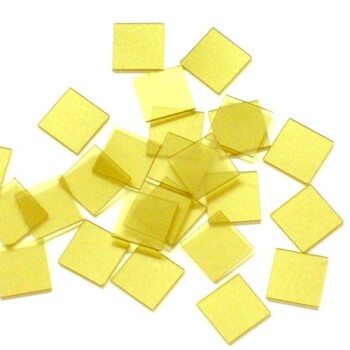
Every CVD diamond begins with a blueprint. A thin slice of a diamond, known as a diamond seed or wafer, is placed inside a sealed vacuum chamber.

This seed is often a synthetic diamond previously created via High Pressure High Temperature (HPHT) methods. It serves as the structural template, dictating the crystal lattice for the new growth.

The Environment: Heat and Gas

Once the seed is secured, the chamber is heated to approximately 800 °C. While hot, this is significantly cooler than the temperatures required for other synthesis methods.

The chamber is then filled with a precise mixture of gases, typically a carbon-rich gas like methane combined with hydrogen.

The Catalyst: Ionization and Plasma

To extract the carbon, the gas mixture must be broken down. High-power microwaves or lasers are introduced into the chamber to ionize the gases.

This energy breaks the molecular bonds of the gases, transforming them into plasma. This is the critical phase where carbon atoms are separated from the hydrogen and methane molecules.

The Growth: Atom-by-Atom Deposition

Once freed, the pure carbon atoms precipitate out of the plasma. They drift down and settle onto the cooler diamond seed.

The carbon adheres to the surface of the seed, crystallizing layer by layer. Over a period ranging from a few days to several weeks, this slow accumulation builds a distinct, often square-shaped diamond crystal.

Understanding the Trade-offs and Nuances

Precision vs. Time

CVD is not an instant process. Because the diamond grows atom by atom, manufacturing a gem-quality stone requires significant time—typically days or weeks.

However, this slow growth rate allows for exceptional control. Manufacturers can manipulate the gas chemistry to control impurities, resulting in diamonds with specific optical or electrical properties.

Low Pressure Advantages

Unlike High Pressure High Temperature (HPHT) methods, CVD operates at low pressures (typically under 27 kPa).

This low-pressure environment offers flexibility. It allows diamonds to be grown over larger areas or on various substrates, which is particularly valuable for industrial applications beyond jewelry, such as semiconductors.

Making the Right Choice for Your Goal

Whether you are evaluating CVD for industrial application or gem selection, understanding the outcome is key.

  • If your primary focus is Chemical Purity: CVD is the superior choice, as the vacuum environment and gas control allow for Type IIa diamonds (almost 100% pure carbon) with minimal nitrogen impurities.
  • If your primary focus is Scalability: The CVD method allows for growth across larger surface areas and flexible substrates, making it ideal for coating tools or creating electronic components.

The CVD method represents a shift from brute force to chemical precision, allowing us to build diamonds from the molecular level up.

Summary Table:

Feature CVD Diamond Growth Details
Mechanism Gas-to-solid transformation (Hydrocarbon plasma)
Temperature Approximately 800 °C
Pressure Low Pressure (< 27 kPa)
Growth Rate Slow, atom-by-atom accumulation (Days to Weeks)
Key Gases Methane (CH₄) and Hydrogen (H₂)
Core Advantage High chemical purity (Type IIa) & precise control

Elevate Your Lab's Synthesis Capabilities with KINTEK

Are you looking to master the precision of Chemical Vapour Deposition? KINTEK specializes in advanced laboratory equipment and consumables designed for high-performance material growth. We offer a comprehensive range of CVD and PECVD systems, alongside high-temperature furnaces and vacuum solutions tailored for both gem-quality diamond synthesis and industrial semiconductor applications.

From diamond seed templates and high-purity gas delivery systems to essential ceramics and crucibles, our portfolio provides the tools you need for atom-by-atom precision. Whether your focus is on chemical purity or industrial scalability, our team is ready to support your research and production goals.

Ready to optimize your diamond growth process? Contact KINTEK today to discuss your project!

Related Products

People Also Ask

Related Products

Multi Heating Zones CVD Tube Furnace Machine Chemical Vapor Deposition Chamber System Equipment

Multi Heating Zones CVD Tube Furnace Machine Chemical Vapor Deposition Chamber System Equipment

KT-CTF14 Multi Heating Zones CVD Furnace - Precise Temperature Control and Gas Flow for Advanced Applications. Max temp up to 1200℃, 4 channels MFC mass flow meter, and 7" TFT touch screen controller.

Graphite Vacuum Furnace High Thermal Conductivity Film Graphitization Furnace

Graphite Vacuum Furnace High Thermal Conductivity Film Graphitization Furnace

The high thermal conductivity film graphitization furnace has uniform temperature, low energy consumption and can operate continuously.

1200℃ Split Tube Furnace with Quartz Tube Laboratory Tubular Furnace

1200℃ Split Tube Furnace with Quartz Tube Laboratory Tubular Furnace

KT-TF12 split tube furnace: high-purity insulation, embedded heating wire coils, and max. 1200C. Widely used for new materials and chemical vapour deposition.

Vacuum Heat Treat Sintering Brazing Furnace

Vacuum Heat Treat Sintering Brazing Furnace

A vacuum brazing furnace is a type of industrial furnace used for brazing, a metalworking process that joins two pieces of metal using a filler metal that melts at a lower temperature than the base metals. Vacuum brazing furnaces are typically used for high-quality applications where a strong, clean joint is required.

Ultra-High Temperature Graphite Vacuum Graphitization Furnace

Ultra-High Temperature Graphite Vacuum Graphitization Furnace

The ultra-high temperature graphitization furnace utilizes medium frequency induction heating in a vacuum or inert gas environment. The induction coil generates an alternating magnetic field, inducing eddy currents in the graphite crucible, which heats up and radiates heat to the workpiece, bringing it to the desired temperature. This furnace is primarily used for graphitization and sintering of carbon materials, carbon fiber materials, and other composite materials.

Vacuum Hot Press Furnace Heated Vacuum Press Machine Tube Furnace

Vacuum Hot Press Furnace Heated Vacuum Press Machine Tube Furnace

Reduce forming pressure & shorten sintering time with Vacuum Tube Hot Press Furnace for high-density, fine-grain materials. Ideal for refractory metals.

Horizontal High Temperature Graphite Vacuum Graphitization Furnace

Horizontal High Temperature Graphite Vacuum Graphitization Furnace

Horizontal Graphitization Furnace: This type of furnace is designed with the heating elements placed horizontally, allowing for uniform heating of the sample. It's well-suited for graphitizing large or bulky samples that require precise temperature control and uniformity.

High Pressure Laboratory Vacuum Tube Furnace Quartz Tubular Furnace

High Pressure Laboratory Vacuum Tube Furnace Quartz Tubular Furnace

KT-PTF High Pressure Tube Furnace: Compact split tube furnace with strong positive pressure resistance. Working temp up to 1100°C and pressure up to 15Mpa. Also works under controller atmosphere or high vacuum.

Laboratory Rapid Thermal Processing (RTP) Quartz Tube Furnace

Laboratory Rapid Thermal Processing (RTP) Quartz Tube Furnace

Get lightning-fast heating with our RTP Rapid Heating Tube Furnace. Designed for precise, high-speed heating and cooling with convenient sliding rail and TFT touch screen controller. Order now for ideal thermal processing!

Vacuum Heat Treat and Sintering Furnace with 9MPa Air Pressure

Vacuum Heat Treat and Sintering Furnace with 9MPa Air Pressure

The air pressure sintering furnace is a high-tech equipment commonly used for the sintering of advanced ceramic materials. It combines vacuum sintering and pressure sintering techniques to achieve high-density and high-strength ceramics.

Molybdenum Vacuum Heat Treat Furnace

Molybdenum Vacuum Heat Treat Furnace

Discover the benefits of a high-configuration molybdenum vacuum furnace with heat shield insulation. Ideal for high-purity, vacuum environments like sapphire crystal growth and heat treatment.

600T Vacuum Induction Hot Press Furnace for Heat Treat and Sintering

600T Vacuum Induction Hot Press Furnace for Heat Treat and Sintering

Discover the 600T Vacuum Induction Hot Press Furnace, designed for high-temperature sintering experiments in vacuum or protected atmospheres. Its precise temperature and pressure control, adjustable working pressure, and advanced safety features make it ideal for nonmetal materials, carbon composites, ceramics, and metal powders.

Mesh belt controlled atmosphere furnace

Mesh belt controlled atmosphere furnace

Discover our KT-MB mesh belt sintering furnace - perfect for high-temperature sintering of electronic components & glass insulators. Available for open air or controlled atmosphere environments.

Vacuum Heat Treat Furnace with Ceramic Fiber Liner

Vacuum Heat Treat Furnace with Ceramic Fiber Liner

Vacuum furnace with polycrystalline ceramic fiber insulation liner for excellent heat insulation and uniform temperature field. Choose from 1200℃ or 1700℃ max. working temperature with high vacuum performance and precise temperature control.

Multi-zone Laboratory Tube Furnace

Multi-zone Laboratory Tube Furnace

Experience precise, efficient thermal testing with our Multi Zone Tube Furnace. Independent heating zones and temperature sensors allow for controlled high-temperature gradient heating fields. Order now for advanced thermal analysis!

1800℃ Muffle Oven Furnace for Laboratory

1800℃ Muffle Oven Furnace for Laboratory

KT-18 muffle furnace with Japan Al2O3 polycrystalline fibe and Silicon Molybdenum heating element, up to 1900℃, PID temperature control and 7" smart touch screen. Compact design, low heat loss, and high energy efficiency. Safety interlock system and versatile functions.

Laboratory Vacuum Tilt Rotary Tube Furnace Rotating Tube Furnace

Laboratory Vacuum Tilt Rotary Tube Furnace Rotating Tube Furnace

Discover the versatility of Laboratory Rotary Furnace: Ideal for calcination, drying, sintering, and high-temperature reactions. Adjustable rotating and tilting functions for optimal heating. Suitable for vacuum and controlled atmosphere environments. Learn more now!

2200 ℃ Tungsten Vacuum Heat Treat and Sintering Furnace

2200 ℃ Tungsten Vacuum Heat Treat and Sintering Furnace

Experience the ultimate refractory metal furnace with our Tungsten vacuum furnace. Capable of reaching 2200℃, perfect for sintering advanced ceramics and refractory metals. Order now for high-quality results.

Graphite Vacuum Furnace IGBT Experimental Graphitization Furnace

Graphite Vacuum Furnace IGBT Experimental Graphitization Furnace

IGBT experimental graphitization furnace, a tailored solution for universities and research institutions, with high heating efficiency, user-friendliness, and precise temperature control.

1200℃ Controlled Atmosphere Furnace Nitrogen Inert Atmosphere Furnace

1200℃ Controlled Atmosphere Furnace Nitrogen Inert Atmosphere Furnace

Discover our KT-12A Pro Controlled atmosphere furnace - high precision, heavy duty vacuum chamber, versatile smart touch screen controller, and excellent temperature uniformity up to 1200C. Ideal for both laboratory and industrial application.


Leave Your Message