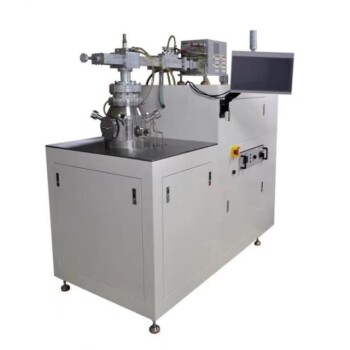
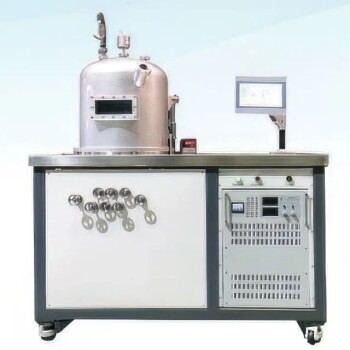
The critical role of Radio Frequency Plasma Enhanced Chemical Vapor Deposition (RF-PECVD) equipment lies in its ability to utilize an internal electric field to control the physical orientation of carbon growth. While it enables gas dissociation at lower temperatures, its primary function in this context is to force carbon atoms to align perpendicularly to the substrate, creating a vertical structure rather than a flat sheet.
The defining characteristic of RF-PECVD is the generation of a plasma sheath containing a directional electric field. This field acts as the essential architectural guide, physically directing carbon atoms to grow vertically, which is the prerequisite for achieving advanced surface properties like superhydrophobicity.
Mechanisms of Vertical Growth
High-Energy Plasma Excitation
The RF-PECVD equipment operates by applying radio frequency power to create a high-energy plasma environment.
This state allows for the effective dissociation of carbon source gases, such as methane.
Crucially, this dissociation occurs at relatively low temperatures. This distinguishes the process from purely thermal methods, preserving the integrity of sensitive substrates while still breaking down the precursor gas.
The Guiding Role of the Plasma Sheath
The most significant contribution of the equipment is the formation of a plasma sheath above the substrate.
Within this sheath, a specific electric field is generated.
This electric field serves as a "guide," exerting a physical influence on the carbon species. It dictates the direction of synthesis, ensuring the material grows vertically rather than spreading laterally.
Functional Consequences of Alignment
Avoiding In-Plane Structures
Without the intervention of the RF-PECVD electric field, carbon atoms naturally tend to form a traditional in-plane flat structure.
The equipment effectively overrides this natural tendency.
By enforcing vertical growth, the equipment transforms the material from a 2D coating into a 3D vertically oriented architecture.
Enabling Superhydrophobic Properties
The shift from flat to vertical geometry is not merely cosmetic; it fundamentally alters surface interactions.
When grown on surfaces like copper, this vertically oriented structure creates specific roughness and morphology.
This resulting architecture imparts superhydrophobic properties to the surface, a capability that traditional flat graphene layers do not possess.
Understanding the Trade-offs
Dependence on Field Stability
The success of VFG preparation is entirely dependent on the stability of the electric field within the plasma sheath.
If the RF power fluctuates or the plasma sheath is inconsistent, the "guiding" mechanism fails.
This results in a loss of vertical alignment, causing the material to revert to disordered or flat structures that lack the desired surface properties.
Complexity of Process Variables
Unlike simple thermal deposition, RF-PECVD introduces complex physical variables related to plasma dynamics.
Operators must strictly control the plasma sheath conditions to maintain the vertical growth vector.
Failure to balance the gas dissociation rate with the electric field strength can lead to poor structural definition.
Making the Right Choice for Your Goal
To maximize the utility of RF-PECVD in your synthesis projects, align your parameter settings with your specific material requirements:
- If your primary focus is surface functionality (e.g., water repellency): Prioritize the stability of the plasma sheath to ensure the electric field is strong enough to enforce strict vertical alignment for superhydrophobicity.
- If your primary focus is substrate protection: Leverage the equipment's ability to dissociate methane via high-energy plasma to keep overall processing temperatures low.
Ultimately, the electric field within the plasma sheath is the non-negotiable physical condition required to transition from standard graphene to Vertically oriented Few-layer Graphene.
Summary Table:
| Feature | Role in VFG Preparation | Benefit |
|---|---|---|
| High-Energy Plasma | Efficiently dissociates carbon source gases (e.g., methane) | Enables processing at lower temperatures |
| Plasma Sheath | Generates a directional internal electric field | Acts as a guide for vertical carbon alignment |
| Vertical Orientation | Overrides natural flat-sheet growth tendency | Creates 3D architecture on the substrate |
| Surface Engineering | Alters morphology and roughness | Imparts advanced superhydrophobic properties |
Elevate Your Nanomaterial Synthesis with KINTEK
Unlock the full potential of your carbon research with KINTEK’s precision RF-PECVD systems. Whether you are developing vertically oriented graphene, advanced thin films, or superhydrophobic coatings, our high-performance CVD equipment provides the stable plasma sheath control necessary for superior architectural guidance.
Why choose KINTEK?
- Comprehensive Range: From PECVD and MPCVD to high-temperature vacuum furnaces and high-pressure reactors.
- Precision Engineering: Expertly designed crushing, milling, and hydraulic press systems for complete material preparation.
- Advanced Lab Solutions: Specialized battery research tools, cooling solutions, and premium ceramics/crucibles.
Ready to transform your laboratory's capabilities? Contact KINTEK today to discuss your project requirements with our technical experts!
References
- Xiaohang Zheng, Wei Cai. In Situ Grown Vertically Oriented Graphene Coating on Copper by Plasma-Enhanced CVD to Form Superhydrophobic Surface and Effectively Protect Corrosion. DOI: 10.3390/nano12183202
This article is also based on technical information from Kintek Solution Knowledge Base .
Related Products
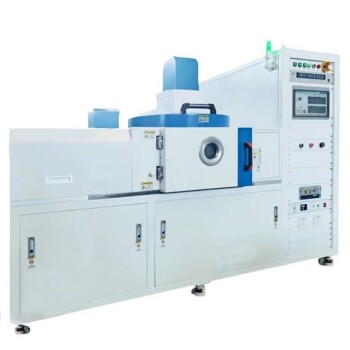
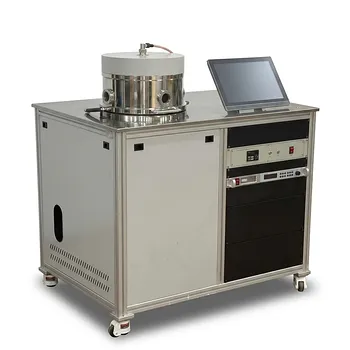
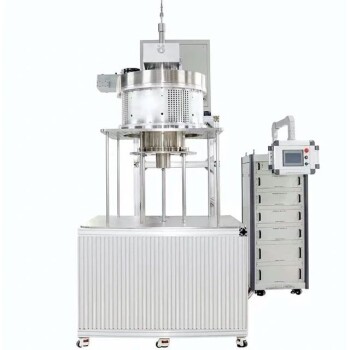
- RF PECVD System Radio Frequency Plasma-Enhanced Chemical Vapor Deposition RF PECVD
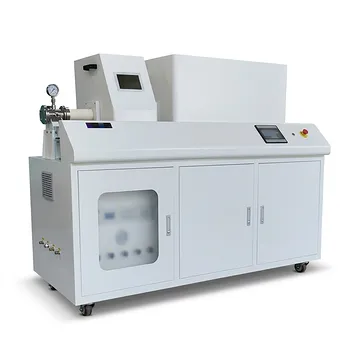
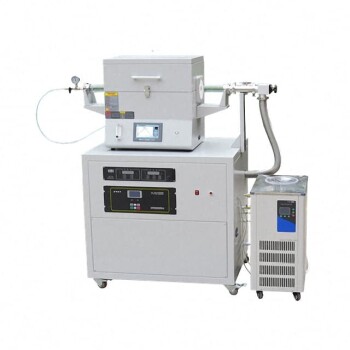
- Inclined Rotary Plasma Enhanced Chemical Vapor Deposition PECVD Equipment Tube Furnace Machine
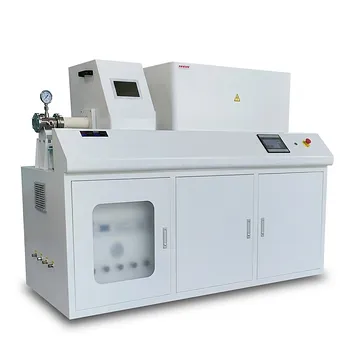
- Inclined Rotary Plasma Enhanced Chemical Vapor Deposition PECVD Equipment Tube Furnace Machine
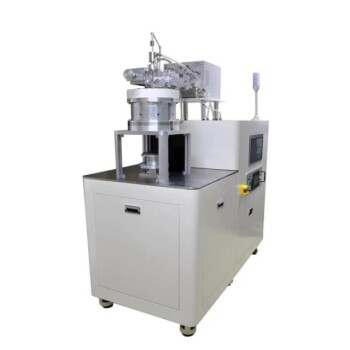
- Chemical Vapor Deposition CVD Equipment System Chamber Slide PECVD Tube Furnace with Liquid Gasifier PECVD Machine
- Electron Beam Evaporation Coating Oxygen-Free Copper Crucible and Evaporation Boat
People Also Ask
- What is plasma enhanced chemical vapour deposition PECVD used for? Enable Low-Temp Thin Films for Electronics & Solar
- What is an example of PECVD? RF-PECVD for High-Quality Thin Film Deposition
- What is plasma enhanced chemical Vapour deposition process used for fabrication of? A Guide to Low-Temperature Thin Films
- What is plasma chemical vapor deposition? A Low-Temperature Thin Film Coating Solution
- What is plasma CVD? Unlock Low-Temperature Thin Film Deposition for Sensitive Materials