Knowledge What is the difference between extrusion and co-extrusion? Engineer Multi-Material Parts
Author avatar

Tech Team · Kintek Solution

Updated 6 days ago

What is the difference between extrusion and co-extrusion? Engineer Multi-Material Parts


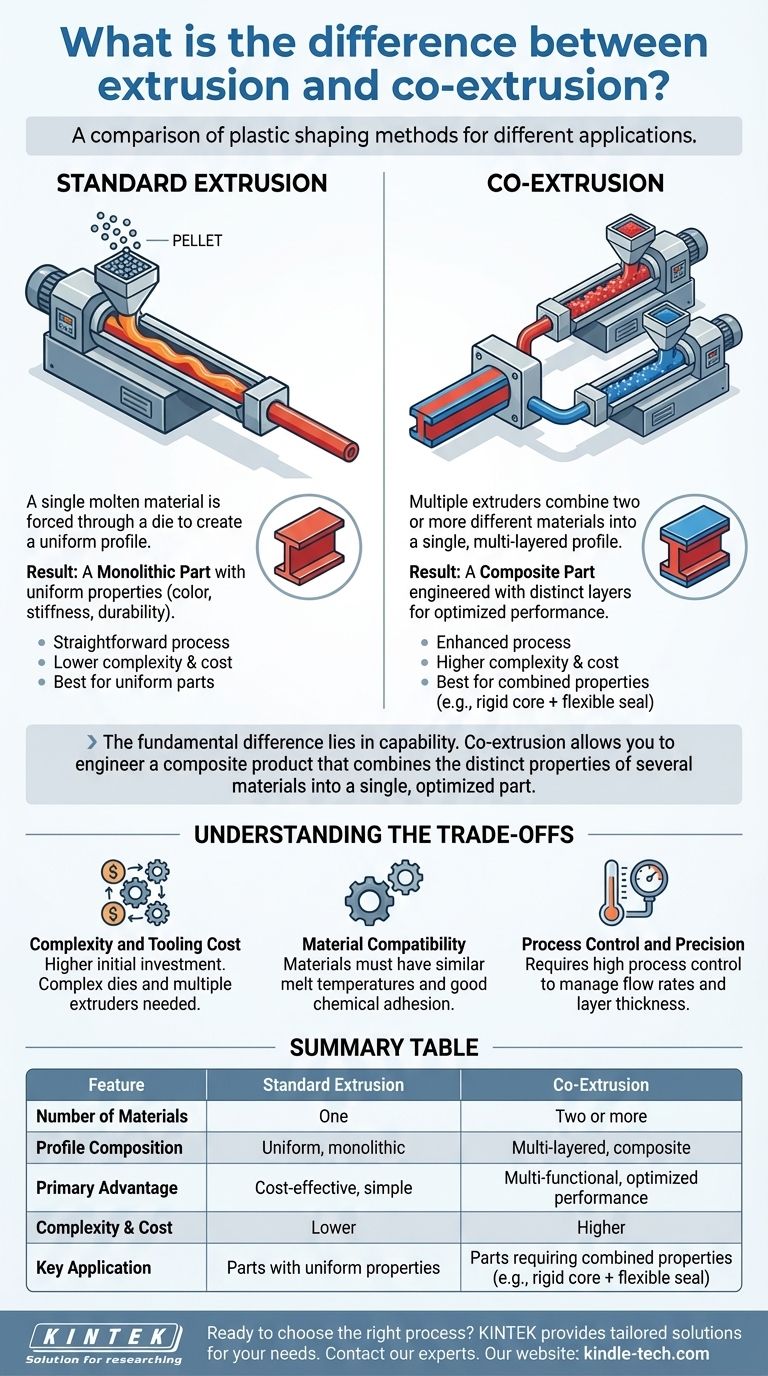
While both are methods for shaping plastic, the essential difference is one of composition. Standard extrusion forces a single molten material through a die to create a uniform profile. In contrast, co-extrusion uses multiple extruders to combine two or more different materials into a single, multi-layered profile before they exit the die.

The fundamental difference lies in capability. While standard extrusion creates a uniform product from one material, co-extrusion allows you to engineer a composite product that combines the distinct properties of several materials—such as rigidity, color, and weather resistance—into a single, optimized part.
What is the difference between extrusion and co-extrusion? Engineer Multi-Material Parts

The Foundation: How Standard Extrusion Works

Standard extrusion is a straightforward, continuous process for creating parts with a fixed cross-sectional profile. It is a foundational technology in plastics manufacturing.

The Core Process: From Pellet to Profile

Solid plastic pellets are fed from a hopper into a long, heated barrel. Inside the barrel, a rotating screw melts the plastic through friction and heat, simultaneously pushing the molten material forward.

This process is analogous to a sophisticated meat grinder or pasta maker. The molten plastic is forced under pressure through a precisely shaped die, emerging as a continuous profile that is then cooled and cut to length.

The Result: A Monolithic Part

The final product from standard extrusion is monolithic, meaning it is composed of a single, uniform material. Its properties—such as color, stiffness, and durability—are consistent throughout the entire part.

The Evolution: How Co-Extrusion Expands Capability

Co-extrusion is not a different process but an enhancement of standard extrusion. It leverages the same core principles but multiplies the capability by introducing more materials.

The Principle of Multi-Material Flow

Co-extrusion uses two or more extruders, each melting and pressurizing a different material. These separate streams of molten plastic are brought together in a special co-extrusion die.

The die is engineered to combine these streams just before they exit, forming a single, cohesive profile where the materials are bonded together but remain as distinct layers.

Key Applications of Combining Materials

This ability to combine materials unlocks significant performance and cost advantages.

For example, a rigid PVC can be used for a product's structural core while a thin outer layer of flexible PVC provides a soft-touch surface or an integrated seal.

Another common use is applying a thin, expensive, UV-resistant "cap stock" over a thicker core made from cheaper or recycled material. This provides excellent weather resistance without the cost of making the entire part from the premium material.

Understanding the Trade-offs

While powerful, co-extrusion introduces complexities that are not present in standard extrusion. Choosing the right process requires understanding these trade-offs.

Complexity and Tooling Cost

Co-extrusion requires multiple extruders and a significantly more complex, and therefore expensive, die. The initial investment and setup costs are higher than for a single-material extrusion line.

Material Compatibility is Crucial

The materials being combined must be compatible. They need to have similar melt temperatures to process correctly in the die, and they must have good chemical adhesion to bond securely to one another. Poor bonding can lead to delamination and product failure.

Process Control and Precision

Managing the flow rates and temperatures of multiple materials simultaneously requires a higher degree of process control and operator expertise. Maintaining consistent layer thickness and adhesion is a critical engineering challenge.

Making the Right Choice for Your Goal

The decision between extrusion and co-extrusion is driven entirely by the functional requirements and cost targets of your final product.

  • If your primary focus is a cost-effective part with uniform properties: Standard extrusion is almost always the correct and most economical choice.
  • If your primary focus is creating a part with multiple functions: Co-extrusion is essential for combining different material properties, like a rigid frame with a flexible hinge or seal.
  • If your primary focus is optimizing cost and durability: Co-extrusion allows you to place expensive, high-performance materials only where they are needed, such as on an exposed surface, while using a lower-cost core.

Ultimately, the choice depends on whether your product's requirements can be met by one material or demand the engineered synergy of several.

Summary Table:

Feature Standard Extrusion Co-Extrusion
Number of Materials One Two or more
Profile Composition Uniform, monolithic Multi-layered, composite
Primary Advantage Cost-effective, simple Multi-functional, optimized performance
Complexity & Cost Lower Higher
Key Application Parts with uniform properties Parts requiring combined properties (e.g., rigid core + flexible seal)

Ready to choose the right process for your plastic profile?

Whether you need a simple, single-material extrusion or a complex multi-layer co-extrusion, KINTEK has the expertise and equipment to bring your project to life. Our team specializes in providing tailored solutions for laboratory and industrial plastic processing needs.

Contact our experts today to discuss your material properties, performance goals, and cost targets. Let us help you engineer the perfect part.

Visual Guide
What is the difference between extrusion and co-extrusion? Engineer Multi-Material Parts Visual Guide

Related Products

People Also Ask

Related Products

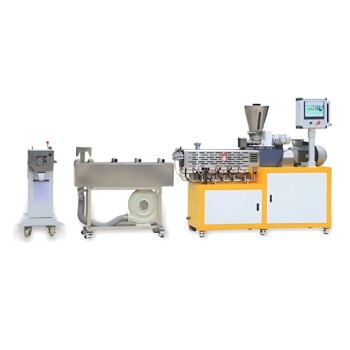
Twin Screw Extruder Plastic Granulation Machine

Twin Screw Extruder Plastic Granulation Machine

Twin screw extruder plastic granulation machine is designed for the mixing and processing experiments of engineering plastics, modified plastics, waste plastics and masterbatches.

HFCVD Machine System Equipment for Drawing Die Nano-Diamond Coating

HFCVD Machine System Equipment for Drawing Die Nano-Diamond Coating

The nano-diamond composite coating drawing die uses cemented carbide (WC-Co) as the substrate, and uses the chemical vapor phase method ( CVD method for short ) to coat the conventional diamond and nano-diamond composite coating on the surface of the inner hole of the mold.

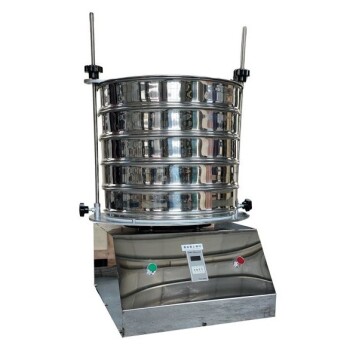
Laboratory Test Sieves and Sieving Machines

Laboratory Test Sieves and Sieving Machines

Precision lab test sieves & sieving machines for accurate particle analysis. Stainless steel, ISO-compliant, 20μm-125mm range. Request specs now!

Anti-Cracking Press Mold for Lab Use

Anti-Cracking Press Mold for Lab Use

The anti-cracking press mold is a specialized equipment designed for molding various shapes and sizes of film using high pressure and electric heating.

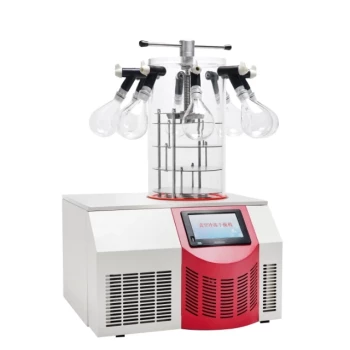
Benchtop Laboratory Vacuum Freeze Dryer

Benchtop Laboratory Vacuum Freeze Dryer

Benchtop laboratory freeze dryer for efficient lyophilization of biological, pharmaceutical, and food samples. Features intuitive touchscreen, high-performance refrigeration, and durable design. Preserve sample integrity—consult now!

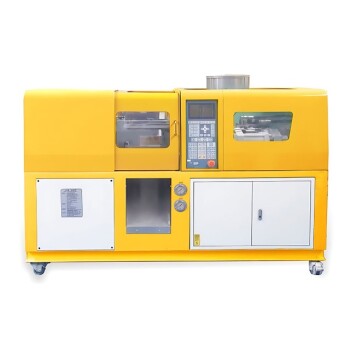
Small Injection Molding Machine for Lab Use

Small Injection Molding Machine for Lab Use

The small injection molding machinehas fast and stable movements; good controllability and repeatability, super energy saving; the product can be automatically dropped and formed; the machine body is low, convenient for feeding, easy to maintain, and no height restrictions on the installation site.

High Energy Vibratory Laboratory Ball Mill Grinding Mill Single Tank Type

High Energy Vibratory Laboratory Ball Mill Grinding Mill Single Tank Type

High-energy vibration ball mill is a small desktop laboratory grinding instrument.It can be ball-milled or mixed with different particle sizes and materials by dry and wet methods.

Laboratory Sterilizer Lab Autoclave Vertical Pressure Steam Sterilizer for Liquid Crystal Display Automatic Type

Laboratory Sterilizer Lab Autoclave Vertical Pressure Steam Sterilizer for Liquid Crystal Display Automatic Type

Liquid crystal display automatic vertical sterilizer is a safe, reliable and automatic control sterilization equipment, which is composed of heating system, microcomputer control system and overheating and overvoltage protection system.

915MHz MPCVD Diamond Machine Microwave Plasma Chemical Vapor Deposition System Reactor

915MHz MPCVD Diamond Machine Microwave Plasma Chemical Vapor Deposition System Reactor

915MHz MPCVD Diamond Machine and its multi-crystal effective growth, the maximum area can reach 8 inches, the maximum effective growth area of single crystal can reach 5 inches. This equipment is mainly used for the production of large-size polycrystalline diamond films, the growth of long single crystal diamonds, the low-temperature growth of high-quality graphene, and other materials that require energy provided by microwave plasma for growth.

Laboratory Single Horizontal Jar Mill

Laboratory Single Horizontal Jar Mill

KT-JM3000 is a mixing and grinding instrument for placing a ball milling tank with a volume of 3000ml or less. It adopts frequency conversion control to realize timing, constant speed, direction change, overload protection and other functions.

Laboratory Ten-Body Horizontal Jar Mill for Lab Use

Laboratory Ten-Body Horizontal Jar Mill for Lab Use

The Ten-body horizontal jar mill is for 10 ball mill pots (3000ml or less). It has frequency conversion control, rubber roller movement, and PE protective cover.

Laboratory Sterilizer Lab Autoclave Pulse Vacuum Lifting Sterilizer

Laboratory Sterilizer Lab Autoclave Pulse Vacuum Lifting Sterilizer

The pulse vacuum lifting sterilizer is a state-of-the-art equipment for efficient and precise sterilization. It uses pulsating vacuum technology, customizable cycles, and a user-friendly design for easy operation and safety.

Benchtop Laboratory Freeze Dryer for Lab Use

Benchtop Laboratory Freeze Dryer for Lab Use

Premium benchtop laboratory freeze dryer for lyophilization, preserving samples with ≤ -60°C cooling. Ideal for pharmaceuticals & research.

High Energy Planetary Ball Mill Machine for Laboratory Horizontal Tank Type

High Energy Planetary Ball Mill Machine for Laboratory Horizontal Tank Type

The KT-P2000H uses a unique Y-axis planetary trajectory, and utilizes the collision, friction and gravity between the sample and the grinding ball.

Precision Machined Zirconia Ceramic Ball for Engineering Advanced Fine Ceramics

Precision Machined Zirconia Ceramic Ball for Engineering Advanced Fine Ceramics

zirconia ceramic ball have the characteristics of high strength, high hardness, PPM wear level, high fracture toughness, good wear resistance, and high specific gravity.

Vacuum Hot Press Furnace Machine for Lamination and Heating

Vacuum Hot Press Furnace Machine for Lamination and Heating

Experience clean and precise lamination with Vacuum Lamination Press. Perfect for wafer bonding, thin-film transformations, and LCP lamination. Order now!

High Energy Planetary Ball Mill Milling Machine for Laboratory

High Energy Planetary Ball Mill Milling Machine for Laboratory

The biggest feature is that the high energy planetary ball mill can not only perform fast and effective grinding, but also has good crushing ability

High-Energy Omnidirectional Planetary Ball Mill Milling Machine for Laboratory

High-Energy Omnidirectional Planetary Ball Mill Milling Machine for Laboratory

The KT-P4000E is a new product derived from the vertical high-energy planetary ball mill with a 360° swivel function. Experience faster, uniform, and smaller sample output results with 4 ≤1000ml ball mill jars.

High-Energy Omnidirectional Planetary Ball Mill Machine for Laboratory

High-Energy Omnidirectional Planetary Ball Mill Machine for Laboratory

The KT-P2000E is a new product derived from the vertical high-energy planetary ball mill with a 360°rotation function. The product not only has the characteristics of the vertical high-energy ball mill, but also has a unique 360°rotation function for the planetary body.

High Energy Planetary Ball Mill Milling Machine for Laboratory

High Energy Planetary Ball Mill Milling Machine for Laboratory

Experience fast and effective sample processing with the F-P2000 high-energy planetary ball mill. This versatile equipment offers precise control and excellent grinding capabilities. Perfect for laboratories, it features multiple grinding bowls for simultaneous testing and high output. Achieve optimal results with its ergonomic design, compact structure, and advanced features. Ideal for a wide range of materials, it ensures consistent particle size reduction and low maintenance.


Leave Your Message