The fundamental difference lies in the medium used to deliver carbon to the steel's surface. Liquid carburizing immerses parts in a molten salt bath, while gas carburizing places them in a furnace with a controlled, carbon-rich atmosphere. This distinction in the carbon source dictates nearly every other aspect of the process, from precision and safety to environmental impact and cost.
While both methods achieve the goal of creating a hard, wear-resistant surface on low-carbon steel, gas carburizing has become the modern industry standard due to its superior process control and significantly safer operation. Liquid carburizing is an older, faster method now largely superseded by its significant environmental and operator hazards.
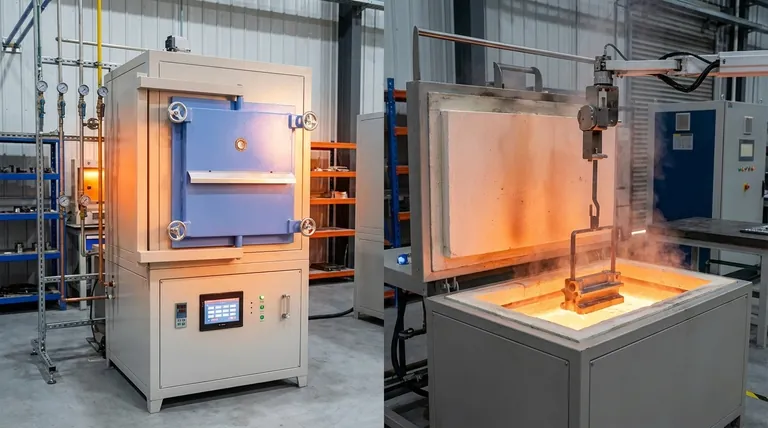
The Core Mechanism: How Carbon Enters the Steel
The goal of any carburizing process is to heat a low-carbon steel part in a carbon-rich environment, allowing carbon atoms to diffuse into the surface. This creates a high-carbon outer "case" that becomes extremely hard after quenching, while the low-carbon "core" remains tough and ductile.
Liquid Carburizing: The Salt Bath Method
In liquid carburizing, parts are submerged in a molten bath of salts, typically containing sodium cyanide (NaCN).
At high temperatures (around 850-950°C), these cyanide compounds break down and react, liberating carbon directly at the surface of the steel for diffusion.
Gas Carburizing: The Atmospheric Method
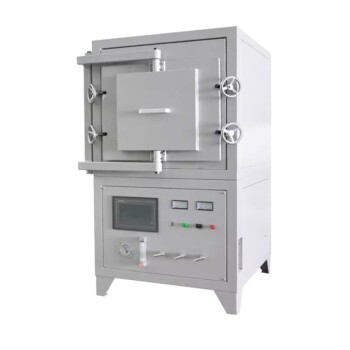
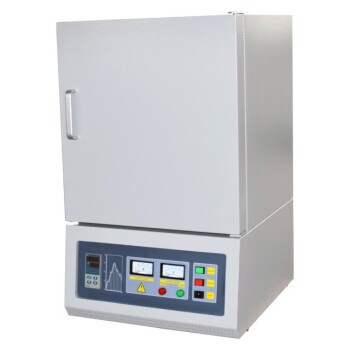
Gas carburizing heats parts in a sealed furnace filled with a carefully controlled atmosphere. This atmosphere usually consists of a carrier gas (endothermic gas) enriched with a carbon-bearing gas like natural gas or propane.
At process temperatures (typically 900-980°C), these gases react to produce carbon monoxide (CO), which is the primary source of carbon that diffuses into the steel.
Comparing Key Process Parameters
The choice between a liquid or gas medium has direct consequences on the final product and the efficiency of the manufacturing operation.
Case Depth Control
Gas carburizing offers excellent and highly precise control. Sophisticated sensors monitor the furnace atmosphere's "carbon potential," allowing for very consistent and repeatable case depths, which is critical for high-performance components like gears.
Liquid carburizing provides less precise control. The carbon concentration is largely fixed by the salt bath's chemistry. Control is primarily managed by adjusting only the time and temperature, making it difficult to achieve the tight tolerances required by many modern applications.
Part Complexity and Geometry
Gas carburizing is superior for complex shapes. The gaseous atmosphere flows freely and ensures uniform carbon delivery to all surfaces, including intricate features and blind holes.
Advanced methods like Low Pressure Carburizing (LPC), which uses a gas like acetylene in a vacuum, excel at this, eliminating the risk of oxidation and providing exceptional uniformity.
Liquid carburizing is effective for many shapes, but can suffer from "drag-out," where molten salt is trapped in small features. This requires extensive post-process cleaning to prevent corrosion and remove toxic residue.
Understanding the Trade-offs: Safety and Environmental Impact
This is the most significant differentiator between the two processes and the primary reason for the shift away from liquid carburizing in modern manufacturing.
The Hazard of Liquid Carburizing
The cyanide salts used in liquid carburizing are extremely toxic and environmentally hazardous.
Handling these materials poses a significant risk to operators. The disposal of spent salt and contaminated cleaning water is heavily regulated and expensive, representing a major environmental liability.
The Profile of Gas Carburizing
Gas carburizing is inherently safer, as it avoids highly toxic chemicals. The primary hazards are related to handling flammable gases and the high temperatures common to all heat treatment.
Modern variations are even cleaner. As noted in vacuum furnace processes, Low-Pressure Carburizing (LPC) using acetylene (C2H2) is an environmentally friendly alternative that produces no CO2 emissions, making it a much more sustainable technology.
Making the Right Choice for Your Application
Selecting the correct process requires aligning the method's capabilities with your component's performance requirements and your organization's operational standards.
- If your primary focus is precision, repeatability, and safety: Gas carburizing is the definitive choice for its superior process control and significantly lower environmental and operator risk.
- If your primary focus is high-performance parts with complex geometries: Low-Pressure Carburizing (LPC), a modern form of gas carburizing, provides the best uniformity and cleanliness for demanding applications.
- If your primary focus is rapid processing (and you can manage the severe risks): Liquid carburizing offers faster cycle times, but its use has been almost entirely phased out due to overwhelming safety and environmental regulations.
Ultimately, selecting the right carburizing method is a strategic decision that balances performance requirements with modern standards for safety and environmental responsibility.
Summary Table:
| Feature | Liquid Carburizing | Gas Carburizing |
|---|---|---|
| Carbon Source | Molten cyanide salts | Controlled carbon-rich gas atmosphere |
| Case Depth Control | Less precise | Highly precise and repeatable |
| Uniformity on Complex Parts | Good, but risk of salt trapping | Excellent, especially with Low-Pressure Carburizing (LPC) |
| Safety & Environmental Impact | High hazard (toxic cyanide salts) | Safer; LPC is an environmentally friendly alternative |
| Modern Industry Standard | Largely superseded | Yes, due to superior control and safety |
Need the right heat treatment solution for your lab or production line?
KINTEK specializes in advanced laboratory and industrial equipment. Whether you're researching carburizing processes or scaling up production, our expertise in precision furnaces and thermal processing technology can help you achieve superior results with safety and efficiency.
Contact our experts today to discuss how KINTEK's solutions can meet your specific laboratory and material processing needs.
Visual Guide

Related Products
- 1400℃ Controlled Atmosphere Furnace with Nitrogen and Inert Atmosphere
- 1200℃ Controlled Atmosphere Furnace Nitrogen Inert Atmosphere Furnace
- 1700℃ Controlled Atmosphere Furnace Nitrogen Inert Atmosphere Furnace
- Controlled Nitrogen Inert Hydrogen Atmosphere Furnace
- Vertical Laboratory Quartz Tube Furnace Tubular Furnace
People Also Ask
- What is the role of nitrogen in annealing process? Creating a Controlled, Protective Atmosphere
- What are the inert gases in a heat treatment furnace? Choose the Right Shield for Your Metal
- What is an example of an inert atmosphere? Discover the Best Gas for Your Process
- What are the functions of nitrogen (N2) in controlled furnace atmospheres? Achieve Superior Heat Treatment Results
- What is nitrogen atmosphere for annealing? Achieve Oxidation-Free Heat Treatment