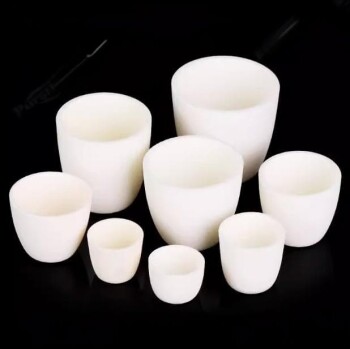
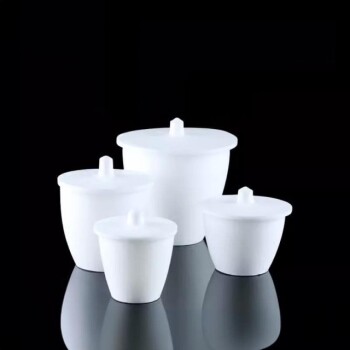
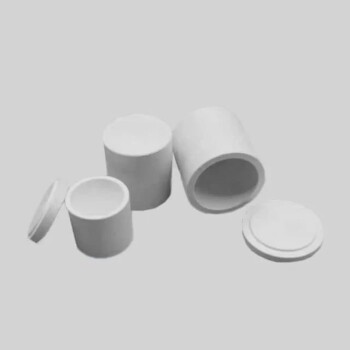
A ceramic crucible with a borosilicate glaze acts as a vital protective barrier during the synthesis of SrFeO3 nanocrystals. This specialized coating effectively resists the aggressive chemical environment created by the molten salt method, specifically neutralizing the corrosive impact of molten nitrates and sodium peroxide (Na2O2).
The borosilicate glaze functions as an inert shield, preventing the crucible material from reacting with the molten mixture. This ensures the chemical stability of the system and guarantees the high purity necessary for the final SrFeO3 product.
The Mechanics of Chemical Protection
The synthesis of SrFeO3 nanocrystals via the molten salt method creates a harsh chemical environment. To navigate this, the reaction vessel must provide more than just thermal resistance; it requires specific chemical defenses.
Resisting Corrosive Agents
The reaction relies on molten nitrates and sodium peroxide (Na2O2), both of which are highly corrosive agents. A standard ceramic surface would likely degrade under this chemical attack.
The Role of the Glaze
The borosilicate glaze provides a non-reactive surface that withstands these specific oxidizers. It acts as a physical boundary, preventing the corrosive melt from coming into direct contact with the underlying porous ceramic body.
Preventing Side Reactions
Without this protective layer, the crucible material would likely undergo side reactions with the synthesis components. The glaze eliminates this variable, ensuring that the chemical reactions occur only between the intended precursors.
Ensuring Product Quality
The ultimate goal of using a borosilicate-glazed crucible is to protect the integrity of the nanocrystals being synthesized.
Maintaining High Purity
Side reactions between the vessel and the melt introduce contaminants. By blocking these interactions, the glaze ensures the high purity of the final SrFeO3 product.
Stabilizing the System
A stable molten salt system is required for uniform crystal growth. The glaze prevents the degradation of the crucible walls, which maintains a consistent chemical environment throughout the high-temperature process.
The Risks of Inadequate Containment
While the borosilicate glaze is effective, understanding why it is necessary highlights the potential pitfalls of the process.
Consequences of Corrosion
If the crucible lacks this specific corrosion-resistant glaze, the strong corrosive attack of the Na2O2 and nitrates will compromise the vessel. This can lead to structural failure of the crucible during heating.
Compromised Reaction Stoichiometry
When the vessel participates in the reaction, it alters the chemical balance of the melt. This loss of stability can prevent the formation of the desired SrFeO3 phase or degrade the quality of the nanocrystals.
Making the Right Choice for Your Synthesis
Selecting the correct containment vessel is as critical as selecting the correct chemical precursors. Ensure your equipment matches the aggressiveness of your reactants.
- If your primary focus is Product Purity: Utilize a crucible with a verified borosilicate glaze to prevent leaching and contamination from the vessel walls.
- If your primary focus is Process Stability: confirm the glaze is intact and rated for the specific oxidizers (Na2O2) used in your molten salt system to avoid unexpected side reactions.
By prioritizing chemical resistance in your vessel selection, you ensure that the synthesis environment remains controlled, predictable, and capable of yielding high-quality nanocrystals.
Summary Table:
| Feature | Function in Molten Salt Synthesis |
|---|---|
| Coating Type | Borosilicate Glaze |
| Primary Role | Chemical barrier against aggressive oxidizers (Na2O2, nitrates) |
| Material Integrity | Prevents crucible degradation and structural failure |
| Product Impact | Guarantees high purity by eliminating side reactions |
| System Benefit | Maintains stable stoichiometry for uniform nanocrystal growth |
Elevate Your Material Synthesis with KINTEK Precision
Don't let crucible contamination compromise your research. KINTEK specializes in high-performance laboratory equipment designed for the most demanding chemical environments. Whether you are synthesizing advanced nanocrystals or performing complex metallurgy, our range of ceramics, crucibles (including specialized glazed options), and high-temperature furnaces provides the stability and purity you require.
From molten salt synthesis to high-pressure reactor applications, we offer the essential tools—including muffle and vacuum furnaces, hydraulic presses, and premium consumables—to ensure your results are consistent and contamination-free.
Ready to optimize your lab's performance? Contact KINTEK today to discuss your specific synthesis needs with our technical experts!
References
- Jun Yang, Yuanming Zhang. Molten salt synthesis of SrFeO3 nanocrystals. DOI: 10.2109/jcersj2.119.736
This article is also based on technical information from Kintek Solution Knowledge Base .
Related Products
- Boron Nitride (BN) Crucible for Phosphorous Powder Sintered
- Alumina Al2O3 Ceramic Crucible Semicircle Boat with Lid for Engineering Advanced Fine Ceramics
- Arc-Shaped Alumina Ceramic Crucible High Temperature Resistant for Engineering Advanced Fine Ceramics
- Engineering Advanced Fine Ceramics Alumina Al2O3 Crucible With Lid Cylindrical Laboratory Crucible
- Engineering Advanced Fine Alumina Al2O3 Ceramic Crucible for Laboratory Muffle Furnace
People Also Ask
- Why use Boron Nitride (BN) crucibles in metal infiltration? Ensure sample purity and non-wetting performance.
- Why are Boron Nitride (BN) or Alumina crucibles preferred for Na-flux GaN growth? Optimize Your Crystal Yield
- What is the necessity of using a ceramic crucible as a carrier during BN synthesis? Ensure High-Purity Results
- How much heat can a ceramic crucible take? Find the Right Crucible for Your High-Temp Process
- What is the necessity of using ceramic crucibles in TGA for TClPhMA? Ensure Accurate Thermal Data Integrity