A laboratory ultrasonic cleaner functions as a critical decontamination bridge between mechanical processing and advanced surface modification. By utilizing the cavitation effect within a liquid medium—typically deionized water, anhydrous ethanol, or acetone—it aggressively dislodges abrasive particles, smear layers, and microscopic contaminants that manual cleaning cannot reach.
The ultrasonic cleaner is not merely a washing station; it is a prerequisite for chemical reactivity. It exposes the true titanium substrate, ensuring that subsequent treatments interact directly with the metal rather than with surface debris.
The Mechanics of Ultrasonic Decontamination
Utilizing the Cavitation Effect
The core mechanism involves high-frequency vibrations transmitted through the solvent. These vibrations create rapid pressure changes that form microscopic bubbles.
When these bubbles implode near the titanium surface, they generate intense energy. This energy physically blasts away contaminants adhering to the metal.
Removing Mechanical Residue
Following sandblasting or mechanical machining, the titanium surface is often coated in a smear layer. This layer consists of deformed metal, abrasive particles, and grinding debris.
Ultrasonic cleaning is the only reliable method to strip this layer without altering the underlying geometry of the sample.
Addressing Chemical Contaminants
Beyond physical debris, the process targets chemical residues. This includes residual cutting fluids and grease left over from the manufacturing process.
Solvents like acetone are particularly effective in this stage for dissolving organic contaminants that could act as a barrier.
Critical Role in Surface Treatment Workflows
Enabling Plasma Interaction
According to your primary workflow, the ultimate goal is often plasma treatment or thin-film deposition. For this to succeed, active ions must interact directly with the titanium substrate.
If the surface is not ultrasonically cleaned, impurities block these ions. This leads to poor adhesion and failures in the deposition process.
Facilitating Oxide Layer Nucleation
For experiments involving oxidation, surface purity is paramount. Residual dust or fluids can interfere with nucleation sites.
A deep clean ensures that the oxide layer grows uniformly and adheres correctly to the specimen surface.
Common Pitfalls to Avoid
Incorrect Solvent Selection
Not all contaminants dissolve in the same medium. While deionized water is excellent for removing salts and loose particles, it may fail against heavy grease.
You must match the solvent (e.g., using anhydrous ethanol or acetone) to the specific type of residue left by your mechanical process.
Underestimating the Smear Layer
A visual inspection is often insufficient. The smear layer can be microscopic but still substantial enough to insulate the titanium from plasma.
Relying solely on rinsing or manual wiping will likely result in inconsistent experimental data during the thin-film deposition phase.
Making the Right Choice for Your Goal
To maximize the effectiveness of your surface treatment, tailor your cleaning approach to your specific endpoint:
- If your primary focus is Plasma Treatment: Prioritize the removal of abrasive particles and smear layers using deionized water or anhydrous ethanol to allow for direct ion interaction.
- If your primary focus is Oxide Layer Growth: Ensure you use a solvent like acetone to strip away all grease and cutting fluids that would inhibit nucleation.
By strictly adhering to this decontamination step, you ensure that your results reflect the properties of the titanium, not the pollutants on its surface.
Summary Table:
| Stage of Workflow | Cleaning Objective | Recommended Solvent |
|---|---|---|
| Post-Machining | Remove smear layers & abrasive debris | Deionized Water / Ethanol |
| Pre-Deposition | Eliminate organic grease & cutting fluids | Acetone |
| Surface Activation | Expose substrate for plasma interaction | Deionized Water |
| Oxidation Prep | Ensure uniform nucleation sites | Anhydrous Ethanol |
Elevate Your Surface Treatment Precision with KINTEK
Don't let microscopic contaminants compromise your research integrity. KINTEK specializes in high-performance laboratory equipment designed for the most demanding material science applications. Whether you are preparing titanium substrates for plasma interaction or growing precise oxide layers, our advanced ultrasonic cleaners ensure a pristine surface every time.
Beyond cleaning, KINTEK offers a comprehensive range of solutions for your workflow, including:
- High-Temperature Furnaces (Muffle, Vacuum, CVD/PECVD) for advanced thermal processing.
- Crushing & Milling Systems for specimen preparation.
- Hydraulic Presses & High-Pressure Reactors for material synthesis.
- Cooling Solutions & Lab Consumables to support your daily operations.
Ready to achieve superior adhesion and experimental consistency? Contact our technical experts today to find the perfect cleaning and thermal processing solutions for your laboratory!
References
- Aljomar José Vechiato Filho, Valentim Adelino Ricardo Barão. Effect of nonthermal plasma treatment on surface chemistry of commercially-pure titanium and shear bond strength to autopolymerizing acrylic resin. DOI: 10.1016/j.msec.2015.11.008
This article is also based on technical information from Kintek Solution Knowledge Base .
Related Products
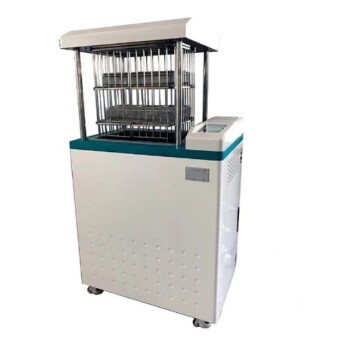
- Laboratory Sterilizer Lab Autoclave Pulse Vacuum Lifting Sterilizer
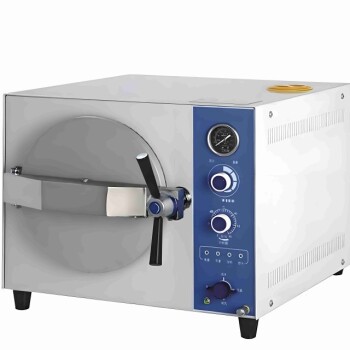
- Portable High Pressure Laboratory Autoclave Steam Sterilizer for Lab Use
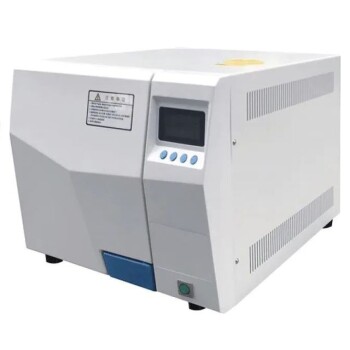
- Laboratory Sterilizer Lab Autoclave Pulsating Vacuum Desktop Steam Sterilizer
- Desktop Fast Laboratory Autoclave Sterilizer 35L 50L 90L for Lab Use
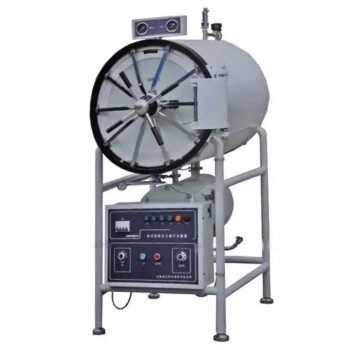
- Laboratory High Pressure Horizontal Autoclave Steam Sterilizer for Lab Use
People Also Ask
- What is the primary function of a laboratory sterilization autoclave? Master the Physics of Wet Heat Sterilization
- What precautions should be taken during autoclave in laboratory? A Complete Safety Guide to Prevent Burns and Explosions
- What extreme conditions does a laboratory autoclave simulate? Testing Wear Resistance of Nuclear Fuel Cladding
- What role does a laboratory autoclave play in HEA corrosion research? Key to Validating Advanced Reactor Materials
- Why is a laboratory autoclave necessary for Postgate Medium B (PMB)? Ensure Pure SRB Cultures & Accurate MIC Research