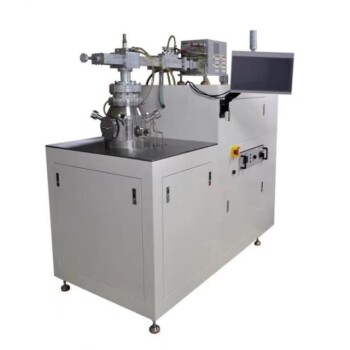
The primary function of a plasma reactor system in contact non-thermal plasma (CNP) synthesis is to create a high-energy physicochemical environment that directly reduces silver ions into metallic nanoparticles. By initiating an electrical discharge at the interface between the gas and liquid phases, the system drives the synthesis process physically rather than chemically.
The reactor acts as a "green" engine for synthesis, utilizing streamer discharges to generate ultraviolet radiation and charged particles. This energetic flux forces the reduction of silver ions in the liquid phase without the need for traditional, often toxic, chemical reducing agents.
Generating the Physicochemical Environment
Creating the Potential Difference
The core mechanism relies on establishing a high-voltage potential difference.
This difference is maintained between a gas-phase electrode and the surface of the liquid solution containing the silver precursor.
Initiating Streamer Discharge
This electrode configuration triggers a specific type of electrical activity known as a streamer discharge.
Crucially, this discharge occurs precisely at the gas-liquid interface, concentrating energy where the reaction is required.
Driving the Reduction Process
Induced Photolysis and UV Radiation
The plasma discharge generates significant ultraviolet radiation.
This radiation induces photolysis reactions within the solution, providing the optical energy needed to destabilize the silver precursor.
Charged Particle Flux
Simultaneously, the reactor bombards the liquid surface with a flux of charged particles.
These particles penetrate the liquid phase, acting as physical catalysts for the chemical transformation.
Converting Ions to Nanoparticles
The combination of UV radiation, photolysis, and particle flux creates a powerful reducing environment.
This drives the chemical reduction of silver ions (Ag+) into solid metallic silver nanoparticles (Ag0).
Operational Considerations and Trade-offs
Equipment Complexity vs. Chemical Simplicity
While this method eliminates the need for complex chemical mixtures, it introduces hardware complexity.
Success depends entirely on the precise configuration of the reactor to maintain a stable gas-liquid interface.
Energy Dependence
The process shifts the input requirement from chemical reagents to electrical energy.
Users must ensure the power supply is sufficient to sustain the high-energy streamer discharge throughout the synthesis duration.
Making the Right Choice for Your Synthesis Goals
To determine if a plasma reactor system is the correct approach for your project, consider the following specific applications:
- If your primary focus is Green Chemistry: This system is ideal as it eliminates the use of strong, potentially toxic chemical reducing agents.
- If your primary focus is Reaction Control: This method allows you to modulate the synthesis rate via electrical parameters rather than chemical concentration.
The CNP plasma reactor system effectively replaces chemical reduction with physical energy, offering a cleaner pathway for nanoparticle production.
Summary Table:
| Feature | Function in CNP Synthesis |
|---|---|
| Energy Source | High-voltage streamer discharge at the gas-liquid interface |
| Reduction Mechanism | UV radiation-induced photolysis and charged particle flux |
| Reducing Agent | None (Physical reduction replaces chemical reagents) |
| Key Outcome | Conversion of Ag+ ions to metallic Ag0 nanoparticles |
| Advantage | Eco-friendly "Green Chemistry" with precise electrical control |
Advance Your Nanomaterial Research with KINTEK
Are you looking to transition to greener, more precise nanoparticle synthesis? KINTEK specializes in high-performance laboratory equipment designed for advanced material science. Whether you require specialized plasma reactor environments, high-temperature furnaces (CVD, PECVD, MPCVD), or high-pressure reactors, we provide the tools necessary to control your synthesis at the molecular level.
From battery research tools to crucibles and ceramic consumables, KINTEK is your partner in achieving repeatable, high-purity results. Contact our specialists today to find the perfect equipment solution for your lab's unique requirements!
References
- Маргарита Скіба, Victoria Vorobyova. The Production of Silver Nanoparticles and Their Effect on Sulfate Reducing Bacteria Under Steel Microbial Corrosion. DOI: 10.23939/chcht14.01.070
This article is also based on technical information from Kintek Solution Knowledge Base .
Related Products
- Microwave Plasma Chemical Vapor Deposition MPCVD Machine System Reactor for Lab and Diamond Growth
- 915MHz MPCVD Diamond Machine Microwave Plasma Chemical Vapor Deposition System Reactor
- Cylindrical Resonator MPCVD Machine System Reactor for Microwave Plasma Chemical Vapor Deposition and Lab Diamond Growth
- Chemical Vapor Deposition CVD Equipment System Chamber Slide PECVD Tube Furnace with Liquid Gasifier PECVD Machine
- RF PECVD System Radio Frequency Plasma-Enhanced Chemical Vapor Deposition RF PECVD
People Also Ask
- How does a microwave plasma reactor facilitate the synthesis of diamond? Master MPCVD with Precision Technology
- What are the advantages of a Microwave Plasma CVD reactor for MCD/NCD coatings? Precision Multilayer Diamond Engineering
- How do vacuum pumps and valves collaborate in MPCVD? Achieve Precise Pressure Control for Superior CNT Synthesis
- How does MPCVD work? A Guide to Low-Temperature, High-Quality Film Deposition
- What is microwave plasma chemical vapor deposition? A Guide to High-Purity Diamond Film Growth