Knowledge What is the function of high-temperature heating and stirring equipment in the TIPS process for ECTFE? (Expert Guide)
Author avatar

Tech Team · Kintek Solution

Updated 1 day ago

What is the function of high-temperature heating and stirring equipment in the TIPS process for ECTFE? (Expert Guide)


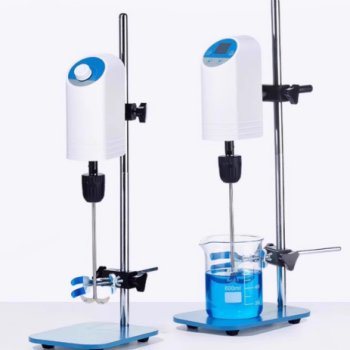
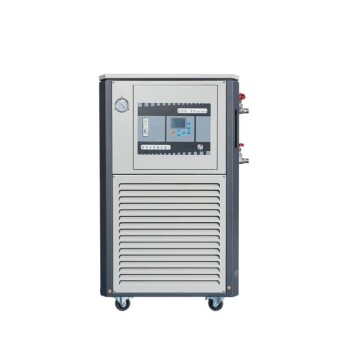
The primary function of high-temperature heating and stirring equipment in the TIPS process is to render Ethylene Chlorotrifluoroethylene (ECTFE) soluble, as it is naturally insoluble in organic solvents at room temperature. This equipment generates precise thermal energy between 180°C and 250°C to overcome the polymer's strong crystalline forces. Simultaneously, the stirring mechanism blends the molten polymer with specific diluents to create a homogeneous casting solution.

ECTFE is a high-melting-point polymer with a robust crystalline structure that resists solvation under standard conditions. High-temperature processing is the non-negotiable prerequisite to transition this solid polymer into a uniform liquid phase capable of being cast into a membrane.

The Challenge of ECTFE Solubility

Overcoming High Melting Points

ECTFE is distinct due to its high chemical resistance and thermal stability. Consequently, it cannot be processed using standard low-temperature methods.

The heating equipment must provide a stable thermal environment ranging from 180°C to 250°C. This specific range is required to melt the polymer and maintain it in a liquid state during the initial mixing phase.

Breaking Crystalline Forces

The core obstacle in processing ECTFE is its strong crystalline forces. These intermolecular forces hold the polymer chains tightly together.

Thermal energy acts as the force multiplier here, vibrating the molecules intensely enough to overcome these attractive forces. Without reaching this threshold, the polymer will remain solid or partially undissolved, leading to defects.

Achieving Homogeneity Through Mixing

Blending with Diluents

Once the thermal threshold is met, the polymer must be mixed with diluents. Common agents used in this process include Dibutyl Phthalate (DBP) or Acetyl Tributyl Citrate (ATBC).

The stirring equipment ensures that these diluents are integrated thoroughly into the polymer matrix. This interaction is chemically impossible at room temperature and relies entirely on the heated environment.

Creating a Uniform Casting Solution

The ultimate output of this machinery is a "uniform casting solution." Uniformity is the critical metric here.

If the stirring is inconsistent or the heat fluctuates, the solution will have varying concentrations of polymer and diluent. A non-uniform solution inevitably leads to a structurally unsound membrane once it enters the cooling phase.

Understanding Process Dependencies

The Role of Thermal Stability

While this equipment focuses on heating, its performance dictates the success of the subsequent cooling steps.

If the solution is not perfectly homogeneous before leaving the heating tank, the controlled cooling and extraction systems (which determine pore size) cannot function correctly. You cannot correct a poorly mixed solution during the solidification phase; the defect is already baked in.

Potential Pitfalls

A common error is underestimating the viscosity changes during mixing.

If the stirring mechanism lacks sufficient torque or the heating is uneven, "hot spots" or unmixed "dead zones" can occur. This results in a membrane with inconsistent porosity or mechanical weakness, regardless of how precise the downstream extraction process is.

Making the Right Choice for Your Goal

To ensure high-quality ECTFE membrane production, focus on the following operational priorities:

  • If your primary focus is Membrane Uniformity: Ensure your equipment maintains a strict temperature variance within the 180°C–250°C window to prevent partial crystallization.
  • If your primary focus is Chemical Compatibility: Verify that the stirring components are rated to handle aggressive diluents like DBP and ATBC at sustained high temperatures.

The integrity of the final membrane's porous microstructure is entirely dependent on achieving a flawless, homogeneous solution during this initial heating stage.

Summary Table:

Feature Requirement Role in TIPS Process
Temperature Range 180°C to 250°C Overcomes crystalline forces to melt ECTFE polymer
Mixing Mechanism High-torque Stirring Blends molten polymer with diluents (e.g., DBP, ATBC)
Output Quality Homogeneity Prevents defects and ensures uniform membrane porosity
Critical Goal Uniform Casting Solution Prerequisite for successful cooling and phase separation

Elevate Your Membrane Research with KINTEK Precision

Achieving a flawless, homogeneous solution is the foundation of high-performance ECTFE membrane production. At KINTEK, we specialize in the high-performance laboratory equipment essential for the TIPS process, including precision high-temperature reactors, vacuum furnaces, and robust stirring systems designed to withstand aggressive diluents and extreme thermal requirements.

Whether you are focusing on membrane uniformity or chemical compatibility, our comprehensive range—from high-pressure reactors to crushing and milling systems—ensures your lab has the reliability it needs.

Ready to optimize your polymer processing? Contact KINTEK today for expert guidance and tailored equipment solutions!

References

  1. Zhangbin Liao, Enrico Drioli. Preparation, Modification, and Application of Ethylene-Chlorotrifluoroethylene Copolymer Membranes. DOI: 10.3390/membranes14020042

This article is also based on technical information from Kintek Solution Knowledge Base .

Related Products

People Also Ask

Related Products

Vacuum Hot Press Furnace Machine Heated Vacuum Press

Vacuum Hot Press Furnace Machine Heated Vacuum Press

Discover the advantages of Vacuum Hot Press Furnace! Manufacture dense refractory metals & compounds, ceramics, and composites under high temp and pressure.

Vacuum Hot Press Furnace Heated Vacuum Press Machine Tube Furnace

Vacuum Hot Press Furnace Heated Vacuum Press Machine Tube Furnace

Reduce forming pressure & shorten sintering time with Vacuum Tube Hot Press Furnace for high-density, fine-grain materials. Ideal for refractory metals.

600T Vacuum Induction Hot Press Furnace for Heat Treat and Sintering

600T Vacuum Induction Hot Press Furnace for Heat Treat and Sintering

Discover the 600T Vacuum Induction Hot Press Furnace, designed for high-temperature sintering experiments in vacuum or protected atmospheres. Its precise temperature and pressure control, adjustable working pressure, and advanced safety features make it ideal for nonmetal materials, carbon composites, ceramics, and metal powders.

High Pressure Laboratory Vacuum Tube Furnace Quartz Tubular Furnace

High Pressure Laboratory Vacuum Tube Furnace Quartz Tubular Furnace

KT-PTF High Pressure Tube Furnace: Compact split tube furnace with strong positive pressure resistance. Working temp up to 1100°C and pressure up to 15Mpa. Also works under controller atmosphere or high vacuum.

Molybdenum Vacuum Heat Treat Furnace

Molybdenum Vacuum Heat Treat Furnace

Discover the benefits of a high-configuration molybdenum vacuum furnace with heat shield insulation. Ideal for high-purity, vacuum environments like sapphire crystal growth and heat treatment.

Vacuum Heat Treat Furnace with Ceramic Fiber Liner

Vacuum Heat Treat Furnace with Ceramic Fiber Liner

Vacuum furnace with polycrystalline ceramic fiber insulation liner for excellent heat insulation and uniform temperature field. Choose from 1200℃ or 1700℃ max. working temperature with high vacuum performance and precise temperature control.

2200 ℃ Tungsten Vacuum Heat Treat and Sintering Furnace

2200 ℃ Tungsten Vacuum Heat Treat and Sintering Furnace

Experience the ultimate refractory metal furnace with our Tungsten vacuum furnace. Capable of reaching 2200℃, perfect for sintering advanced ceramics and refractory metals. Order now for high-quality results.

Laboratory Rapid Thermal Processing (RTP) Quartz Tube Furnace

Laboratory Rapid Thermal Processing (RTP) Quartz Tube Furnace

Get lightning-fast heating with our RTP Rapid Heating Tube Furnace. Designed for precise, high-speed heating and cooling with convenient sliding rail and TFT touch screen controller. Order now for ideal thermal processing!

1700℃ Laboratory High Temperature Tube Furnace with Alumina Tube

1700℃ Laboratory High Temperature Tube Furnace with Alumina Tube

Looking for a high-temperature tube furnace? Check out our 1700℃ Tube Furnace with Alumina Tube. Perfect for research and industrial applications up to 1700C.

Vacuum Heat Treat Sintering Brazing Furnace

Vacuum Heat Treat Sintering Brazing Furnace

A vacuum brazing furnace is a type of industrial furnace used for brazing, a metalworking process that joins two pieces of metal using a filler metal that melts at a lower temperature than the base metals. Vacuum brazing furnaces are typically used for high-quality applications where a strong, clean joint is required.

Vacuum Heat Treat and Sintering Furnace with 9MPa Air Pressure

Vacuum Heat Treat and Sintering Furnace with 9MPa Air Pressure

The air pressure sintering furnace is a high-tech equipment commonly used for the sintering of advanced ceramic materials. It combines vacuum sintering and pressure sintering techniques to achieve high-density and high-strength ceramics.

Graphite Vacuum Furnace IGBT Experimental Graphitization Furnace

Graphite Vacuum Furnace IGBT Experimental Graphitization Furnace

IGBT experimental graphitization furnace, a tailored solution for universities and research institutions, with high heating efficiency, user-friendliness, and precise temperature control.

Vacuum Heat Treat and Molybdenum Wire Sintering Furnace for Vacuum Sintering

Vacuum Heat Treat and Molybdenum Wire Sintering Furnace for Vacuum Sintering

A vacuum molybdenum wire sintering furnace is a vertical or bedroom structure, which is suitable for withdrawal, brazing, sintering and degassing of metal materials under high vacuum and high temperature conditions. It is also suitable for dehydroxylation treatment of quartz materials.

Vertical High Temperature Graphite Vacuum Graphitization Furnace

Vertical High Temperature Graphite Vacuum Graphitization Furnace

Vertical high temperature graphitization furnace for carbonization and graphitization of carbon materials up to 3100℃.Suitable for shaped graphitization of carbon fiber filaments and other materials sintered in a carbon environment.Applications in metallurgy, electronics, and aerospace for producing high-quality graphite products like electrodes and crucibles.

Horizontal High Temperature Graphite Vacuum Graphitization Furnace

Horizontal High Temperature Graphite Vacuum Graphitization Furnace

Horizontal Graphitization Furnace: This type of furnace is designed with the heating elements placed horizontally, allowing for uniform heating of the sample. It's well-suited for graphitizing large or bulky samples that require precise temperature control and uniformity.

1700℃ Muffle Oven Furnace for Laboratory

1700℃ Muffle Oven Furnace for Laboratory

Get superior heat control with our 1700℃ Muffle Furnace. Equipped with intelligent temperature microprocessor, TFT touch screen controller & advanced insulation materials for precise heating up to 1700C. Order now!

Ultra-High Temperature Graphite Vacuum Graphitization Furnace

Ultra-High Temperature Graphite Vacuum Graphitization Furnace

The ultra-high temperature graphitization furnace utilizes medium frequency induction heating in a vacuum or inert gas environment. The induction coil generates an alternating magnetic field, inducing eddy currents in the graphite crucible, which heats up and radiates heat to the workpiece, bringing it to the desired temperature. This furnace is primarily used for graphitization and sintering of carbon materials, carbon fiber materials, and other composite materials.

1800℃ Muffle Oven Furnace for Laboratory

1800℃ Muffle Oven Furnace for Laboratory

KT-18 muffle furnace with Japan Al2O3 polycrystalline fibe and Silicon Molybdenum heating element, up to 1900℃, PID temperature control and 7" smart touch screen. Compact design, low heat loss, and high energy efficiency. Safety interlock system and versatile functions.

1700℃ Controlled Atmosphere Furnace Nitrogen Inert Atmosphere Furnace

1700℃ Controlled Atmosphere Furnace Nitrogen Inert Atmosphere Furnace

KT-17A Controlled atmosphere furnace: 1700℃ heating, vacuum sealing technology, PID temperature control, and versatile TFT smart touch screen controller for laboratory and industrial use.

Vacuum Dental Porcelain Sintering Furnace

Vacuum Dental Porcelain Sintering Furnace

Get precise and reliable results with KinTek's Vacuum Porcelain Furnace. Suitable for all porcelain powders, it features hyperbolic ceramic furnace function, voice prompt, and automatic temperature calibration.


Leave Your Message