Knowledge What is the function of the crushing and sieving system in zinc ash processing? Enhance Efficiency & Recovery
Author avatar

Tech Team · Kintek Solution

Updated 11 hours ago

What is the function of the crushing and sieving system in zinc ash processing? Enhance Efficiency & Recovery


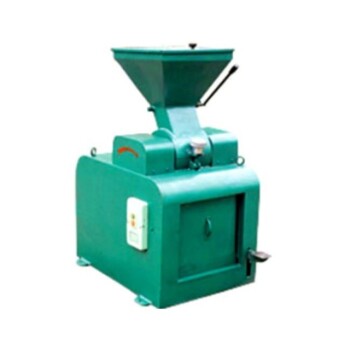
The crushing and sieving system functions as the critical physical separation unit in the pretreatment of zinc ash. Its primary role is to pulverize the raw material to liberate fine oxide components while simultaneously isolating and removing large metallic zinc particles that are unsuitable for the subsequent chemical stages.

Core Takeaway The efficiency of downstream leaching relies entirely on this stage. By mechanically separating metallic zinc and standardizing the particle size of the remaining oxides, this system ensures a high specific surface area for chemical reactions and guarantees that process data accurately reflects the material’s composition.

The Mechanics of Separation

The raw zinc ash is a heterogeneous mixture containing both valuable zinc oxides and metallic zinc. The crushing and sieving system addresses these two components differently.

Removal of Metallic Zinc

The primary mechanical function is the physical removal of large metallic zinc particles. Unlike brittle oxides, metallic zinc is malleable; when crushed, it tends to flatten rather than shatter. The sieving process captures these larger metallic fragments, preventing them from entering the leaching tanks where they would consume excess acid and reduce process efficiency.

Pulverization of Oxides

Simultaneously, the system is designed to pulverize the industrial raw materials, specifically the oxide components. This reduction creates a fine powder that passes through the sieves, separating it effectively from the coarse metallic contaminants.

Enhancing Chemical Efficiency

Once the physical separation is complete, the system's value lies in how it conditions the material for the "leaching" stage (where acid is used to dissolve the zinc).

Increasing Specific Surface Area

The system facilitates the separation of fine oxide components. By reducing the particle size, the system significantly increases the specific surface area of the material. This ensures that during the subsequent leaching procedures, the chemical reagents can penetrate the material rapidly and uniformly, leading to a more complete reaction.

Ensuring Material Uniformity

Consistency is vital for industrial processing. The sieving component ensures the uniformity of the raw material. By strictly controlling the particle size distribution, the system prevents oversized particles from entering the chemical circuit, which would otherwise result in incomplete reactions or inconsistent product quality.

Operational Stability and Control

Beyond physical and chemical preparation, this stage is essential for process monitoring.

Improving Data Reliability

The primary reference highlights that this process improves the representativeness of technical data. When the feedstock is uniform and free of erratic metallic chunks, the samples taken for analysis accurately reflect the bulk material. This allows engineers to calculate acid consumption and recovery rates with precision.

Understanding the Trade-offs

While essential, the crushing and sieving process introduces specific operational challenges that must be managed.

The Risk of Over-Grinding

While fine particles are desirable for leaching, excessive pulverization can create "fines" or slime that are difficult to filter later in the process. The system must strike a balance between maximizing surface area and maintaining a particle size that allows for efficient liquid-solid separation downstream.

Screen Integrity and Maintenance

The reliability of the entire separation relies on the integrity of the sieves. If a screen tears, large metallic particles will contaminate the leach feed. This not only wastes acid but can also introduce impurities that complicate the purification of the final zinc product.

Making the Right Choice for Your Goal

The configuration of your crushing and sieving circuit should depend on your specific processing targets.

  • If your primary focus is Metallic Recovery: Prioritize screen mesh sizes that strictly differentiate between the malleable metallic zinc (oversize) and the brittle oxides (undersize) to maximize the resale value of the recovered metal.
  • If your primary focus is Leaching Efficiency: Focus on the crushing intensity to maximize the production of fine oxides, increasing the specific surface area to speed up reaction times in the leaching tanks.

Success in zinc ash processing is defined here: a consistent, metal-free oxide powder creates the foundation for a predictable and profitable recovery operation.

Summary Table:

Process Function Description Impact on Production
Metallic Separation Removes malleable zinc fragments via sieving Reduces acid waste and prevents contamination
Oxide Pulverization Breaks down brittle oxides into fine powder Increases surface area for faster chemical leaching
Size Uniformity Standardizes particle distribution Ensures consistent reaction rates and higher data reliability
Material Conditioning Prepares feedstock for downstream stages Improves filtration efficiency and final product purity

Maximize Your Recovery with KINTEK Precision Solutions

Don't let inefficient pretreatment undermine your laboratory or industrial output. KINTEK specializes in advanced crushing and milling systems, sieving equipment, and high-performance consumables designed to streamline zinc ash processing and material preparation.

Whether you require robust crushing units or high-precision laboratory tools, our experts are here to help you achieve superior data reliability and processing efficiency. From ball mills and hydraulic presses to high-temperature furnaces and reactors, we provide the comprehensive equipment necessary for the most demanding research and production environments.

Ready to optimize your workflow? Contact KINTEK today for expert guidance and tailored equipment solutions!

References

  1. Grzegorz Włoch, Leszek Szatan. Preliminary Investigation on Leaching Behavior of Zinc ash. DOI: 10.24425/122406

This article is also based on technical information from Kintek Solution Knowledge Base .

Related Products

People Also Ask

Related Products

Laboratory High Throughput Tissue Grinding Mill Grinder

Laboratory High Throughput Tissue Grinding Mill Grinder

KT-MT is a high-quality, small, and versatile tissue grinder used for crushing, grinding, mixing, and cell wall breaking in various fields, including food, medical, and environmental protection. It is equipped with 24 or 48 2ml adapters and ball grinding tanks and is widely employed for DNA, RNA, and protein extraction.

Liquid Nitrogen Cryogenic Grinder Mill Cryomill Airflow Ultrafine Pulverizer

Liquid Nitrogen Cryogenic Grinder Mill Cryomill Airflow Ultrafine Pulverizer

Discover the Liquid Nitrogen Cryogenic Grinding Machine, perfect for lab use, ultra-fine pulverization, and preserving material properties. Ideal for pharmaceuticals, cosmetics, and more.

Laboratory Jar Ball Mill with Alumina Zirconia Grinding Jar and Balls

Laboratory Jar Ball Mill with Alumina Zirconia Grinding Jar and Balls

Grind to perfection with alumina/zirconia grinding jars and balls. Available in volume sizes from 50ml to 2500ml, compatible with various mills.

Laboratory Test Sieves and Vibratory Sieve Shaker Machine

Laboratory Test Sieves and Vibratory Sieve Shaker Machine

Efficiently process powders, granules, and small blocks with a high-frequency vibration sieve. Control vibration frequency, screen continuously or intermittently, and achieve accurate particle size determination, separation, and classification.

Custom PTFE Teflon Parts Manufacturer for PTFE Mesh F4 Sieve

Custom PTFE Teflon Parts Manufacturer for PTFE Mesh F4 Sieve

PTFE mesh sieve is a specialized test sieve designed for particle analysis in various industries, featuring a non-metallic mesh woven from PTFE filament. This synthetic mesh is ideal for applications where metal contamination is a concern . PTFE sieves are crucial for maintaining the integrity of samples in sensitive environments, ensuring accurate and reliable results in particle size distribution analysis.

Laboratory Vibratory Sieve Shaker Machine for Dry and Wet Three-Dimensional Sieving

Laboratory Vibratory Sieve Shaker Machine for Dry and Wet Three-Dimensional Sieving

KT-VD200 can be used for sieving tasks of dry and wet samples in the laboratory. The screening quality is 20g-3kg. The product is designed with a unique mechanical structure and an electromagnetic vibrating body with a vibration frequency of 3000 times per minute.

Vibratory Sieve Shaker Machine Dry Three-Dimensional Vibrating Sieve

Vibratory Sieve Shaker Machine Dry Three-Dimensional Vibrating Sieve

The KT-V200 product focuses on solving common sieving tasks in the laboratory. It is suitable for sieving 20g-3kg dry samples.

Cold Isostatic Pressing Machine CIP for Small Workpiece Production 400Mpa

Cold Isostatic Pressing Machine CIP for Small Workpiece Production 400Mpa

Produce uniformly high-density materials with our Cold Isostatic Press. Ideal for compacting small workpieces in production settings. Widely used in powder metallurgy, ceramics, and biopharmaceutical fields for high-pressure sterilization and protein activation.

Lab Plastic PVC Calender Stretch Film Casting Machine for Film Testing

Lab Plastic PVC Calender Stretch Film Casting Machine for Film Testing

The cast film machine is designed for the molding of polymer cast film products and has multiple processing functions such as casting, extrusion, stretching, and compounding.

Heated Hydraulic Press Machine with Integrated Manual Heated Plates for Lab Use

Heated Hydraulic Press Machine with Integrated Manual Heated Plates for Lab Use

Efficiently process heat-pressing samples with our Integrated Manual Heated Lab Press. With a heating range up to 500°C, it's perfect for various industries.

Single Punch Electric Tablet Press Machine TDP Tablet Punching Machine

Single Punch Electric Tablet Press Machine TDP Tablet Punching Machine

The electric tablet punching machine is a laboratory equipment designed for pressing various granular and powdery raw materials into discs and other geometric shapes. It is commonly used in pharmaceutical, healthcare products, food, and other industries for small batch production and processing. The machine is compact, lightweight, and easy to operate, making it suitable for use in clinics, schools, laboratories, and research units.

Metallographic Specimen Mounting Machine for Laboratory Materials and Analysis

Metallographic Specimen Mounting Machine for Laboratory Materials and Analysis

Precision metallographic mounting machines for labs—automated, versatile, and efficient. Ideal for sample prep in research and quality control. Contact KINTEK today!

Electric Split Lab Cold Isostatic Press CIP Machine for Cold Isostatic Pressing

Electric Split Lab Cold Isostatic Press CIP Machine for Cold Isostatic Pressing

Split cold isostatic presses are capable of providing higher pressures, making them suitable for testing applications that require high pressure levels.

Vacuum Hot Press Furnace Machine for Lamination and Heating

Vacuum Hot Press Furnace Machine for Lamination and Heating

Experience clean and precise lamination with Vacuum Lamination Press. Perfect for wafer bonding, thin-film transformations, and LCP lamination. Order now!

HFCVD Machine System Equipment for Drawing Die Nano-Diamond Coating

HFCVD Machine System Equipment for Drawing Die Nano-Diamond Coating

The nano-diamond composite coating drawing die uses cemented carbide (WC-Co) as the substrate, and uses the chemical vapor phase method ( CVD method for short ) to coat the conventional diamond and nano-diamond composite coating on the surface of the inner hole of the mold.

Lab Blown Film Extrusion Three Layer Co-Extrusion Film Blowing Machine

Lab Blown Film Extrusion Three Layer Co-Extrusion Film Blowing Machine

Lab blown film extrusion is mainly used to detect the feasibility of film blowing of polymer materials and the colloid condition in the materials, as well as the dispersion of colored dispersions, controlled mixtures, and extrudates;

Automatic Heated Hydraulic Press Machine with Heated Plates for Laboratory Hot Press 25T 30T 50T

Automatic Heated Hydraulic Press Machine with Heated Plates for Laboratory Hot Press 25T 30T 50T

Efficiently prepare your samples with our Automatic Heated Lab Press. With a pressure range up to 50T and precise control, it's perfect for various industries.

Manual High Temperature Heated Hydraulic Press Machine with Heated Plates for Lab

Manual High Temperature Heated Hydraulic Press Machine with Heated Plates for Lab

The High Temperature Hot Press is a machine specifically designed for pressing, sintering and processing materials in a high temperature environment. It is capable of operating in the range of hundreds of degrees Celsius to thousands of degrees Celsius for a variety of high temperature process requirements.

Laboratory Sterilizer Lab Autoclave Herbal Powder Sterilization Machine for Plant

Laboratory Sterilizer Lab Autoclave Herbal Powder Sterilization Machine for Plant

The herbal powder sterilization autoclave machine for Chinese medicine uses saturated steam for effective sterilization. It utilizes the heat and penetrative properties of steam, achieves sterilization after heat preservation, and maintains a good drying effect with a dedicated drying system.

Automatic Lab Cold Isostatic Press CIP Machine Cold Isostatic Pressing

Automatic Lab Cold Isostatic Press CIP Machine Cold Isostatic Pressing

Efficiently prepare samples with our Automatic Lab Cold Isostatic Press. Widely used in material research, pharmacy, and electronic industries. Provides greater flexibility and control compared to electric CIPs.


Leave Your Message