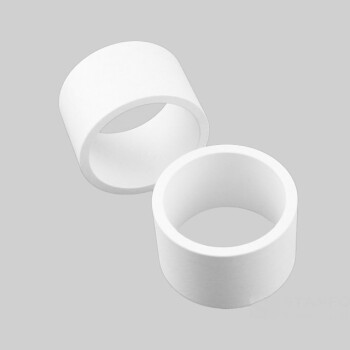
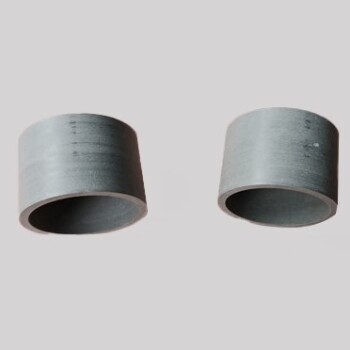
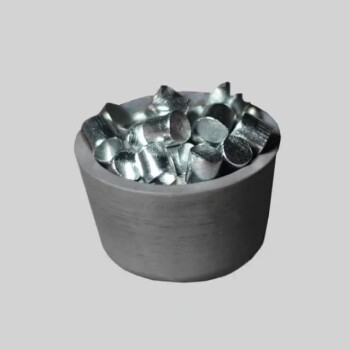
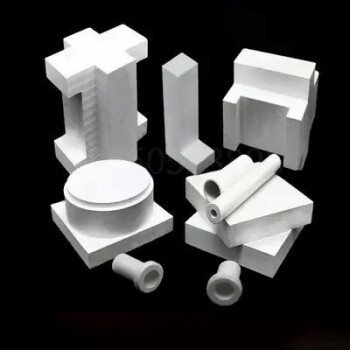
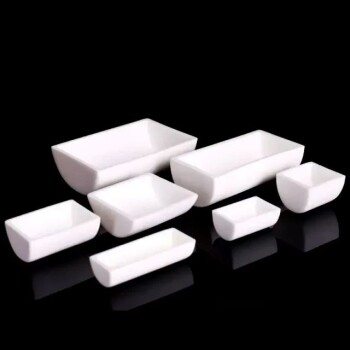
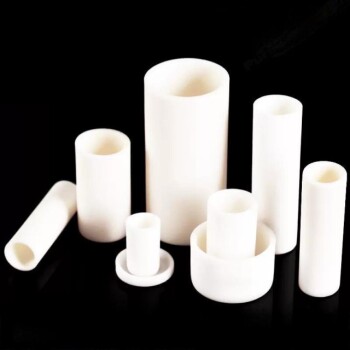
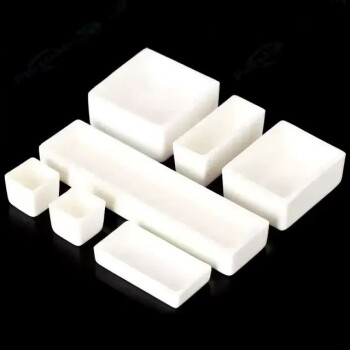
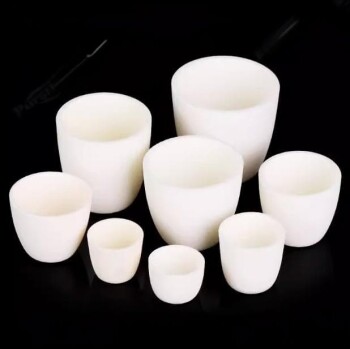
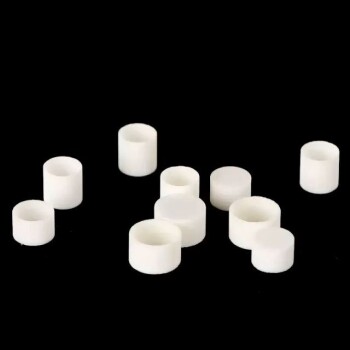
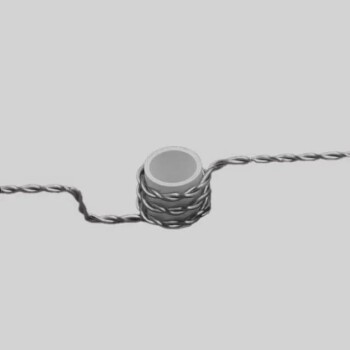
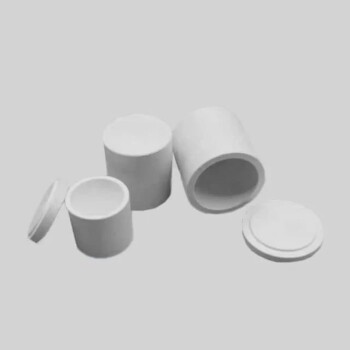
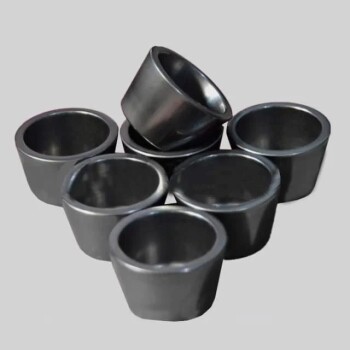
The necessity of a ceramic crucible in boron nitride synthesis is defined by its ability to maintain structural integrity and chemical neutrality under extreme thermal stress. At synthesis temperatures typically reaching 1200°C or higher, these crucibles serve as inert vessels that prevent contamination while allowing essential atmospheric gases to interact uniformly with the precursor materials.
Ceramic crucibles are indispensable because they provide the required thermal resistance and chemical inertness to ensure high-purity results. They act as a stable environment that facilitates uniform nitridation without interfering with the chemical reaction or the final composition of the boron nitride.
Ensuring Chemical Purity and Stability
Prevention of Elemental Contamination
At high temperatures, many materials become reactive or begin to soften, potentially leaching impurities into the sample. Ceramic crucibles, particularly those made of high-purity alumina or boron nitride, are chemically inert and do not react with reactants or reducing atmospheres like ammonia.
Resistance to Reducing Atmospheres
The synthesis of boron nitride often involves an ammonia-reducing atmosphere at temperatures around 1200°C. Ceramic materials are specifically chosen because they do not degrade or participate in secondary chemical reactions under these aggressive atmospheric conditions.
Non-Wetting and Anti-Adhesion Properties
High-performance ceramics often exhibit non-wetting characteristics, meaning the synthesized powder or any liquid phases do not adhere to the container walls. This ensures that the final product remains loose or only slightly agglomerated, allowing for easy collection without physical loss or damage to the sample.
Facilitating the Synthesis Process
Promoting Uniform Nitridation
The physical design of a ceramic crucible often features an open structure that allows flowing gases to fully permeate the precursor powder bed. This exposure is critical for ensuring that the nitridation reaction occurs consistently throughout the entire microscopic structure of the sample.
Structural Integrity at Extreme Heat
Ceramic crucibles can withstand temperatures ranging from 1200°C to over 1900°C without deformation or melting. This stability ensures that the spatial orientation of the reactants remains constant during the long annealing cycles required for high-quality crystal growth.
Reliable Experimental Data
By acting as a neutral carrier, the crucible ensures that the resulting phase evaluations and material properties are a direct result of the precursor ratio and heat treatment. This eliminates "noise" in experimental data that would otherwise be caused by container-induced impurities.
Understanding the Trade-offs
Material Limitations and Thermal Shock
While ceramics are highly heat-resistant, they can be brittle and susceptible to thermal shock if cooled or heated too rapidly. Rapid temperature fluctuations can cause the crucible to crack, potentially ruining the synthesis run and damaging the furnace heating elements.
Cost vs. Purity Requirements
High-purity crucibles, such as those made of 99.9% alumina or pyrolytic boron nitride, are significantly more expensive than standard laboratory grade options. Selecting a lower-grade ceramic may save costs but risks introducing trace metal impurities that can alter the electronic or thermal properties of the synthesized boron nitride.
How to Apply This to Your Synthesis Project
Choosing the right carrier is as important as the precursor chemistry itself. Use the following guidelines to select the appropriate crucible for your specific synthesis goals:
- If your primary focus is Maximum Chemical Purity: Opt for a Boron Nitride (BN) crucible, as it provides the highest level of inertness and prevents the introduction of foreign elements like aluminum or silica.
- If your primary focus is Cost-Effective Scalability: Use a high-purity alumina crucible, which offers excellent thermal stability and chemical resistance for standard 1200°C nitridation at a lower price point.
- If your primary focus is Product Recovery and Yield: Select a crucible with non-wetting properties or apply a BN release spray to ensure the sample does not adhere to the walls during high-temperature sintering.
The correct ceramic crucible is not merely a container, but a critical tool that ensures the chemical integrity and physical quality of the final boron nitride product.
Summary Table:
| Key Requirement | Role of Ceramic Crucible | Material Benefits |
|---|---|---|
| Chemical Purity | Prevents elemental leaching & resists reducing atmospheres | High-purity Alumina or BN options |
| Thermal Stability | Maintains structure at extreme heat (1200°C - 1900°C+) | No deformation or melting |
| Gas Interaction | Open structure allows uniform ammonia/gas permeation | Consistent nitridation throughout |
| Sample Recovery | Non-wetting properties prevent adhesion to walls | High yield & easy powder collection |
Elevate Your Synthesis Precision with KINTEK
Achieving high-purity boron nitride requires more than just the right chemistry—it demands the highest quality laboratory environment. KINTEK specializes in professional laboratory equipment and consumables, offering the precision tools you need for advanced material synthesis.
Whether you are scaling production or conducting fundamental research, we provide:
- High-Temperature Furnaces: Muffle, tube, atmosphere, and vacuum furnaces designed for stable annealing.
- Premium Consumables: High-purity ceramic crucibles (Alumina, BN), PTFE products, and specialized reaction vessels.
- Advanced Systems: High-pressure reactors, crushing systems, and cooling solutions like ULT freezers.
Don't let container-induced impurities compromise your data. Contact KINTEK today to find the perfect crucible and furnace solution for your lab and ensure maximum chemical integrity for every project.
References
- Yanjiao Li, Dejun Zeng. A Simple Method for the Synthesis of a Coral-like Boron Nitride Micro-/Nanostructure Catalyzed by Fe. DOI: 10.3390/nano13040753
This article is also based on technical information from Kintek Solution Knowledge Base .
Related Products
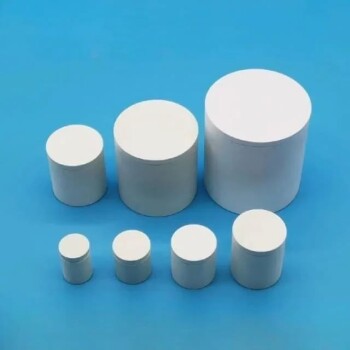
- Boron Nitride (BN) Crucible for Phosphorous Powder Sintered
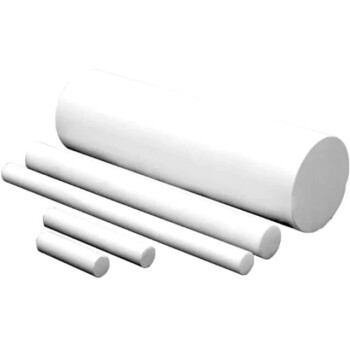
- Boron Nitride (BN) Ceramic Rod for High Temperature Applications
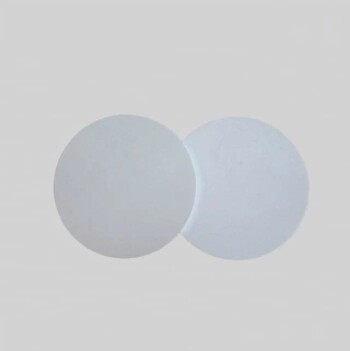
- Boron Nitride (BN) Ceramic Plate
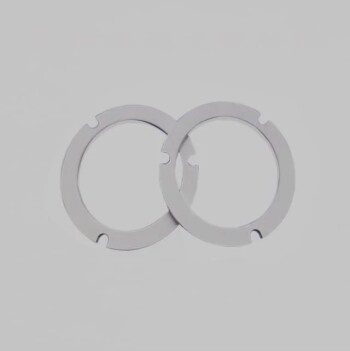
- Hexagonal Boron Nitride HBN Ceramic Ring
- Boron Nitride (BN) Ceramic Tube
People Also Ask
- Why use Boron Nitride (BN) crucibles in metal infiltration? Ensure sample purity and non-wetting performance.
- Why are Boron Nitride (BN) or Alumina crucibles preferred for Na-flux GaN growth? Optimize Your Crystal Yield
- How much heat can a ceramic crucible take? Find the Right Crucible for Your High-Temp Process
- What is the necessity of using ceramic crucibles in TGA for TClPhMA? Ensure Accurate Thermal Data Integrity
- What protective role do ceramic crucibles play? Ensure Equipment Longevity and Catalyst Purity in Synthesis