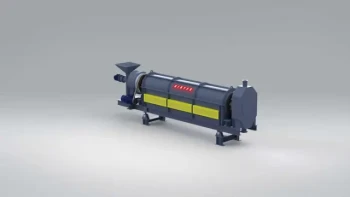
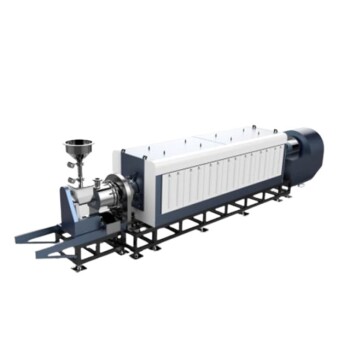
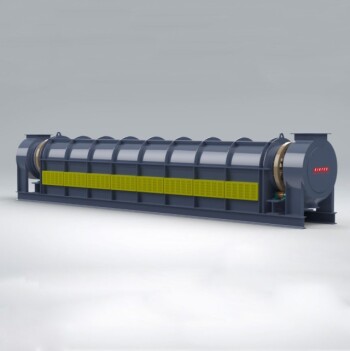
The operational mechanism relies on controlled anaerobic thermal degradation. By subjecting coconut shell powder to intense heat within a strictly oxygen-free environment—typically maintained by nitrogen—the furnace initiates a chemical breakdown without combustion. This process strips away volatile components and converts the organic biomass into a solid, electrically conductive carbon skeleton with a highly developed microporous structure.
Core Takeaway The high-temperature pyrolysis furnace functions as a precision reactor that transforms raw biomass into high-performance electrode material. Its primary role is to drive devolatilization and carbonization, creating the initial pore framework and electrical conductivity essential for the energy density and cycle life of supercapacitors.
The Core Mechanism: Anaerobic Thermal Degradation
Creating the Inert Environment
The fundamental requirement for this mechanism is the total exclusion of oxygen. The furnace operates under a strict inert atmosphere, usually nitrogen gas.
This prevents the coconut shell powder from burning (oxidizing) into ash. Instead, the heat forces the material to decompose chemically, preserving the carbon structure while expelling other elements.
High-Temperature Devolatilization
As the furnace temperature rises, the biomass undergoes devolatilization. This is the physical and chemical removal of non-carbon volatile components, such as hydrogen, oxygen, and various tars.
This step effectively "dries out" the chemical structure of the coconut shell. It reduces the mass of the material while retaining the rigid carbon architecture.
Formation of the Carbon Skeleton
Once volatiles are removed, the remaining material stabilizes into a solid carbon precursor. This process creates the carbon skeleton, which provides the mechanical strength of the electrode material.
Crucially, this transformation establishes the material's electrical conductivity. Without this thermal conversion, the material would remain an insulating organic solid, useless for electronic applications like supercapacitors.
Development of Microporous Structure
The most critical outcome of this mechanism is pore formation. As gases escape the degrading biomass, they leave behind a network of voids.
The furnace induces a specific distribution of micropores and interstitial spaces. This porosity provides the massive surface area required for ion adsorption, directly influencing the supercapacitor's capacity to store energy.
Critical Process Parameters
Regulating Heating Rates
The mechanism is not just about reaching a high temperature; it is about how you get there. The furnace controls the heating rate to manage how quickly volatiles are released.
If heated too quickly, the structure may collapse or crack. Controlled heating ensures the pore network remains intact and uniform.
Isothermal Holding Time
The furnace maintains the material at a specific maximum temperature for a set duration, known as the isothermal holding time.
This period ensures the carbonization degree is uniform throughout the batch. It allows time for the final rearrangement of the carbon atoms, optimizing both conductivity and structural stability.
Understanding the Trade-offs
The Balance of Temperature
There is a critical trade-off between pore volume and yield. Higher temperatures generally increase electrical conductivity and purity (carbon content).
However, excessive temperatures can cause the pore structure to collapse or sinter, reducing the specific surface area needed for energy storage. Conversely, temperatures that are too low result in incomplete carbonization and poor conductivity.
Atmosphere Sensitivity
The mechanism is unforgiving regarding atmospheric control. Even a minor leak of oxygen during the high-temperature phase can lead to partial combustion.
This results in "burn-off," where valuable carbon material creates ash, significantly lowering the yield and introducing impurities that degrade the cycle life of the final supercapacitor.
Making the Right Choice for Your Goal
To maximize the performance of coconut shell-based activated carbon, you must tune the furnace parameters to your specific electrode requirements.
- If your primary focus is High Energy Density: Prioritize precise heating curves to maximize micropore development and specific surface area, as this dictates total charge storage.
- If your primary focus is High Power Density: Prioritize higher carbonization temperatures to maximize electrical conductivity, allowing for faster charge/discharge rates.
The pyrolysis furnace is not merely a heater; it is the tool that defines the structural destiny of your electrode material.
Summary Table:
| Mechanism Phase | Primary Process | Outcome for Supercapacitors |
|---|---|---|
| Inert Atmosphere | Oxygen exclusion (Nitrogen) | Prevents combustion; preserves carbon structure |
| Devolatilization | Removal of H, O, and volatiles | Reduces mass; "cleanses" the carbon framework |
| Carbonization | High-temp solid transformation | Establishes electrical conductivity and strength |
| Pore Formation | Gas escape during degradation | Creates high surface area for ion adsorption |
| Isothermal Holding | Stable heat maintenance | Ensures uniform carbonization and pore stability |
Elevate Your Energy Storage Research with KINTEK
Precision is the difference between ordinary carbon and high-performance electrode material. KINTEK specializes in advanced laboratory equipment designed to meet the rigorous demands of material science. Our comprehensive range of high-temperature furnaces (tube, muffle, vacuum, and atmosphere-controlled) and crushing systems provides the exact thermal and mechanical control needed for superior coconut shell pyrolysis.
From high-pressure reactors to specialized PTFE and ceramic consumables, KINTEK delivers the tools to optimize your carbonization degree and pore architecture.
Ready to refine your supercapacitor materials? Contact our laboratory specialists today to find the perfect furnace solution for your research goals.
References
- Asta Narkūnienė, Gintautas Poškas. Multiphysics simulation to support analysis of engineered materials in geological repository. DOI: 10.21175/rad.abstr.book.2023.44.4
This article is also based on technical information from Kintek Solution Knowledge Base .
Related Products
- Graphite Vacuum Furnace Bottom Discharge Graphitization Furnace for Carbon Materials
- Vacuum Heat Treat and Pressure Sintering Furnace for High Temperature Applications
- High Temperature Muffle Oven Furnace for Laboratory Debinding and Pre Sintering
- Electric Rotary Kiln Small Rotary Furnace for Activated Carbon Regeneration
- 1400℃ Controlled Atmosphere Furnace with Nitrogen and Inert Atmosphere
People Also Ask
- What is the use of graphite furnace? Achieve Extreme-Temperature Processing for Advanced Materials
- What is the disadvantage of graphite furnace? Managing Reactivity and Contamination Risks
- What gas is used in graphite furnace? Maximize Accuracy with the Right Inert Gas
- What is the purpose of a graphite furnace? Achieve Extreme Temperatures for Advanced Materials
- What is the graphite furnace technique? Achieve Extreme Temperatures for Advanced Materials