At its core, ceramic pressing is a multi-stage manufacturing process that transforms a specialized ceramic powder into a dense, solid component. This involves preparing the powder into a flowable form, pressing it into a preliminary shape called a "green body," and then applying heat and pressure in a furnace to fuse the particles together through a process called sintering.
The success of ceramic pressing hinges less on the individual steps and more on the meticulous control of key variables. The core challenge is managing the material's transformation to achieve precise final dimensions, desired aesthetics, and optimal physical properties without introducing flaws.
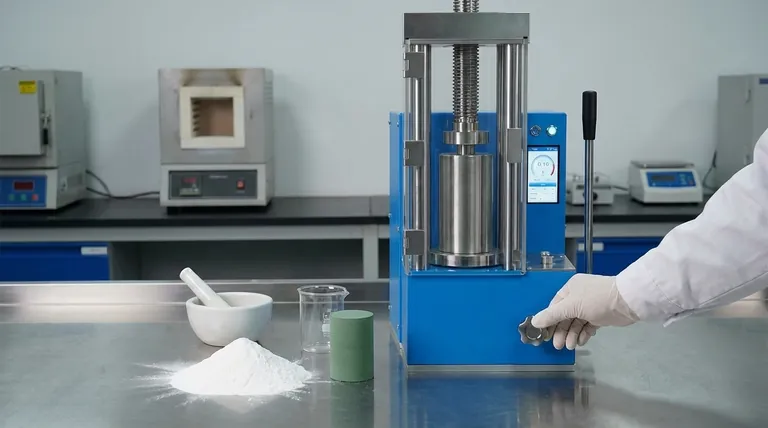
The Ceramic Pressing Workflow: From Powder to Part
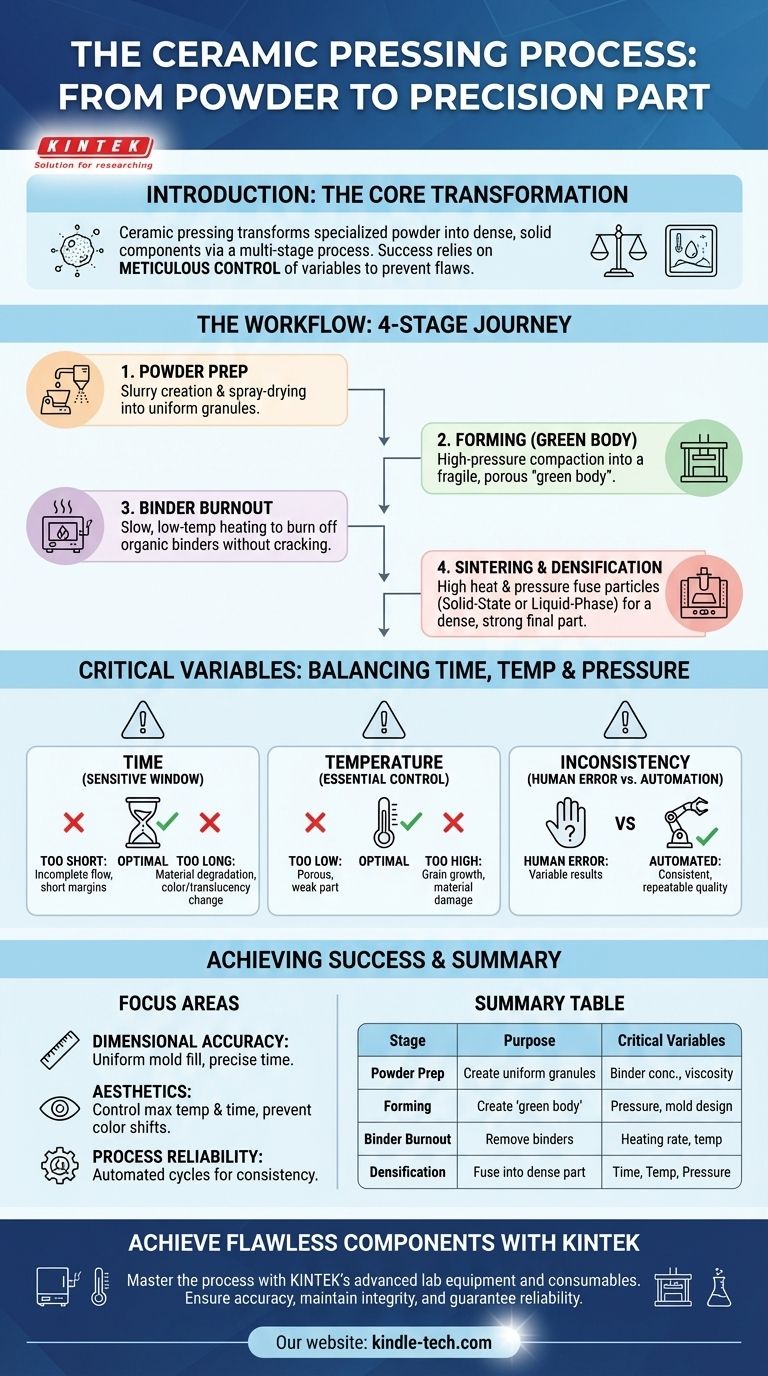
The journey from a raw powder to a finished ceramic component is a precise, sequential process. Each step builds upon the last, and failure at any stage can compromise the final result.
Step 1: Preparing the Ceramic Powder
First, the raw, unfired ceramic powder is mixed with water, a binder, and a deflocculant (a substance that prevents clumping). This creates a uniform, liquid mixture known as a slurry.
This slurry is then spray-dried. The process atomizes the slurry into a heated chamber, instantly evaporating the liquid and forming small, uniform, and spherical granules. These granules are ideal for ensuring the mold fills evenly.
Step 2: Forming the "Green Body"
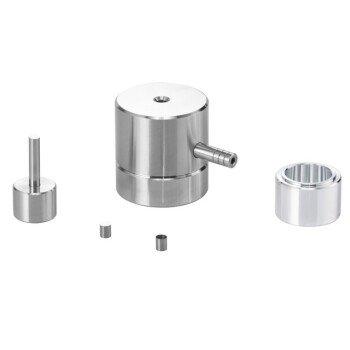
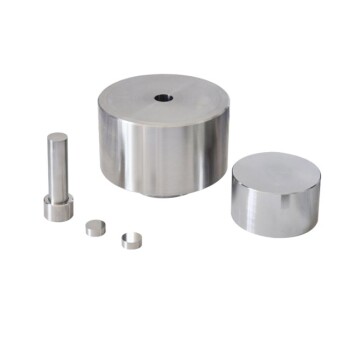
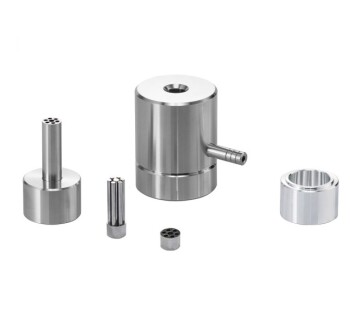
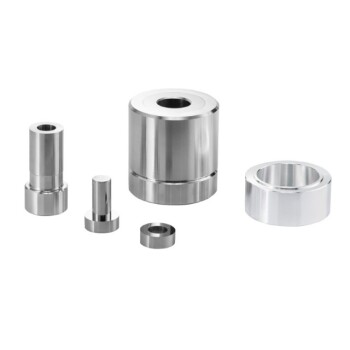
The spray-dried powder is then placed into a mold. Under high pressure, the powder is compacted into a solid, albeit fragile, shape.
This initial, un-sintered part is called a "green body." While it holds its shape, it has very low mechanical strength and is highly porous.
Step 3: Binder Burnout
Before the final fusion, the green body is heated at a relatively low temperature. The purpose of this stage is to carefully burn off the organic binder that was added in Step 1.
This must be done slowly to allow the resulting gases to escape without cracking or damaging the fragile part.
Step 4: Sintering and Densification
Sintering is the critical high-temperature step where the ceramic particles fuse together to form a dense, strong final part. The green body is brought to a pressing furnace, where an ingot and plunger may be used to apply pressure while the temperature is raised.
This densification primarily occurs through two mechanisms:
- Solid-State Sintering: Used for materials like zirconia, where atoms migrate between particles via diffusion, closing the gaps between them.
- Liquid-Phase Sintering: Used for harder-to-sinter materials like silicon carbide. Additives in the powder melt, creating a liquid that pulls particles together through capillary forces, accelerating densification.
Understanding the Trade-offs and Critical Variables
The quality of a pressed ceramic is not guaranteed by simply following the steps. It is dictated by the precise control of time, temperature, and pressure. Deviations can lead to irreversible defects.
The Critical Role of Pressing Time
Time is arguably the most sensitive variable in the final pressing stage. The window for a perfect press is often narrow.
- Time Too Short: If the press cycle is too brief, the material may not have enough time to flow and completely fill the mold. In a dental application, this results in defects like short margins.
- Time Too Long: Excessive time under heat and pressure can cause material degradation. This can manifest as unwanted changes in color or translucency, or even alter the material's core physical properties.
The Impact of Temperature
Proper temperature control during both binder burnout and final sintering is essential. If the temperature is too low, sintering will be incomplete, leaving the final part porous and weak.
Conversely, if the temperature is too high or applied too quickly, it can cause grain growth or material damage, compromising strength and aesthetics.
The Consequence of Inconsistency
Different ceramic materials have unique requirements. For example, with lithium disilicate, a common dental ceramic, an excessive press time can cause an undesirable reaction layer to form on the surface.
This is why automated press furnaces are often used. They ensure that the optimal time and temperature profiles are repeated with absolute consistency, minimizing the risk of defects caused by human error.
Achieving a Successful Press
Understanding these principles allows you to troubleshoot issues and optimize your process for specific outcomes.
- If your primary focus is dimensional accuracy: Ensure the powder is properly prepared for uniform mold filling and pay strict attention to press time to avoid incomplete flow and short margins.
- If your primary focus is aesthetics: Meticulously control the maximum temperature and the duration of the press cycle to prevent color shifts, changes in translucency, or surface reactions.
- If your primary focus is process reliability: Rely on automated equipment with pre-programmed cycles for specific materials to eliminate variables and ensure consistent, high-quality results.
Mastering the ceramic pressing process is a matter of transforming it from a simple procedure into a controlled science.
Summary Table:
| Stage | Key Process | Purpose | Critical Variables |
|---|---|---|---|
| 1. Powder Prep | Spray Drying | Create uniform, flowable granules | Binder concentration, slurry viscosity |
| 2. Forming | Pressing | Create a 'green body' shape | Pressure, mold design |
| 3. Binder Burnout | Low-Temp Heating | Remove organic binders | Heating rate, temperature |
| 4. Densification | Sintering | Fuse particles into a dense, strong part | Time, Temperature, Pressure |
Achieve flawless ceramic components with KINTEK.
Mastering the ceramic pressing process requires precision and consistency at every stage. KINTEK specializes in the advanced lab equipment and consumables needed for reliable results, from powder preparation to final sintering.
Our solutions help you:
- Ensure Dimensional Accuracy: Achieve perfect mold fill and avoid defects like short margins.
- Maintain Material Integrity: Control time and temperature to preserve aesthetics and physical properties.
- Guarantee Process Reliability: Leverage automated systems for repeatable, high-quality outcomes.
Let us provide the tools and expertise for your laboratory's success. Contact KINTEK today to discuss your specific ceramic pressing needs.
Visual Guide
Related Products
- Dental Porcelain Zirconia Sintering Ceramic Vacuum Press Furnace
- Cylindrical Press Mold with Scale for Lab
- Cylindrical Press Mold for Lab Applications
- Round Bidirectional Press Mold for Lab
- Automatic High Temperature Heated Hydraulic Press Machine with Heated Plates for Lab
People Also Ask
- What is the shrinkage of zirconia during sintering? Mastering the 20-25% Dimensional Change
- What is the sintering temperature of zirconia ceramic? Mastering the 1400°C-1600°C Thermal Profile
- What does sintering mean in dentistry? The Essential Process for Strong, Durable Restorations
- What factors are important to consider when choosing a dental sintering furnace? Match Your Workflow for Optimal Results
- What does sintering do to zirconia? Unlock Its Full Strength and Aesthetic Potential