Hot Isostatic Pressing (HIP) functions as a critical densification mechanism for IN718 superalloys by subjecting the material to simultaneous high temperature and uniform high pressure. This process induces plastic deformation and diffusion bonding within the metal powder particles, effectively eliminating internal voids to create a solid, high-integrity component.
The Core Takeaway The primary role of HIP equipment is to eradicate the macro-segregation and micro-porosity inevitable in powder metallurgy. By applying isostatic pressure (e.g., 175 MPa) at high temperatures (e.g., 1180°C), it transforms a porous structure into a near-fully dense material with a uniform, high-performance microstructure.
Creating the Conditions for Densification
Simultaneous Heat and Pressure
The HIP process does not rely on thermal energy alone. It creates an environment combining high temperatures (often around 1180°C for IN718) with extreme pressure (typically 175 MPa).
Isostatic Application
Unlike traditional pressing, HIP applies pressure uniformly from all directions using an inert gas, typically argon. This omnidirectional force ensures the material densifies evenly, preventing internal distortions that would occur with unidirectional pressure.
The Role of the Closed Container
The process takes place within a sealed vessel where a compressor introduces the gas while an internal furnace regulates heat. This controlled environment is essential for managing the precise conditions required to force metal particles together.
Mechanisms of Action
Inducing Plastic Deformation
Under these extreme conditions, the metal powder particles yield and undergo plastic deformation. The pressure forces the particles to rearrange and physically close the gaps (interstitial voids) between them.
Diffusion Bonding
Once the particles are physically pressed together, the high temperature facilitates diffusion. Atoms migrate across the particle boundaries, effectively bonding distinct particles into a single, cohesive solid.
Eliminating Porosity
The primary target of this mechanism is micro-porosity. The process compresses gas bubbles and closes internal voids, bringing the material to a state of near-full density that casting or sintering alone cannot achieve.
Impact on Material Quality
Achieving Microstructural Homogeneity
HIP eliminates macro-segregation, ensuring that the chemical composition and grain structure are consistent throughout the part. This results in a homogeneous annealed microstructure without unwanted grain growth.
Enhancing Mechanical Performance
By removing internal defects, the process significantly boosts the material's mechanical properties. Parts treated with HIP exhibit higher fatigue strength, improved ductility, and superior tensile strength compared to non-HIPed counterparts.
Enabling High-Integrity Applications
For superalloys like IN718 used in aircraft engines, reliability is paramount. HIP provides the maximum abrasion and corrosion resistance required for these critical environments.
Understanding Process Trade-offs
Parameter Interdependence
The three critical variables—temperature, pressure, and hold time—are deeply interconnected. You can achieve the same level of densification with lower pressure or temperature, but this necessitates a significantly longer hold time.
Balancing Cycle Time vs. Conditions
Operating at the higher end of the temperature range (70% to 90% of solidus) accelerates densification but requires robust equipment capability. Conversely, optimizing for lower energy input extends the process duration, potentially impacting throughput.
Making the Right Choice for Your Goal
To maximize the effectiveness of HIP for IN718 densification, consider your specific performance targets:
- If your primary focus is Maximum Fatigue Strength: Prioritize parameters that ensure 100% pore closure to eliminate crack initiation sites, even if it requires higher pressures.
- If your primary focus is Process Efficiency: Adjust the cycle to balance a longer hold time with slightly lower temperatures or pressures to reduce equipment strain while maintaining density standards.
The ultimate value of HIP lies in its ability to turn a porous, variable powder compact into a fully dense, reliable superalloy component capable of withstanding extreme operational stress.
Summary Table:
| Parameter | Typical Value for IN718 | Functional Role |
|---|---|---|
| Temperature | ~1180°C | Facilitates diffusion bonding and particle yielding |
| Pressure | ~175 MPa | Induces plastic deformation to close internal voids |
| Pressure Medium | Argon Gas (Inert) | Ensures uniform, omnidirectional (isostatic) force |
| Primary Goal | Densification | Eradicates micro-porosity and macro-segregation |
| Resulting Property | High Fatigue Strength | Eliminates crack initiation sites for aerospace safety |
Elevate Your Material Integrity with KINTEK Solutions
Unlock the full potential of your superalloys and advanced ceramics with KINTEK’s industry-leading thermal processing technology. Whether you are aiming for near-full density in IN718 components or require precision isostatic pressing, our high-performance systems deliver the reliability your laboratory demands.
Beyond HIP, KINTEK specializes in a comprehensive range of laboratory equipment, including high-temperature muffle and vacuum furnaces, hydraulic pellet presses, and advanced crushing systems. Our solutions empower researchers in aerospace, dental, and battery technology to achieve superior microstructural homogeneity and mechanical strength.
Ready to optimize your densification process? Contact KINTEK today to discover how our expert-grade furnaces and presses can transform your production quality.
Related Products
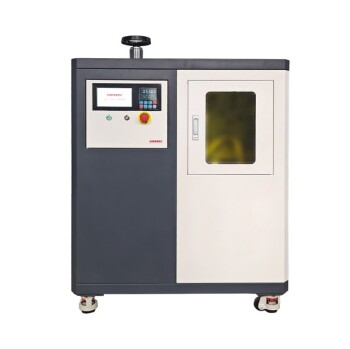
- Warm Isostatic Press for Solid State Battery Research
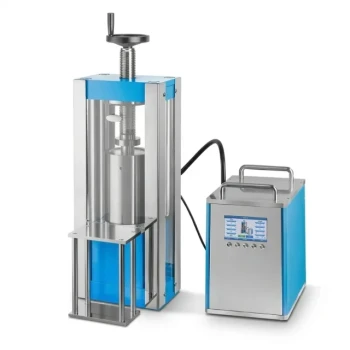
- Electric Split Lab Cold Isostatic Press CIP Machine for Cold Isostatic Pressing
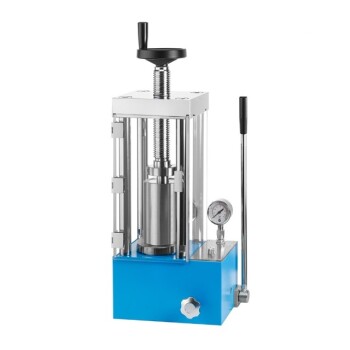
- Manual Cold Isostatic Pressing Machine CIP Pellet Press
- Automatic High Temperature Heated Hydraulic Press Machine with Heated Plates for Lab
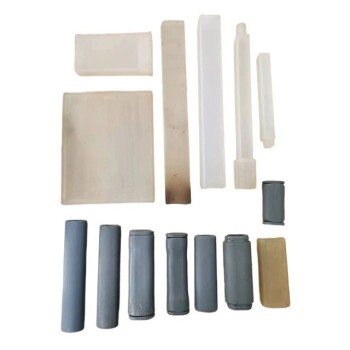
- Isostatic Molding Pressing Molds for Lab
People Also Ask
- What is the temperature of a warm isostatic press? Achieve Optimal Densification for Your Materials
- What is the function of a Warm Isostatic Press (WIP) in all-solid-state pouch cells? Optimize Battery Density
- Why are Warm Isostatic Presses (WIP) necessary for solid-state batteries? Achieve Atomic-Level Contact
- What advantages does a warm isostatic press offer over a traditional uniaxial press for Li6PS5Cl electrolyte sheets?
- How do warm isostatic presses improve dry electrode performance? Enhance ASSB Conductivity with Heat & Pressure