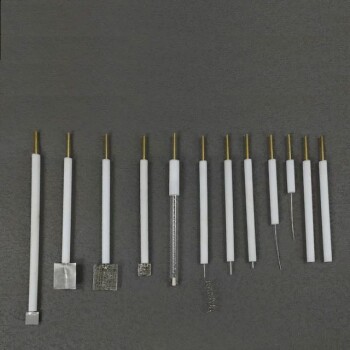
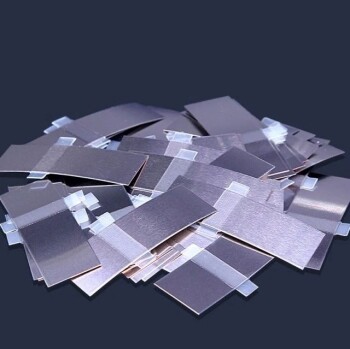
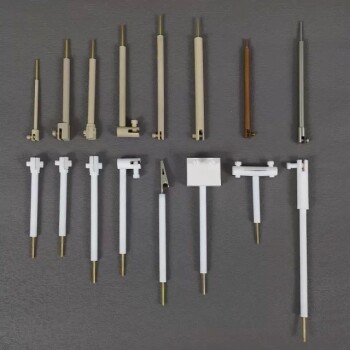
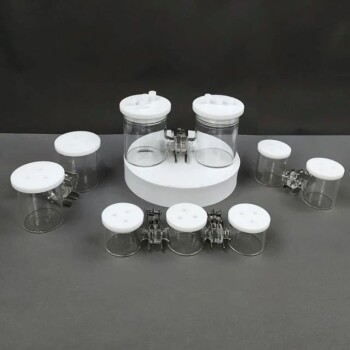
The primary function of metal electrodes in electrocoagulation is to act as a sacrificial source of metal cations, such as aluminum or iron. Through a process called anodic dissolution, the electrodes release these positive ions into the water, which neutralizes the negative charge of microplastic particles and forces them to clump together.
The electrodes do not merely conduct electricity; they actively dissolve to provide the chemical agents necessary to destabilize microplastics, transforming them from microscopic suspensions into manageable aggregates.
The Mechanism of Remediation
Generating the Active Agent
The core operation begins with anodic dissolution.
When an electric field is applied, the metal electrode (the anode) physically breaks down at the atomic level. This releases metal cations—specifically positively charged ions like aluminum or iron—directly into the wastewater.
Charge Neutralization
Microplastics typically carry a negative charge, which keeps them repelling each other and staying suspended in water.
The metal cations released by the electrode are positively charged. They interact with the negatively charged microplastics, effectively canceling out the repulsive forces that keep the particles stable and separated.
From Suspension to Removal
Formation of Flocs
Once the electrical repulsion is neutralized, the microplastics are no longer forced apart.
This allows them to aggregate, or clump together, forming larger masses known as flocs. This physical transformation is the critical bridge between invisible contamination and visible waste.
Facilitating Separation
The creation of flocs is not the final step, but it is the enabler for removal.
Because these aggregates are significantly larger and heavier than individual microplastics, they can be easily separated from the water. The reference highlights that this allows for effective removal through standard filtration or sedimentation processes.
Understanding the Process Dependencies
Electrocoagulation is a Pre-cursor
It is critical to understand that the electrodes themselves do not extract the plastic from the water; they prepare the plastic for extraction.
The process relies heavily on the efficiency of the subsequent physical separation steps. If the filtration or sedimentation systems following the electrocoagulation unit are inadequate, the newly formed flocs will remain in the water stream.
Making the Right Choice for Your Goal
To optimize microplastic remediation, you must view the electrode not as a standalone tool, but as the initiator of a two-step system.
- If your primary focus is Maximizing Aggregation: Ensure your electrode material (Iron vs. Aluminum) is selected based on which cation most effectively neutralizes the specific charge of your target microplastics.
- If your primary focus is System Efficiency: Recognize that the electrode's job is complete once flocs form; your focus must then shift immediately to the capacity of your filtration or sedimentation units to handle the increased particle mass.
The electrode's role is to break the stability of the microplastic suspension, rendering it vulnerable to physical removal.
Summary Table:
| Process Stage | Action of Metal Electrode / System | Purpose in Remediation |
|---|---|---|
| Anodic Dissolution | Release of metal cations (Al³⁺ or Fe²⁺/³⁺) | Acts as a sacrificial source of active agents |
| Charge Neutralization | Interaction between positive ions and negative particles | Destabilizes microplastics to stop repulsion |
| Flocculation | Formation of large particle aggregates (flocs) | Converts microscopic waste into manageable masses |
| Separation | Sedimentation or filtration | Physically removes the microplastic flocs from water |
Revolutionize Your Water Treatment with KINTEK Precision
Effective microplastic remediation starts with high-performance electrochemical components. KINTEK specializes in advanced laboratory equipment and consumables designed for rigorous research and industrial applications. Whether you are optimizing electrocoagulation processes or developing next-generation filtration systems, our expertise in electrolytic cells and electrodes ensures you achieve maximum aggregation and system efficiency.
From high-temperature high-pressure reactors to specialized ceramics and crucibles, KINTEK provides the tools necessary to bridge the gap between microscopic contamination and pure water.
Ready to enhance your lab's capabilities or scale your remediation project?
Contact KINTEK Today to explore our comprehensive range of electrodes, battery research tools, and high-precision laboratory systems.
References
- Sanela Martić, Tyra Lewis. Emerging electrochemical tools for microplastics remediation and sensing. DOI: 10.3389/fsens.2022.958633
This article is also based on technical information from Kintek Solution Knowledge Base .
Related Products
- Metal Disc Electrode Electrochemical Electrode
- Copper Nickel Foam Metal Sheet
- Gold Disc Electrode
- Reference Electrode Calomel Silver Chloride Mercury Sulfate for Laboratory Use
- High Purity Gold Platinum Copper Iron Metal Sheets
People Also Ask
- What are the recommended surface protection methods for different types of metal disk electrodes? Essential Guide for Longevity
- What precautions should be taken when using metal disk electrodes? Ensure Accuracy and Longevity
- What is the expected lifespan of a metal disk electrode? Extend Its Life with Proper Care
- How should a metal disk electrode and its corresponding electrolyte be prepared before an experiment? A Step-by-Step Guide
- What methods can be used to verify the performance of a metal disk electrode? Ensure Accurate Electrochemical Results