The primary function of the heating device in the in-situ thermal polymerization process is to act as the catalyst for the chemical reaction that solidifies the electrolyte. It triggers the decomposition of chemical initiators within the precursor solution, generating the free radicals necessary to start the cross-linking polymerization of monomers.
By precisely controlling the temperature, the heating device drives the in-situ generation of a polymer solid electrolyte network directly within the sulfur cathode, creating the stable electrode-electrolyte interface essential for battery function.
The Mechanics of Thermal Polymerization
Triggering the Chemical Reaction
The process begins with a liquid precursor solution that has been infiltrated into the cathode structure. This solution contains monomers and specific chemical initiators.
The heating device provides the thermal energy required to decompose these initiators.
From Liquid to Solid
Upon decomposition, the initiators release free radicals.
These radicals are the agents that begin the cross-linking process. They cause the monomers to link together, transforming the liquid solution into a solid polymer network.
Why In-Situ Generation Matters
Establishing Intimate Contact
The goal of this process is not merely to create a solid, but to create a solid in the right place.
By polymerizing the electrolyte directly inside the sulfur cathode, the material forms a seamless, integrated contact with the active sulfur particles and conductive carbon.
Stabilizing the Interface
The heating device ensures that this polymer network creates a stable electrode-electrolyte interface.
This contrasts with simple physical mixing; the thermal process chemically bonds the ionic conductors within the cathode structure, facilitating efficient ion transmission during operation.
Understanding the Trade-offs
The Precision Requirement
While heating is the trigger, the accuracy of the temperature is critical.
If the temperature is too low, the initiators will not decompose fully, leading to incomplete polymerization and residual liquid that compromises safety.
Thermal Risks
Conversely, excessive or uneven heating can be detrimental.
High temperatures run the risk of degrading the sulfur active material or the newly formed polymer chains. Furthermore, uneven heating can result in a heterogeneous electrolyte network, creating weak points in the battery where ion transport is blocked.
Making the Right Choice for Your Goal
To optimize the in-situ thermal polymerization process, consider how the heating parameters align with your specific objectives:
- If your primary focus is maximizing interfacial contact: Prioritize a heating profile that encourages slow, uniform cross-linking to allow the polymer to fully wet the sulfur and carbon surfaces before solidifying.
- If your primary focus is process speed: Select initiators with lower decomposition temperatures, but ensure your heating device has rapid, precise thermal control to prevent runaway reactions.
Mastering the thermal activation step is the key to transforming a liquid precursor into a unified, high-performance solid-state battery system.
Summary Table:
| Feature | Role in Thermal Polymerization |
|---|---|
| Initiator Activation | Decomposes chemicals to release free radicals for cross-linking. |
| Phase Transition | Converts liquid precursor solutions into a solid polymer network. |
| Interface Formation | Establishes seamless, intimate contact between sulfur and electrolyte. |
| Stability Control | Chemically bonds ionic conductors to ensure long-term battery cycle life. |
Elevate Your Battery Research with KINTEK Precision
Achieving the perfect electrode-electrolyte interface requires uncompromising thermal accuracy. KINTEK specializes in advanced laboratory equipment designed for the next generation of energy storage. Whether you are conducting in-situ thermal polymerization for all-solid-state batteries or exploring battery research tools and consumables, our high-precision high-temperature furnaces, vacuum systems, and specialized reactors provide the uniform heating necessary to prevent thermal degradation and ensure complete polymerization.
From PTFE products and ceramics to sophisticated crushing, milling, and hydraulic press systems, KINTEK is your partner in material science excellence.
Ready to optimize your sulfur cathode production? Contact us today to discover how our tailored solutions can enhance your laboratory’s efficiency and research outcomes.
Related Products
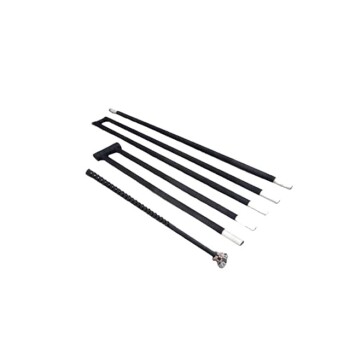
- Silicon Carbide SiC Thermal Heating Elements for Electric Furnace
- Double Plate Heating Press Mold for Lab
- Laboratory Rapid Thermal Processing (RTP) Quartz Tube Furnace
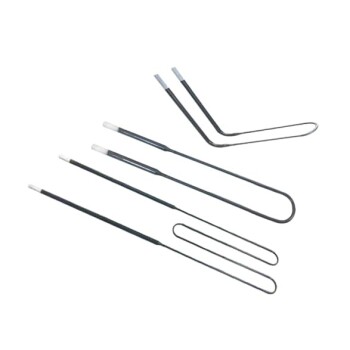
- Molybdenum Disilicide (MoSi2) Thermal Elements Electric Furnace Heating Element
- Multi Heating Zones CVD Tube Furnace Machine Chemical Vapor Deposition Chamber System Equipment
People Also Ask
- What is the function of the heating element in a furnace? The Engine of Your Thermal Process
- What is the best heating element for a furnace? A Guide to Selecting the Right Material for Your Temperature Needs
- What is SiC elements? The Ultimate High-Temperature Heating Solution
- How long does a heating element last on the furnace? Understand Lifespan & Safety for Your System
- What are silicon carbide heating elements used for? Reliable High-Temp Heating for Industrial Processes