The use of a laboratory hydraulic press is a critical preparation step that transforms fine catalyst powders into uniform, mechanically stable particles required for accurate performance testing. By compressing powder into "green bodies" that are subsequently crushed and sieved to a specific size range, researchers eliminate erratic pressure drops and gas bypassing within fixed-bed reactors. This process ensures that reaction gases interact uniformly with the catalyst’s active sites, providing the reliable kinetic data necessary for diesel oxidation catalyst (DOC) evaluation.
Core Takeaway: Pelletizing via a hydraulic press converts loose powder into structured granules to ensure stable fluid dynamics, prevent reactor clogging, and guarantee that experimental results reflect the catalyst's true chemical activity rather than physical bed irregularities.
Optimizing Reactor Fluid Dynamics
Eliminating Pressure Drop and Back Pressure
Fine powders offer extreme resistance to gas flow, which can lead to high back pressure and system instability. Using a hydraulic press to create denser pellets significantly reduces this resistance, allowing for a steady, measurable flow throughout the evaluation.
Preventing Gas Bypassing and Channeling
In a fixed-bed reactor, gases naturally follow the path of least resistance; in loose powder, this often results in channeling or "short-circuiting." Pelletizing ensures the catalyst bed is packed uniformly, forcing the diesel exhaust stimulants to move through the entire material rather than bypassing it.
Protecting Downstream Analytical Equipment
Unprocessed fine powders are easily carried away by high-velocity gas flows, which can contaminate downstream sensors and analyzers. The mechanical strength imparted by the hydraulic press prevents "dusting" or pulverization, keeping the experimental setup clean and the material balance accurate.
Enhancing Data Accuracy and Repeatability
Ensuring Uniform Gas Distribution
For a DOC evaluation to be valid, every part of the catalyst bed must be exposed to the reaction gases equally. Structured granules created through pressing and sieving (often to ranges like 250–355 μm or 60–80 mesh) facilitate a homogenous distribution of reactants across all active sites.
Maximizing Contact and Diffusion
The high static pressure of the press—often reaching up to 40 MPa—increases the physical contact between catalyst components. This density helps simulate real-world industrial environments where catalysts must maintain their structural integrity under constant thermal and chemical stress.
Providing a Foundation for Kinetic Analysis
Accurate kinetic data requires that the reaction is limited by chemistry, not by poor mass transfer or physical bed fluctuations. By standardizing the particle size and density, the hydraulic press removes physical variables, allowing researchers to focus solely on the catalytic conversion rates.
Understanding the Trade-offs and Pitfalls
The Risk of Over-Compression
Applying excessive pressure can lead to pore collapse or a significant reduction in surface area. If the pellets are pressed too hard, the internal active sites may become inaccessible to the gas, leading to artificially low activity readings that do not represent the powder’s true potential.
Mechanical Friability
Conversely, if the pressure is insufficient, the resulting "green bodies" will be too fragile. These pellets may crumble back into powder during the crushing and sieving process or, worse, during the actual test, leading to the same pressure drop issues the process was intended to solve.
Thermal Sintering Risks
In some cases, the high density achieved by pressing can exacerbate sintering (the fusing of particles) during high-temperature diesel oxidation tests. It is essential to balance the need for mechanical strength with the requirement for a porous, high-surface-area structure.
How to Apply This to Your Evaluation
To achieve the most reliable results during catalyst pelletization, your approach should be dictated by the specific requirements of your reactor and the nature of your material.
- If your primary focus is reactor safety and stability: Prioritize achieving a specific mechanical strength (e.g., using 40 MPa) to ensure the bed does not move or pulverize under high flow rates.
- If your primary focus is kinetic precision: Focus on the crushing and sieving stage to obtain a very narrow particle size distribution (such as 300–425 μm) to minimize internal diffusion limitations.
- If your primary focus is material characterization (XRD/XPS): Use the hydraulic press to create perfectly flat, dense pellets to ensure a consistent surface height for maximum signal intensity.
Standardizing your pelletization protocol is the most effective way to ensure that your diesel oxidation catalyst evaluations are both reproducible and scientifically sound.
Summary Table:
| Feature | Loose Powder | Pelletized Catalyst |
|---|---|---|
| Fluid Dynamics | High pressure drop & channeling | Stable flow & low back pressure |
| Gas Distribution | Irregular / Bypassing | Uniform contact with active sites |
| Safety | Risk of downstream contamination | Mechanically stable; no "dusting" |
| Data Quality | Erratic; physical interference | High accuracy; reflects true kinetics |
Elevate Your Catalyst Research with KINTEK Precision
To achieve reliable and reproducible diesel oxidation catalyst (DOC) evaluation, the quality of your pellet preparation is paramount. KINTEK specializes in high-performance laboratory equipment designed to remove physical variables from your experiments, ensuring your results reflect true chemical activity.
Our extensive portfolio for catalyst researchers includes:
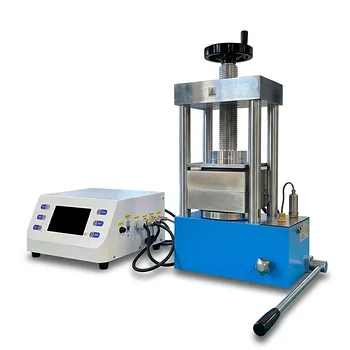
- Hydraulic Presses: Advanced manual and automated systems for pellet, hot, and isostatic pressing to achieve perfect "green body" density.
- Sample Preparation: Precision crushing and sieving equipment to maintain narrow particle size distributions.
- High-Temperature Solutions: Muffle, tube, and vacuum furnaces for critical sintering and calcination stages.
- Advanced Reactors: High-temperature high-pressure reactors and autoclaves for rigorous performance testing.
Don't let inconsistent bed morphology compromise your kinetic data. Contact KINTEK today to find the ideal hydraulic press and sieving solution tailored to your laboratory’s specific catalyst evaluation needs.
References
- Chih-Han Liu, Eleni A. Kyriakidou. Enhanced low temperature performance of bimetallic Pd/Pt/SiO2(core)@Zr(shell) diesel oxidation catalysts. DOI: 10.1016/j.apcatb.2023.122436
This article is also based on technical information from Kintek Solution Knowledge Base .
Related Products
- Automatic Laboratory Hydraulic Press for XRF & KBR Pellet Press
- Automatic Laboratory Hydraulic Pellet Press Machine for Lab Use
- Laboratory Hydraulic Pellet Press for XRF KBR FTIR Lab Applications
- Laboratory Hydraulic Press Lab Pellet Press Machine for Glove Box
- Laboratory Manual Hydraulic Pellet Press for Lab Use
People Also Ask
- What is the significance of applying 200 MPa of pressure with a laboratory hydraulic pellet press for composite ceramics?
- What is the role of a laboratory hydraulic pellet press and stainless steel molds in the fabrication of RuO2/NbC anodes?
- What is the necessity of using a laboratory hydraulic pellet press in the preparation of biomass fuel pellets? Guide
- How does a laboratory hydraulic pellet press contribute to SiCw/2024 aluminum composite preforms? Optimize Densification
- What role does a laboratory hydraulic pellet press play in fly ash utilization? Enhancing Adsorption and Flow Control