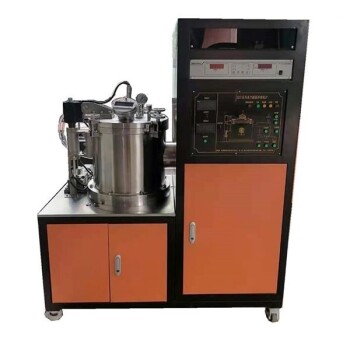
Pre-annealing metal substrates in a vacuum tube furnace is essential for eliminating residual stresses and work hardening while ensuring structural homogenization. This foundational step establishes a uniform material state, which is critical for creating predictable plastic deformation gradients and stable heterogeneous structures during subsequent processing stages, such as laser shock treatment.
The core purpose of vacuum pre-annealing is to "reset" the metal’s internal energy and microstructure. By removing the mechanical inconsistencies of previous processing, the furnace provides a blank slate that allows for precise, controlled gradient formation in 3D metal structures.
Establishing a Uniform Material Foundation
The Elimination of Residual Stress
Previous mechanical or thermal processing steps often leave residual stresses trapped within the metal substrate. A vacuum tube furnace provides the high-temperature environment necessary to relax these internal forces, preventing warping or unpredictable movement during later fabrication stages.
Overcoming Work Hardening
Processing metal at room temperature often leads to work hardening, where certain areas become significantly harder and less ductile than others. Annealing restores the material's ductility, ensuring that the substrate responds uniformly to the forces used to create 3D gradient structures.
Structural Homogenization
To achieve a predictable deformation gradient, the starting microstructure must be consistent throughout the entire part. The controlled thermal environment of the tube furnace allows the grains within the metal to reorganize into a homogenized state, removing localized variations that would otherwise cause defects.
Ensuring Atmospheric and Structural Integrity
Prevention of High-Temperature Oxidation
Using a vacuum atmosphere is critical because many high-purity metals react aggressively with oxygen at annealing temperatures. By removing air, the furnace prevents the formation of oxide scales, which can interfere with surface adhesion and the chemical purity of the final gradient structure.
Controlled Phase Transformations
In complex alloys, pre-annealing can be used to manage specific material phases, such as dissolving the brittle sigma phase in certain metal supports. This prevents volume expansion and internal cracking that might occur during subsequent high-temperature operations or service life.
Microstructure Adjustment for Adhesion
For substrates intended for coating or multi-material layering, vacuum annealing can induce surface recrystallization. This process adjusts the metal's microstructure to better match the thermal expansion coefficients of other materials, significantly enhancing film-substrate adhesion.
Understanding the Trade-offs
Equipment and Throughput Constraints
Vacuum tube furnaces offer exceptional control but are often limited by the physical dimensions of the tube. This makes them ideal for high-precision research and small-to-medium parts, but they may become a bottleneck in high-volume industrial production compared to continuous belt furnaces.
Cooling Rate Limitations
Achieving the desired microstructure often depends on the cooling rate after the annealing dwell time. In a vacuum, heat transfer occurs primarily through radiation, which can result in slower cooling cycles unless the furnace is equipped with specialized gas-quenching capabilities.
Operational Costs and Complexity
Maintaining a high-vacuum environment requires sophisticated pumping systems and regular maintenance to prevent leaks. These requirements increase the operational cost per part, making it essential to justify the use of vacuum annealing through the need for high purity or specific mechanical properties.
How to Apply This to Your Project
Making the Right Choice for Your Goal
The specific parameters of your vacuum annealing cycle should be dictated by the final requirements of your 3D gradient structure.
- If your primary focus is predictable plastic deformation: Prioritize a longer dwell time at temperature to ensure total homogenization and the complete removal of prior work hardening.
- If your primary focus is surface purity and brightness: Ensure your furnace utilizes a high-vacuum system or an inert gas purge with a titanium trap to eliminate residual oxygen.
- If your primary focus is preventing structural cracks: Focus on specific temperature setpoints that facilitate the dissolution of brittle phases, such as the sigma phase in Ni-based alloys.
By meticulously controlling the initial state of the metal substrate, you ensure that the subsequent 3D gradient formation is a result of intentional design rather than uncontrolled material variables.
Summary Table:
| Key Objective | Mechanism in Vacuum Furnace | Benefit to 3D Gradient Preparation |
|---|---|---|
| Stress Relief | Thermal relaxation of internal forces | Prevents warping during subsequent laser/mechanical treatment |
| Homogenization | Grain reorganization at high temperature | Ensures a consistent starting state for predictable deformation |
| Oxidation Control | High-vacuum atmosphere (removal of O2) | Maintains surface purity and improves multi-material adhesion |
| Ductility Recovery | Mitigation of prior work hardening | Allows the substrate to respond uniformly to gradient forming |
| Phase Management | Dissolution of brittle phases (e.g., sigma) | Eliminates internal cracking risks during high-temp operations |
Achieve Superior Material Consistency with KINTEK
Precision in 3D gradient metal structures starts with a perfectly prepared substrate. KINTEK provides the advanced thermal solutions necessary to "reset" your materials and ensure structural integrity. Our high-performance vacuum tube furnaces offer the precise temperature control and atmospheric purity required for critical pre-annealing and homogenization processes.
Beyond our specialized furnaces (including muffle, tube, rotary, and CVD/PECVD systems), KINTEK offers a comprehensive portfolio for material science, including high-pressure reactors, hydraulic presses, crushing systems, and essential ceramic consumables. Whether you are in research or high-precision manufacturing, we deliver the reliability and expertise your project demands.
Don't leave your material state to chance—contact our specialists today to find the ideal furnace solution for your laboratory!
References
- Xiaohan Zhang, Yaowu Hu. Laser shock peening enables 3D gradient metal structures: A case study on manufacturing self-armored hydrophobic surfaces. DOI: 10.1016/j.ijmachtools.2023.103993
This article is also based on technical information from Kintek Solution Knowledge Base .
Related Products
- Vacuum Sealed Continuous Working Rotary Tube Furnace Rotating Tube Furnace
- Laboratory High Pressure Vacuum Tube Furnace
- Laboratory Vacuum Tilt Rotary Tube Furnace Rotating Tube Furnace
- Split Chamber CVD Tube Furnace with Vacuum Station Chemical Vapor Deposition System Equipment Machine
- 1200℃ Controlled Atmosphere Furnace Nitrogen Inert Atmosphere Furnace
People Also Ask
- What are the process advantages of using a rotary tube furnace for WS2 powder? Achieve Superior Material Crystallinity
- What are the advantages of using a rotary tube furnace for MoVOx catalysts? Elevate Uniformity and Crystallinity
- Why is a vacuum tube furnace with argon protection required for RGO/Cu? Ensure Conductivity and Material Purity
- Why is a rotary tube furnace preferred over a fixed tube furnace for the carbonization of asphaltenes? Superior Quality
- Why is a rotary tube furnace recommended for the calcination stage of potassium vanadium oxide catalysts? Optimize Purity