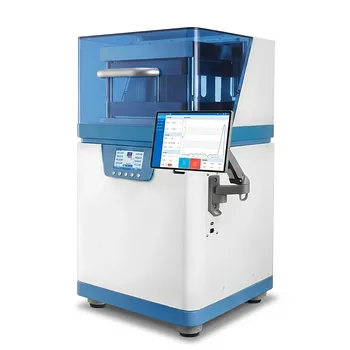
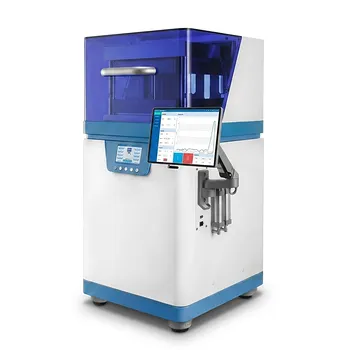
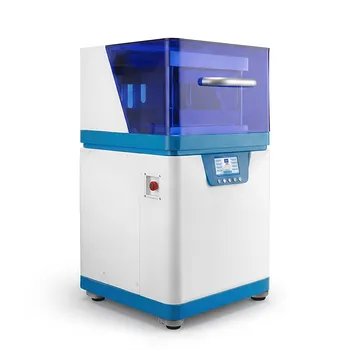
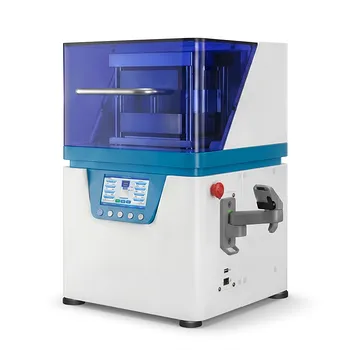
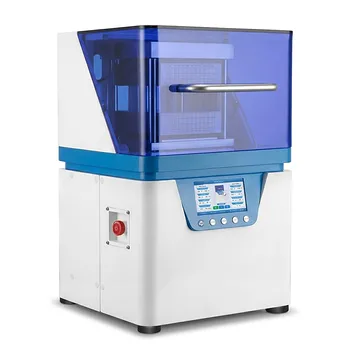
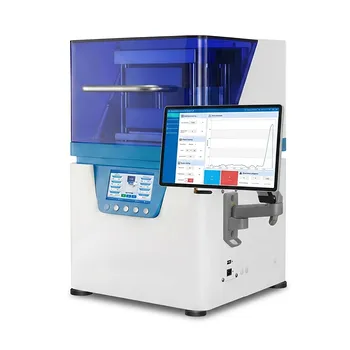
Precision hot presses are the foundational tools used to fuse individual fuel cell components into a unified, functional unit. By applying simultaneous, precisely controlled temperature and pressure, these machines bond the catalyst-coated layers—often consisting of a cathode (such as Mn-N-C) and an anode—directly to both sides of a proton exchange membrane (PEM).
The core role of a precision hot press is to eliminate interfacial gaps between the membrane and catalyst layers. This process establishes high-efficiency proton transport channels and minimizes contact resistance, which is essential for maximizing the power density of the resulting fuel cell.
Facilitating Superior Interfacial Bonding
Creating the Proton Transport Network
The primary function of the hot press is to ensure "intimate" physical contact between the catalyst particles and the electrolyte membrane. This contact is necessary for protons to move seamlessly from the anode, through the membrane, and into the cathode.
Without this synchronized thermal and mechanical action, the layers remain separate entities with high electrical and ionic resistance. The hot press transforms these layers into a cohesive Membrane Electrode Assembly (MEA).
Inducing Interface Fusion
At specific temperatures—often ranging from 80°C to 130°C—the polymer electrolyte in the membrane and the catalyst binder can undergo a degree of micro-melting.
This softening allows the materials to interpenetrate at the molecular level. This fusion is what significantly reduces interfacial contact resistance, ensuring that electrons and protons move with minimal energy loss.
Enhancing Electrochemical Efficiency
Optimizing Conductivity
A precision hot press is vital for improving proton conductivity and electron transfer efficiency. By compressing the catalyst-coated gas diffusion layer (GDL) against the Nafion membrane, the press forces the active sites of the catalyst into direct contact with the ion-conducting polymer.
This alignment is critical during operation. Efficient transport channels allow the fuel cell to handle higher current densities without a significant drop in voltage.
Ensuring Mechanical Stability
Beyond electrical performance, the hot press provides the mechanical stability required for long-term operation. The high pressure (which can reach 400 kg/cm² in laboratory settings) ensures the MEA can withstand the physical stresses of gas flow and thermal cycling.
A well-pressed MEA will not delaminate over time. This structural integrity is a prerequisite for the "long-term operation" and "durability" expected of modern PEMFC stacks.
Precision Control and Material Protection
Preventing Structural Damage
Precision is the most critical attribute of the hot press because fuel cell components are exceptionally fragile. Excessive force can crush the delicate pores of the carbon paper in the Gas Diffusion Layer (GDL) or cause catalyst particles to puncture the thin proton exchange membrane.
Advanced hydraulic presses use accurately controlled pressure profiles to achieve bonding without compromising the porosity of the layers. This ensures that while the layers are tight, gases (Hydrogen and Oxygen) can still reach the catalyst sites.
Managing Thermal Profiles
The hot press must maintain a constant, uniform temperature across the entire surface of the MEA. Inconsistent heating leads to "cold spots" where bonding is weak, or "hot spots" where the membrane may degrade thermally.
Standard laboratory procedures often utilize specific setpoints, such as 120°C or 130°C, to achieve the perfect balance between polymer flow and material preservation.
Understanding the Trade-offs
The Risk of Over-Compression
While high pressure reduces contact resistance, it can also lead to mass transport losses. If the gas diffusion layer is over-compressed, its pores close up, preventing fuel from reaching the catalyst and causing the cell to "choke" at high power levels.
Thermal Degradation vs. Bonding Quality
There is a narrow window for effective hot-pressing temperatures. If the temperature is too low, the interface fusion is incomplete, leading to high resistance; if it is too high, the proton exchange membrane can lose its sulfonic acid groups or suffer mechanical weakening, shortening the lifespan of the fuel cell.
How to Apply This to Your Project
Recommendations for MEA Fabrication
- If your primary focus is maximizing peak power output: Prioritize higher bonding pressures and temperatures (near the glass transition point of the membrane) to minimize interfacial resistance, provided your GDL can withstand the load.
- If your primary focus is long-term durability: Opt for slightly lower, highly uniform pressures to ensure the membrane thickness remains consistent and the GDL structure remains uncompromised.
- If your primary focus is laboratory consistency: Utilize a hydraulic press with digital synchronized controls for both temperature and pressure to ensure that every MEA produced has a repeatable performance profile.
Mastering the balance of heat and force within the hot press is the definitive step in transforming raw materials into a high-performance energy conversion device.
Summary Table:
| Key Role | Technical Impact | Critical Control Parameter |
|---|---|---|
| Interfacial Fusion | Eliminates gaps; minimizes contact resistance | Precise Temperature (80°C - 130°C) |
| Proton Conductivity | Creates efficient ion transport channels | Uniform Pressure Distribution |
| Mechanical Stability | Prevents delamination; ensures long-term durability | High Pressure (up to 400 kg/cm²) |
| Material Protection | Preserves GDL porosity and membrane integrity | Synchronized Force/Time Profiles |
Elevate Your Fuel Cell Research with KINTEK
Precision is the difference between a failing cell and a high-performance power source. KINTEK specializes in advanced laboratory solutions, offering a comprehensive range of precision hydraulic presses (pellet, hot, isostatic) engineered specifically for sensitive applications like MEA fabrication.
Whether you are optimizing proton conductivity or ensuring long-term mechanical stability, our equipment provides the synchronized temperature and pressure control required for superior interfacial bonding. Beyond hot presses, KINTEK supports your entire workflow with high-temperature furnaces, battery research tools, and specialized ceramics.
Ready to achieve superior consistency in your PEMFC fabrication?
Contact our technical team today to find the ideal pressing solution.
References
- Thomas Stracensky, Hui Xu. Bypassing Formation of Oxide Intermediate via Chemical Vapor Deposition for the Synthesis of an Mn-N-C Catalyst with Improved ORR Activity. DOI: 10.1021/acscatal.3c01982
This article is also based on technical information from Kintek Solution Knowledge Base .
Related Products
- Automatic Laboratory Heat Press Machine
- Automatic Laboratory Hot Press 400x400 mm with Programmable High Temperature and Hydraulic Force Control
- Large Format Automatic Laboratory Hot Press 400x400 Plate for Industrial Material Sintering and Polymer Lamination
- Automatic Hydraulic Hot Press with 500x500mm Heating Plates and Multi Stage PLC Control for Material Sintering
- Automatic Laboratory Hot Press Machine with Heated Platens 200x200mm Program Control Dual Heating Plates
People Also Ask
- What are the core advantages of using a laboratory hot press to produce Bi2Se3? Achieve 93% Density & High Conductivity
- Why is a laboratory hot press necessary for all-solid-state battery assembly? Reduce Impedance and Enhance Performance
- How does a three-stage pressure program affect rice husk particleboards? Optimize Bond Strength & Stability
- What is the primary function of a laboratory hot press in MEA assembly? Optimize Fuel Cell Bonding & Performance
- How does a laboratory hot press improve alloy performance? Optimize Liquid Phase Sintering for High-Strength Materials