Knowledge What is the role of a sieving system in wet depithing? Optimize Sugarcane Bagasse Cellulose Extraction
Author avatar

Tech Team · Kintek Solution

Updated 20 hours ago

What is the role of a sieving system in wet depithing? Optimize Sugarcane Bagasse Cellulose Extraction


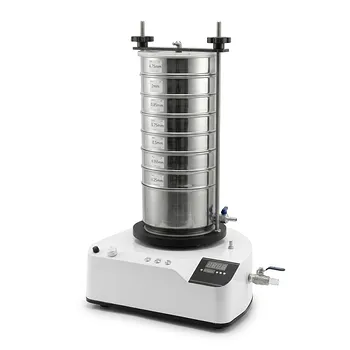
The primary role of a sieving system in the wet depithing process is to mechanically separate valuable fiber components from non-fibrous pith within sugarcane bagasse. Utilizing specific mesh sizes, such as 1.19 mm and 0.250 mm, the system isolates the structural fibers necessary for cellulose production while allowing smaller pith particles and impurities to be washed away.

The sieving system acts as a critical quality control gate, ensuring that raw materials entering the alkaline pulping process are free of non-fibrous contaminants. This separation directly correlates to higher cellulose purity and a more efficient downstream chemical reaction.

The Mechanics of Wet Depithing

Separation via Mesh Sizing

The core effectiveness of the system relies on the precise selection of sieve mesh sizes.

In the context of sugarcane bagasse, screens with openings of 1.19 mm and 0.250 mm are commonly employed. These dimensions are specifically targeted to retain longer, useful fibers while permitting the passage of smaller, non-fibrous pith particles.

The Function of Water Flow

Unlike dry sieving, this process relies on a continuous flow of water to facilitate separation.

A spray nozzle, typically positioned above the sieve stack, introduces water to the sample, creating a suspension. This hydraulic action helps dislodge pith from the fiber bundles, flushing the smaller particles through the mesh.

Visual Indicators of Completion

The rinsing process is not arbitrary; it continues until the liquid exiting the sieve stack is visibly clear.

The transition from turbid water (clouded with solids) to clear water signals that the majority of free pith and loose impurities have been successfully removed from the fiber mass.

Impact on Downstream Processing

Optimizing for Alkaline Pulping

The output of the sieving system serves as the feedstock for the subsequent alkaline pulping process.

By removing the pith early, the system ensures that the chemical agents used in pulping react primarily with the desired fibers. This improves the efficiency of the chemical reaction and reduces the waste of reagents on non-valuable material.

Elevating Cellulose Purity

The ultimate goal of this mechanical intervention is the production of high-purity cellulose pulp.

By physically eliminating the pith—which contains lower cellulose content and higher impurities—the final pulp exhibits superior quality and structural integrity.

Critical Operational Considerations

Fluid Compatibility

A fundamental requirement of wet sieving is that the liquid medium must be inert regarding the sample material.

The water or sieving liquid used must not alter the physical or chemical properties of the bagasse. If the liquid causes unwanted swelling or chemical degradation, the separation results will be skewed, and the fiber quality compromised.

Managing System Complexity

Wet sieving involves more complex infrastructure than dry methods due to the need for water management.

Operators must ensure consistent water pressure from spray nozzles to prevent clogging and ensure the sample is evenly washed. Inadequate flow can lead to pith retention, defeating the purpose of the depithing step.

Making the Right Choice for Your Goal

To maximize the efficiency of your cellulose extraction, consider the following regarding your sieving setup:

  • If your primary focus is Pulp Purity: Ensure your mesh sizes are strictly maintained at 1.19 mm and 0.250 mm to aggressively filter out non-fibrous pith.
  • If your primary focus is Process Consistency: Monitor the turbidity of the outlet water continuously to strictly define the endpoint of the washing cycle.

Effective depithing is not just about cleaning; it is the foundational step that dictates the maximum potential quality of your final cellulose product.

Summary Table:

Feature Specification/Role
Common Mesh Sizes 1.19 mm and 0.250 mm
Mechanism Hydraulic action via water spray and mesh filtration
Primary Goal Mechanical separation of structural fibers from non-fibrous pith
Completion Indicator Effluent liquid transitions from turbid to clear
Downstream Benefit Reduced chemical reagent waste and higher cellulose purity

Maximize Your Material Purity with KINTEK

Precise separation is the foundation of high-quality cellulose extraction. At KINTEK, we specialize in providing professional-grade crushing, milling, and sieving equipment designed to meet the rigorous demands of laboratory research and industrial processing.

Whether you are refining sugarcane bagasse or conducting advanced battery research, our comprehensive portfolio—including sieving systems, high-temperature furnaces, and hydraulic presses—ensures your samples meet the highest standards of quality. Our expert team is ready to help you select the ideal mesh configurations and equipment to streamline your workflow and enhance your results.

Ready to elevate your lab's efficiency? Contact us today to explore our full range of solutions!

References

  1. Leandro Vinícius Alves Gurgel, Antônio Aprígio da Silva Curvelo. Characterization of depolymerized residues from extremely low acid hydrolysis (ELA) of sugarcane bagasse cellulose: Effects of degree of polymerization, crystallinity and crystallite size on thermal decomposition. DOI: 10.1016/j.indcrop.2011.11.009

This article is also based on technical information from Kintek Solution Knowledge Base .

Related Products

People Also Ask

Related Products

Laboratory Test Sieves and Sieving Machines

Laboratory Test Sieves and Sieving Machines

Precision lab test sieves & sieving machines for accurate particle analysis. Stainless steel, ISO-compliant, 20μm-125mm range. Request specs now!

Laboratory Test Sieves and Vibratory Sieve Shaker Machine

Laboratory Test Sieves and Vibratory Sieve Shaker Machine

Efficiently process powders, granules, and small blocks with a high-frequency vibration sieve. Control vibration frequency, screen continuously or intermittently, and achieve accurate particle size determination, separation, and classification.

Laboratory Vibratory Sieve Shaker Machine for Dry and Wet Three-Dimensional Sieving

Laboratory Vibratory Sieve Shaker Machine for Dry and Wet Three-Dimensional Sieving

KT-VD200 can be used for sieving tasks of dry and wet samples in the laboratory. The screening quality is 20g-3kg. The product is designed with a unique mechanical structure and an electromagnetic vibrating body with a vibration frequency of 3000 times per minute.

Laboratory Vibratory Sieve Shaker Machine Slap Vibrating Sieve

Laboratory Vibratory Sieve Shaker Machine Slap Vibrating Sieve

KT-T200TAP is a slapping and oscillating sieving instrument for laboratory desktop use, with 300 rpm horizontal circular motion and 300 vertical slapping motions to simulate manual sieving to help sample particles pass through better.

Vibratory Sieve Shaker Machine Dry Three-Dimensional Vibrating Sieve

Vibratory Sieve Shaker Machine Dry Three-Dimensional Vibrating Sieve

The KT-V200 product focuses on solving common sieving tasks in the laboratory. It is suitable for sieving 20g-3kg dry samples.

Small Lab Rubber Calendering Machine

Small Lab Rubber Calendering Machine

Small lab rubber calendering machine is used for producing thin, continuous sheets of plastic or rubber materials. It is commonly employed in laboratories, small-scale production facilities, and prototyping environments to create films, coatings, and laminates with precise thickness and surface finish.

Custom PTFE Teflon Parts Manufacturer for PTFE Mesh F4 Sieve

Custom PTFE Teflon Parts Manufacturer for PTFE Mesh F4 Sieve

PTFE mesh sieve is a specialized test sieve designed for particle analysis in various industries, featuring a non-metallic mesh woven from PTFE filament. This synthetic mesh is ideal for applications where metal contamination is a concern . PTFE sieves are crucial for maintaining the integrity of samples in sensitive environments, ensuring accurate and reliable results in particle size distribution analysis.

Lab Electrochemical Workstation Potentiostat for Laboratory Use

Lab Electrochemical Workstation Potentiostat for Laboratory Use

Electrochemical workstations, also known as laboratory electrochemical analyzers, are sophisticated instruments designed for precise monitoring and control in various scientific and industrial processes.

Metallographic Specimen Mounting Machine for Laboratory Materials and Analysis

Metallographic Specimen Mounting Machine for Laboratory Materials and Analysis

Precision metallographic mounting machines for labs—automated, versatile, and efficient. Ideal for sample prep in research and quality control. Contact KINTEK today!

Laboratory Sterilizer Lab Autoclave Herbal Powder Sterilization Machine for Plant

Laboratory Sterilizer Lab Autoclave Herbal Powder Sterilization Machine for Plant

The herbal powder sterilization autoclave machine for Chinese medicine uses saturated steam for effective sterilization. It utilizes the heat and penetrative properties of steam, achieves sterilization after heat preservation, and maintains a good drying effect with a dedicated drying system.

Lab Internal Rubber Mixer Rubber Kneader Machine for Mixing and Kneading

Lab Internal Rubber Mixer Rubber Kneader Machine for Mixing and Kneading

Lab internal rubber mixer is suitable for mixing, kneading and dispersing various chemical raw materials such as plastics, rubber, synthetic rubber, hot melt adhesive and various low-viscosity materials.

Cold Isostatic Pressing Machine CIP for Small Workpiece Production 400Mpa

Cold Isostatic Pressing Machine CIP for Small Workpiece Production 400Mpa

Produce uniformly high-density materials with our Cold Isostatic Press. Ideal for compacting small workpieces in production settings. Widely used in powder metallurgy, ceramics, and biopharmaceutical fields for high-pressure sterilization and protein activation.

Electric Split Lab Cold Isostatic Press CIP Machine for Cold Isostatic Pressing

Electric Split Lab Cold Isostatic Press CIP Machine for Cold Isostatic Pressing

Split cold isostatic presses are capable of providing higher pressures, making them suitable for testing applications that require high pressure levels.

Rubber Vulcanizer Vulcanizing Machine Plate Vulcanizing Press for Lab

Rubber Vulcanizer Vulcanizing Machine Plate Vulcanizing Press for Lab

The Plate vulcanizing press is a kind of equipment used in the production of rubber products, mainly used for the vulcanization of rubber products. Vulcanization is a key step in rubber processing.

Lab Plastic PVC Calender Stretch Film Casting Machine for Film Testing

Lab Plastic PVC Calender Stretch Film Casting Machine for Film Testing

The cast film machine is designed for the molding of polymer cast film products and has multiple processing functions such as casting, extrusion, stretching, and compounding.

Automatic Heated Hydraulic Press Machine with Heated Plates for Laboratory Hot Press 25T 30T 50T

Automatic Heated Hydraulic Press Machine with Heated Plates for Laboratory Hot Press 25T 30T 50T

Efficiently prepare your samples with our Automatic Heated Lab Press. With a pressure range up to 50T and precise control, it's perfect for various industries.

Automatic Laboratory Hydraulic Pellet Press Machine for Lab Use

Automatic Laboratory Hydraulic Pellet Press Machine for Lab Use

Experience efficient sample preparation with our Automatic Lab Press Machine. Ideal for material research, pharmacy, ceramics, and more. Features a compact size and hydraulic press functionality with heating plates. Available in various sizes.

Heated Hydraulic Press Machine with Integrated Manual Heated Plates for Lab Use

Heated Hydraulic Press Machine with Integrated Manual Heated Plates for Lab Use

Efficiently process heat-pressing samples with our Integrated Manual Heated Lab Press. With a heating range up to 500°C, it's perfect for various industries.

Automatic Lab Cold Isostatic Press CIP Machine Cold Isostatic Pressing

Automatic Lab Cold Isostatic Press CIP Machine Cold Isostatic Pressing

Efficiently prepare samples with our Automatic Lab Cold Isostatic Press. Widely used in material research, pharmacy, and electronic industries. Provides greater flexibility and control compared to electric CIPs.

Single Punch Tablet Press Machine and Mass Production Rotary Tablet Punching Machine for TDP

Single Punch Tablet Press Machine and Mass Production Rotary Tablet Punching Machine for TDP

Rotary tablet punching machine is an automatic rotating and continuous tableting machine. It is mainly used for tablet manufacturing in the pharmaceutical industry, and is also suitable for industrial sectors such as food, chemicals, batteries, electronics, ceramics, etc. to compress granular raw materials into tablets.


Leave Your Message