The primary role of the industrial electric heating oven in the production of Fe-Cr-Mn-Mo-N-C composite steel is to execute a critical pre-drying phase for oxide raw materials. Specifically, materials such as iron oxide, chromium oxide, manganese oxide, and molybdenum oxide are subjected to a temperature of 250 °C for a duration of 1 to 2 hours.
While moisture removal is the immediate action, the ultimate goal is process stability. By drying the oxides, the oven increases the specific surface area of the particles, which is a prerequisite for efficient ball milling and a stable Self-propagating High-temperature Synthesis (SHS) reaction.
Operational Parameters and Objectives
Targeted Raw Materials
This thermal treatment is specifically designed for the oxide components of the composite steel.
It prepares iron oxide, chromium oxide, manganese oxide, and molybdenum oxide for the intense physical processing that follows.
Precise Thermal Regulation
The process requires a sustained temperature of 250 °C.
Maintaining this temperature for 1 to 2 hours ensures that moisture is driven out of the material structure without prematurely altering the chemical composition of the oxides.
Impact on Downstream Processing
Increasing Specific Surface Area
Beyond simple drying, this heating phase physically alters the particle state.
The process increases the specific surface area of the raw material particles. This physical change is essential for maximizing the contact area between reactants in later stages.
Enhancing Ball Milling Efficiency
Moisture in raw materials can lead to clumping and inconsistent particle reduction.
By effectively removing moisture, the oven ensures that the subsequent ball milling process functions at peak efficiency, resulting in a uniform powder mixture.
Stabilizing the SHS Reaction
The production of this composite steel relies on Self-propagating High-temperature Synthesis (SHS), a reaction sensitive to contaminants.
Water vapor acts as a contaminant that can destabilize combustion. Pre-drying ensures the chemical stability required for a successful SHS reaction.
The Risks of Inadequate Treatment
Consequences of Residual Moisture
If the oven cycle is shortened or the temperature is insufficient, residual moisture remains within the oxides.
This moisture can impede the ball milling process, leading to uneven particle sizes and poor mixture homogeneity.
Reaction Instability
The most significant trade-off involves the SHS reaction itself.
Skipping or rushing this pre-drying phase introduces instability into the synthesis reaction, potentially leading to incomplete combustion or structural defects in the final composite steel.
Making the Right Choice for Your Goal
To ensure the highest quality Fe-Cr-Mn-Mo-N-C composite steel, precise control of the pre-drying phase is non-negotiable.
- If your primary focus is Milling Efficiency: Ensure the oxides are dried for the full duration to prevent clumping and maximize specific surface area.
- If your primary focus is Reaction Consistency: Strictly maintain the 250 °C temperature to guarantee the low moisture content required for a stable SHS reaction.
Proper thermal preparation of raw oxides is the foundational step that dictates the success of the entire synthesis process.
Summary Table:
| Parameter | Specification | Purpose |
|---|---|---|
| Target Materials | Iron, Chromium, Manganese, Molybdenum Oxides | Pre-drying raw oxide components |
| Temperature | 250 °C | Moisture removal & surface area optimization |
| Duration | 1 - 2 Hours | Ensuring chemical and physical stability |
| Key Outcome | Enhanced Specific Surface Area | Prerequisite for efficient ball milling |
| Final Goal | SHS Reaction Stability | Prevention of combustion instability and defects |
Elevate Your Material Synthesis with KINTEK
Achieving the perfect Fe-Cr-Mn-Mo-N-C composite steel requires absolute thermal precision. KINTEK specializes in advanced laboratory and industrial heating solutions designed to stabilize your most sensitive reactions.
From high-temperature muffle and vacuum furnaces to precision crushing, milling, and hydraulic pressing systems, we provide the end-to-end equipment necessary for superior metallurgy. Our portfolio also includes high-temperature high-pressure reactors, autoclaves, and specialized consumables like crucibles and ceramics tailored for SHS processes.
Ready to optimize your production efficiency and reaction stability? Contact KINTEK today to discuss your project requirements!
References
- Maksim Konovalov, М. I. Mokrushina. On the Methodology of the Quantitative Analysis of Fe-Cr-Mn-Mo-N-C Steels with Reinforcing Particles of Oxides and Nitrides Using an X-ray Fluorescence Energy-Dispersive Spectrometer BRA-135F. DOI: 10.15350/17270529.2023.2.23
This article is also based on technical information from Kintek Solution Knowledge Base .
Related Products
- Laboratory Scientific Electric Heating Blast Drying Oven
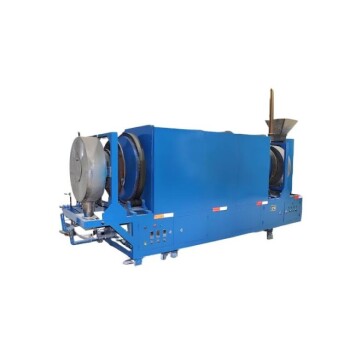
- Electric Rotary Kiln Continuous Working Small Rotary Furnace Heating Pyrolysis Plant
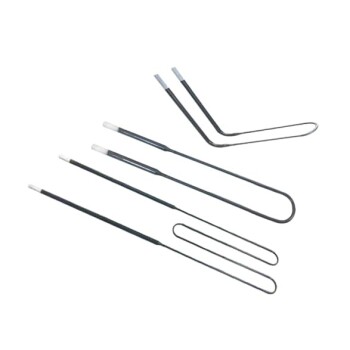
- Molybdenum Disilicide (MoSi2) Thermal Elements Electric Furnace Heating Element
- Electric Heated Hydraulic Vacuum Heat Press for Lab
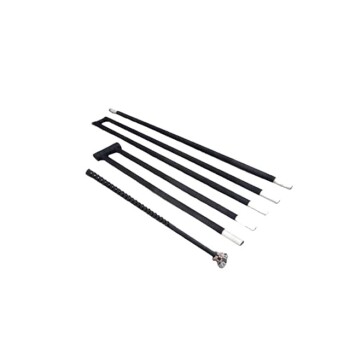
- Silicon Carbide SiC Thermal Heating Elements for Electric Furnace
People Also Ask
- How does a laboratory electric drying oven contribute to the formation of the initial coating? Expert Insights
- What role does a precision laboratory drying oven play in the synthesis of GO-PANI nanocomposites? Protect Material Integrity
- What role does a laboratory drying oven play in the preparation of zinc oxide nanoparticle precursors?
- What is the necessity of using a laboratory drying oven when processing MoO3/GO composite nanopowders? Find out here.
- What is the role of a laboratory drying oven in cellulose citrate production? Ensure Material Stability & Purity