Knowledge What is the role of crucibles in the Pechini method? Key Steps for High-Purity Synthesis
Author avatar

Tech Team · Kintek Solution

Updated 3 days ago

What is the role of crucibles in the Pechini method? Key Steps for High-Purity Synthesis


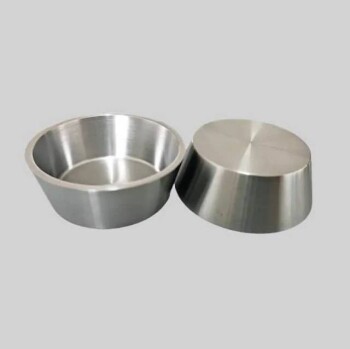
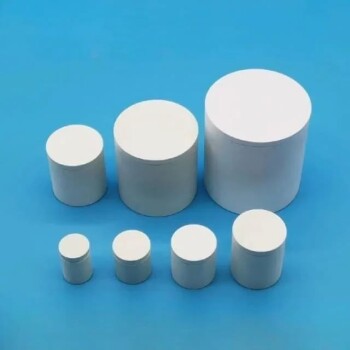
In the context of the Pechini synthesis method, crucibles function as essential high-temperature containment vessels designed to withstand extreme thermal processing without compromising sample integrity. They facilitate two distinct heating stages required to transform the initial dried polymer resin into the final La0.6Sr0.4CoO3-δ ceramic precursor.

Crucibles provide a stable, chemically resistant environment for both the carbonization of organic resins at 400°C and the final calcination at 1000°C, ensuring the material achieves the correct phase transformation without contamination.

The Two-Stage Thermal Role

The Pechini method relies on a precise thermal history to achieve the desired material properties. The crucible is the physical interface between the heat source and your chemical precursors during two critical phases.

Phase 1: Carbonization of the Resin

Initially, the crucible contains the dried polymer resin derived from the solution.

The system is heated to 400°C.

The primary goal here is the removal of organic residues. The crucible must safely contain the material as it chars and evolves gases, leaving behind a precursor powder.

Phase 2: High-Temperature Calcination

Following the initial burn-off, the resulting material is typically ground and returned to the crucible.

The vessel is then subjected to a much higher temperature of 1000°C.

This step is critical for phase transformation. The crucible ensures the powder remains contained while the thermal energy drives the crystallization of the La0.6Sr0.4CoO3-δ structure.

Critical Requirements for Success

Thermal Stability

The crucible acts as a safeguard against thermal failure.

It must maintain structural integrity from ambient temperatures up to 1000°C.

This resistance ensures the process can move from resin decomposition to crystallization without the vessel cracking or degrading.

Contamination Control

Maintaining the purity of the La0.6Sr0.4CoO3-δ precursor is paramount.

The crucible acts as a barrier, preventing interaction with the furnace environment or heating elements.

By holding the powder securely, it ensures the chemical reaction proceeds solely within the sample material.

Understanding the Trade-offs

While crucibles are necessary for containment, they introduce specific variables that must be managed to ensure synthesis success.

Material Compatibility Risks

The primary trade-off involves the interaction between the crucible material and the precursor powder at high temperatures.

The reference emphasizes the need to avoid contamination.

If a crucible is not sufficiently inert at 1000°C, trace elements from the vessel may leach into the sample, altering the stoichiometry of the final product.

Thermal Transfer Limitations

Crucibles act as a thermal mass that can slightly delay heat transfer.

Thicker crucibles offer more durability but may increase the time required for the center of the powder bed to reach the target calcination temperature.

Making the Right Choice for Your Synthesis

Selecting the appropriate crucible strategy is vital for obtaining high-quality La0.6Sr0.4CoO3-δ precursors.

  • If your primary focus is phase purity: Prioritize a crucible material known for high chemical inertness at 1000°C to eliminate the risk of contamination during the final transformation.
  • If your primary focus is process efficiency: Ensure the crucible geometry allows for even heat distribution to the resin and powder, ensuring complete organic removal at 400°C.

Ultimately, the crucible is the passive but critical component that safeguards the chemical integrity of the Pechini method from start to finish.

Summary Table:

Process Stage Temperature Primary Function of Crucible
Carbonization 400°C Safe containment during resin charring and organic residue removal.
Calcination 1000°C Facilitating phase transformation and crystallization of ceramic structures.
Integrity Maintenance Ambient to 1000°C Preventing sample contamination and ensuring chemical stoichiometry.

Elevate Your Material Synthesis with KINTEK Precision

Achieving the perfect phase transformation in the Pechini method requires more than just high temperatures—it demands high-quality containment. KINTEK specializes in premium laboratory equipment, offering a robust selection of high-temperature crucibles (alumina, ceramic, and quartz) and muffle furnaces designed to withstand the rigorous 1000°C demands of ceramic precursor synthesis.

From our precision crushing and milling systems for post-carbonization processing to our advanced calcination solutions, KINTEK provides the reliability and purity your research depends on. Ensure your La0.6Sr0.4CoO3-δ precursors meet the highest standards of chemical integrity.

Ready to optimize your lab's thermal processing? Contact us today to find the perfect crucible and furnace solution!

Related Products

People Also Ask

Related Products

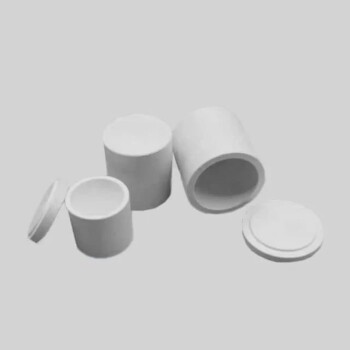
Engineering Advanced Fine Ceramics Alumina Al2O3 Crucible With Lid Cylindrical Laboratory Crucible

Engineering Advanced Fine Ceramics Alumina Al2O3 Crucible With Lid Cylindrical Laboratory Crucible

Cylindrical Crucibles Cylindrical crucibles are one of the most common crucible shapes, suitable for melting and processing a wide variety of materials, and are easy to handle and clean.

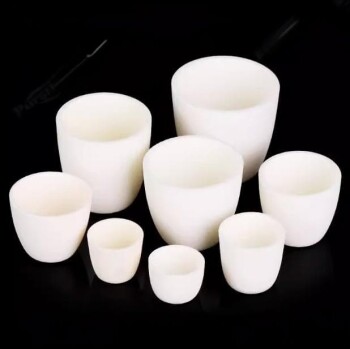
Engineering Advanced Fine Ceramics Alumina Crucibles (Al2O3) for Thermal Analysis TGA DTA

Engineering Advanced Fine Ceramics Alumina Crucibles (Al2O3) for Thermal Analysis TGA DTA

TGA/DTA thermal analysis vessels are made of aluminum oxide (corundum or aluminum oxide). It can withstand high temperature and is suitable for analyzing materials that require high temperature testing.

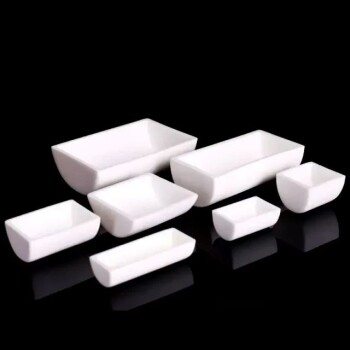
Evaporation Crucible for Organic Matter

Evaporation Crucible for Organic Matter

An evaporation crucible for organic matter, referred to as an evaporation crucible, is a container for evaporating organic solvents in a laboratory environment.

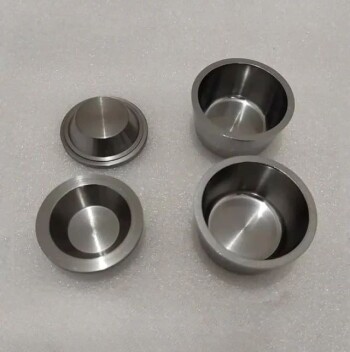
E Beam Crucibles Electron Gun Beam Crucible for Evaporation

E Beam Crucibles Electron Gun Beam Crucible for Evaporation

In the context of electron gun beam evaporation, a crucible is a container or source holder used to contain and evaporate the material to be deposited onto a substrate.

1400℃ Muffle Oven Furnace for Laboratory

1400℃ Muffle Oven Furnace for Laboratory

Get precise high-temperature control up to 1500℃ with KT-14M Muffle furnace. Equipped with a smart touch screen controller and advanced insulation materials.

Benchtop Laboratory Freeze Dryer for Lab Use

Benchtop Laboratory Freeze Dryer for Lab Use

Premium benchtop laboratory freeze dryer for lyophilization, preserving samples with ≤ -60°C cooling. Ideal for pharmaceuticals & research.

Molybdenum Vacuum Heat Treat Furnace

Molybdenum Vacuum Heat Treat Furnace

Discover the benefits of a high-configuration molybdenum vacuum furnace with heat shield insulation. Ideal for high-purity, vacuum environments like sapphire crystal growth and heat treatment.

Vertical High Temperature Graphite Vacuum Graphitization Furnace

Vertical High Temperature Graphite Vacuum Graphitization Furnace

Vertical high temperature graphitization furnace for carbonization and graphitization of carbon materials up to 3100℃.Suitable for shaped graphitization of carbon fiber filaments and other materials sintered in a carbon environment.Applications in metallurgy, electronics, and aerospace for producing high-quality graphite products like electrodes and crucibles.

Graphite Vacuum Furnace Bottom Discharge Graphitization Furnace for Carbon Materials

Graphite Vacuum Furnace Bottom Discharge Graphitization Furnace for Carbon Materials

Bottom-out graphitization furnace for carbon materials, ultra-high temperature furnace up to 3100°C, suitable for graphitization and sintering of carbon rods and carbon blocks. Vertical design, bottom discharging, convenient feeding and discharging, high temperature uniformity, low energy consumption, good stability, hydraulic lifting system, convenient loading and unloading.

Graphite Vacuum Continuous Graphitization Furnace

Graphite Vacuum Continuous Graphitization Furnace

High-temperature graphitization furnace is a professional equipment for graphitization treatment of carbon materials. It is a key equipment for the production of high-quality graphite products. It has high temperature, high efficiency and uniform heating. It is suitable for various high-temperature treatments and graphitization treatments. It is widely used in metallurgy, electronics, aerospace, etc. industry.

Horizontal High Temperature Graphite Vacuum Graphitization Furnace

Horizontal High Temperature Graphite Vacuum Graphitization Furnace

Horizontal Graphitization Furnace: This type of furnace is designed with the heating elements placed horizontally, allowing for uniform heating of the sample. It's well-suited for graphitizing large or bulky samples that require precise temperature control and uniformity.

Ultra-High Temperature Graphite Vacuum Graphitization Furnace

Ultra-High Temperature Graphite Vacuum Graphitization Furnace

The ultra-high temperature graphitization furnace utilizes medium frequency induction heating in a vacuum or inert gas environment. The induction coil generates an alternating magnetic field, inducing eddy currents in the graphite crucible, which heats up and radiates heat to the workpiece, bringing it to the desired temperature. This furnace is primarily used for graphitization and sintering of carbon materials, carbon fiber materials, and other composite materials.

Large Vertical Graphite Vacuum Graphitization Furnace

Large Vertical Graphite Vacuum Graphitization Furnace

A large vertical high-temperature graphitization furnace is a type of industrial furnace used for the graphitization of carbon materials, such as carbon fiber and carbon black. It is a high-temperature furnace that can reach temperatures of up to 3100°C.

Glassy Carbon Sheet RVC for Electrochemical Experiments

Glassy Carbon Sheet RVC for Electrochemical Experiments

Discover our Glassy Carbon Sheet - RVC. Perfect for your experiments, this high-quality material will elevate your research to the next level.

Platinum Sheet Electrode for Laboratory and Industrial Applications

Platinum Sheet Electrode for Laboratory and Industrial Applications

Elevate your experiments with our Platinum Sheet Electrode. Crafted with quality materials, our safe and durable models can be tailored to fit your needs.

High Energy Vibratory Laboratory Ball Mill Grinding Mill Single Tank Type

High Energy Vibratory Laboratory Ball Mill Grinding Mill Single Tank Type

High-energy vibration ball mill is a small desktop laboratory grinding instrument.It can be ball-milled or mixed with different particle sizes and materials by dry and wet methods.

Laboratory Single Horizontal Jar Mill

Laboratory Single Horizontal Jar Mill

KT-JM3000 is a mixing and grinding instrument for placing a ball milling tank with a volume of 3000ml or less. It adopts frequency conversion control to realize timing, constant speed, direction change, overload protection and other functions.

Lab Vibration Mill

Lab Vibration Mill

Vibration Mill for Efficient Sample Preparation, Suitable for Crushing and Grinding a Variety of Materials with Analytical Precision. Supports Dry / Wet / Cryogenic Grinding and Vacuum/Inert Gas Protection.

Small Vacuum Heat Treat and Tungsten Wire Sintering Furnace

Small Vacuum Heat Treat and Tungsten Wire Sintering Furnace

The small vacuum tungsten wire sintering furnace is a compact experimental vacuum furnace specially designed for universities and scientific research institutes. The furnace features a CNC welded shell and vacuum piping to ensure leak-free operation. Quick-connect electrical connections facilitate relocation and debugging, and the standard electrical control cabinet is safe and convenient to operate.

Hybrid High Energy Vibratory Ball Mill for Lab Use

Hybrid High Energy Vibratory Ball Mill for Lab Use

KT-BM400 is used for rapid grinding or mixing of dry, wet and frozen small amount of samples in the laboratory. It can be configured with two 50ml ball mill jars


Leave Your Message