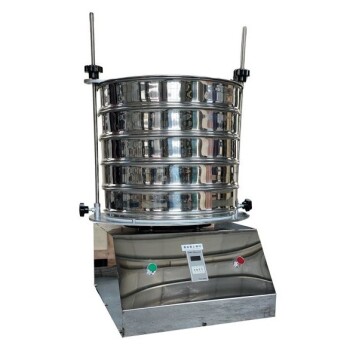
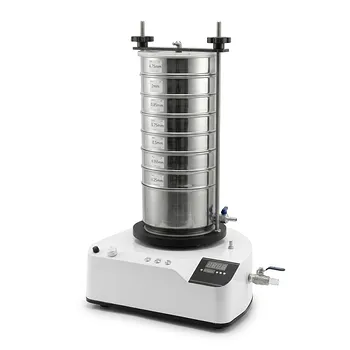
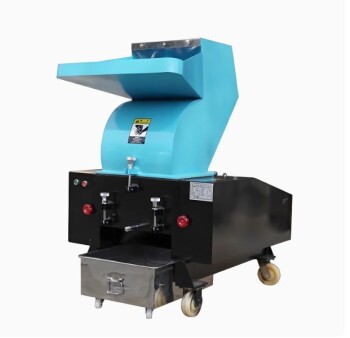
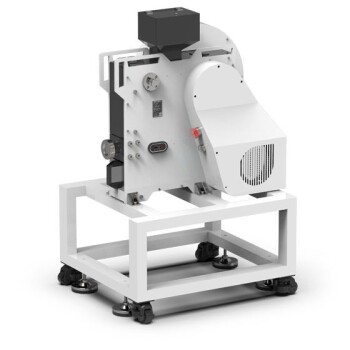
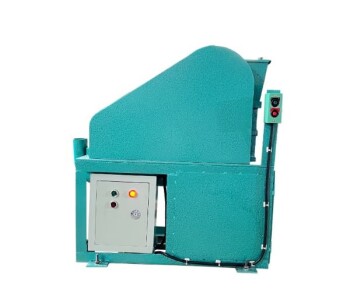
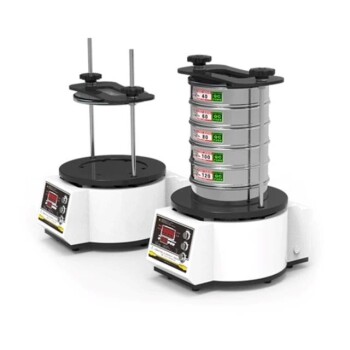
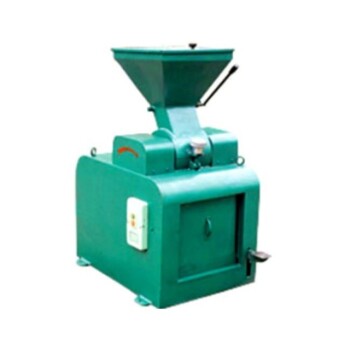
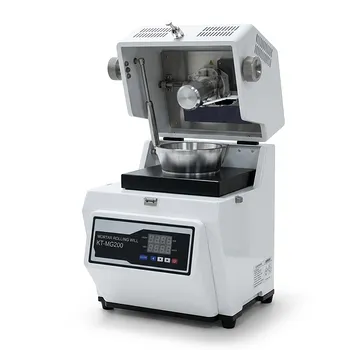
Crushing and sieving systems function as the critical mechanical preparation step in the conversion of wheat straw into sugar. These systems physically reduce raw straw into a uniform particle size, specifically ranging from 0.1 to 0.8 mm, to optimize the material for downstream processing.
Core Takeaway: The primary value of this system is the maximization of reactive surface area. By mechanically exposing the internal structure of the straw, you significantly lower the barrier for chemical agents and enzymes to access and break down cellulose, directly correlating to higher sugar production efficiency.
The Mechanics of Surface Area Expansion
Transforming Physical Structure
Raw wheat straw is naturally resistant to degradation. Crushing systems apply mechanical force to shear and impact the biomass, altering its physical state from coarse stalks to fine particles.
Creating Uniformity
Sieving ensures that the output is not just small, but consistent. The target range of 0.1 to 0.8 mm is specific; it creates a predictable baseline for the chemical reactions that follow.
Exposing the Cellulose
The reduction process opens up the tight structure of lignocellulose. This physical disruption reduces the material's natural "recalcitrance," or resistance to breaking down.
Enhancing Chemical and Enzymatic Efficiency
Improving Chemical Penetration
Before sugar can be extracted, the straw usually undergoes chemical pretreatment. A higher specific surface area allows chemical media to penetrate the biomass fibers more uniformly.
Faster Reaction Kinetics
When the particle size is reduced, the diffusion distance for chemicals decreases. This leads to more thorough impregnation of the straw, ensuring that the entire batch reacts at the same rate.
Maximizing Enzyme Contact
For sugar production, enzymes must physically latch onto cellulose chains to hydrolyze them into glucose. Crushing increases the contact frequency between these enzymes and the cellulose structure.
Boosting Hydrolysis Yield
Because the enzymes can access more surface area, the subsequent enzymatic hydrolysis becomes more efficient. This directly results in a higher conversion rate of cellulose into fermentable sugars.
Understanding the Trade-offs
The Necessity of Precision
While smaller is generally better for surface area, the specific range of 0.1 to 0.8 mm is the operational target for wheat straw.
Risks of Inconsistency
If particles are larger than this range, chemical penetration becomes superficial, leaving the core of the particle unreacted. This results in wasted biomass and lower sugar yields.
Mechanical Energy Input
Achieving this specific particle size requires energy input for crushing and sieving. The process must balance the energy cost of mechanical reduction against the gain in sugar yield to remain economically viable.
Making the Right Choice for Your Goal
To optimize your wheat straw pretreatment process, consider the following specific objectives:
- If your primary focus is Maximum Sugar Yield: Ensure your system consistently achieves the lower end of the particle size range (closer to 0.1 mm) to maximize the surface area available for enzymatic attack.
- If your primary focus is Process Consistency: Prioritize the sieving mechanism to strictly eliminate oversized particles (>0.8 mm), ensuring that chemical pretreatment affects the entire batch uniformly.
Proper mechanical sizing is the lever that multiplies the efficiency of every subsequent chemical and biological step in sugar production.
Summary Table:
| Feature | Target Specification | Impact on Sugar Production |
|---|---|---|
| Optimal Particle Size | 0.1 - 0.8 mm | Increases reactive surface area for faster hydrolysis |
| Uniformity Control | Precision Sieving | Ensures consistent chemical penetration and reaction kinetics |
| Structural Change | Mechanical Shear | Disrupts lignocellulose recalcitrance to expose cellulose |
| Reaction Efficiency | High Contact Frequency | Minimizes diffusion distance for enzymes and chemical media |
Elevate Your Biomass Processing with KINTEK Precision
Maximize your sugar production efficiency by mastering the critical mechanical preparation phase. KINTEK specializes in high-performance crushing and milling systems alongside precision sieving equipment designed to achieve the exact 0.1 to 0.8 mm particle range required for optimal wheat straw pretreatment.
Beyond mechanical sizing, our comprehensive portfolio supports your entire lab workflow—from high-temperature furnaces and high-pressure reactors for chemical pretreatment to ULT freezers and homogenizers for sample preservation and analysis. Whether you are conducting battery research or biomass conversion, KINTEK provides the durable equipment and essential consumables (like ceramics and crucibles) to ensure consistent, scalable results.
Ready to optimize your yield? Contact our laboratory specialists today to find the perfect crushing and sieving solution for your research needs.
References
- Forough Momayez, Ilona Sárvári Horváth. Sustainable and efficient sugar production from wheat straw by pretreatment with biogas digestate. DOI: 10.1039/c9ra05285b
This article is also based on technical information from Kintek Solution Knowledge Base .
Related Products
- Laboratory Test Sieves and Sieving Machines
- Three-dimensional electromagnetic sieving instrument
- Laboratory Vibratory Sieve Shaker Machine for Dry and Wet Three-Dimensional Sieving
- Powerful Plastic Crusher Machine
- Laboratory Jaw Crusher
People Also Ask
- What are laboratory test sieves used for? A Guide to Particle Size Analysis
- How do you calculate the sieve test? Master Particle Size Distribution for Quality Control
- How does a lab test sieve contribute to biomass charcoal powder preparation? Achieve Uniform Particle Size
- What are the specifications for test sieves? A Guide to ASTM & ISO Standards for Accurate Particle Analysis
- What materials are required for sieving? Achieve Accurate Particle Size Analysis