Knowledge What is the role of crushing and sieving systems in the Bayer process? Optimize Alumina Extraction Efficiency
Author avatar

Tech Team · Kintek Solution

Updated 1 hour ago

What is the role of crushing and sieving systems in the Bayer process? Optimize Alumina Extraction Efficiency


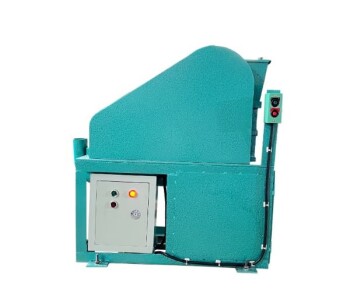
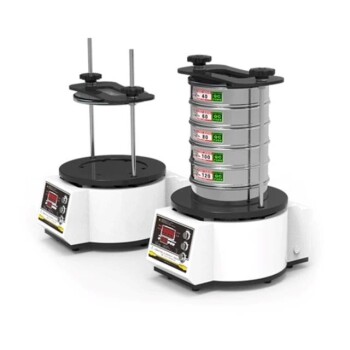
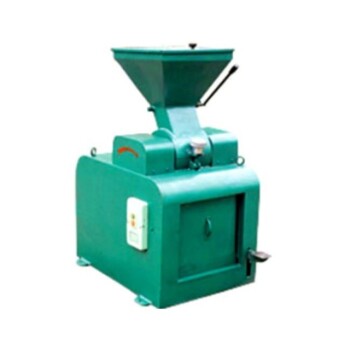
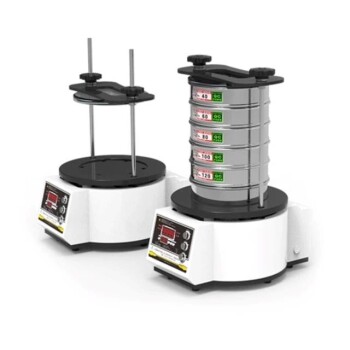
Crushing and sieving systems serve as the foundational preparatory mechanism in the Bayer process, tasked with mechanically reducing raw bauxite ore into fine, uniform particles. By rigorously controlling particle size, these systems function as the primary enabler for the chemical reactions that follow, ensuring the ore is physically primed for processing.

The efficiency of the crushing and sieving stage is not merely a logistical step; it is a chemical necessity. It directly dictates the overall extraction efficiency of alumina by maximizing the specific surface area available for reaction with sodium hydroxide.

The Mechanics of Material Preparation

Particle Size Reduction

The immediate role of this equipment is to process raw, coarse bauxite into fine particles.

This transformation is critical because raw ore is naturally inconsistent in size and shape. Crushing and sieving standardize the feed, creating a uniform input for the plant.

Maximizing Surface Area

The physical reduction of the ore has a geometric purpose: increasing specific surface area.

Chemical reactions occur at the interface where the solid meets the liquid. By breaking the material down, the system exposes significantly more "reaction surface" per unit of mass.

This principle is consistent across various industrial applications, where size reduction is used to facilitate the penetration of heat or chemical reagents into a material's structure.

Impact on the Leaching Process

Facilitating Alkaline Pressure Leaching

The Bayer process relies on a stage known as alkaline pressure leaching.

In this stage, the prepared bauxite must react with a sodium hydroxide solution. The crushing system ensures that the solid bauxite particles are small enough to be fully suspended and contacted by this liquid solution.

Ensuring Complete Reaction

Efficiency in the leaching stage depends on the thoroughness of the contact between the ore and the solvent.

If the particles are too large, the sodium hydroxide may not penetrate to the core of the particle within the allotted time. Properly crushed and sieved material ensures the reaction is not physically limited, allowing for maximum dissolution of the target components.

Understanding the Operational Trade-offs

The Cost of Inconsistency

If the crushing and sieving process is inefficient, the downstream consequences are severe.

Inconsistent particle sizes can lead to incomplete reactions. Large, unreacted cores of ore represent wasted raw material and lost yield. Conversely, uniformity in particle size—achieved through precise sieving—is essential for predicting reaction times and maintaining stable process control.

The Balance of Flow and Reaction

While maximizing surface area is the primary goal, the physical handling of the material remains a factor.

Drawing parallels from catalyst and packed-bed applications, maintaining a specific particle size range is often necessary to prevent flow issues or pressure drops in reactor vessels. The sieving system acts as the quality control gate, ensuring only particles within the optimal range proceed to the chemical stage.

Optimizing Production Outcomes

The effectiveness of your raw material treatment determines the ceiling of your plant's performance.

  • If your primary focus is Extraction Yield: Prioritize the reduction ratio of your crushing system to maximize the specific surface area available for the sodium hydroxide reaction.
  • If your primary focus is Process Stability: Focus on the precision of the sieving system to ensure a uniform particle distribution, eliminating variables that lead to inconsistent leaching rates.

Ultimately, the crushing and sieving system converts a physical raw material problem into a chemical processing advantage.

Summary Table:

System Component Primary Role Impact on Bayer Process
Crushing System Particle Size Reduction Increases specific surface area for faster chemical reactions.
Sieving System Particle Size Control Ensures uniform feed and eliminates unreacted large particles.
Material Prep Standardization Facilitates complete alkaline pressure leaching in downstream stages.
Quality Gate Process Stability Prevents flow issues and ensures predictable reaction kinetics.

Elevate Your Raw Material Processing with KINTEK

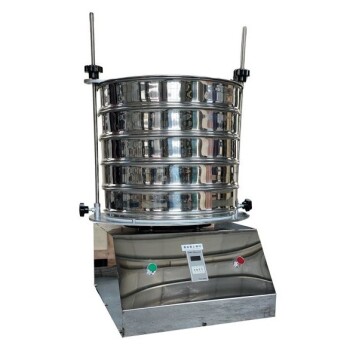
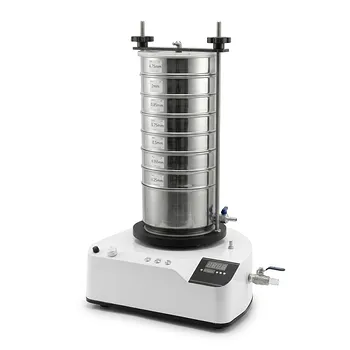
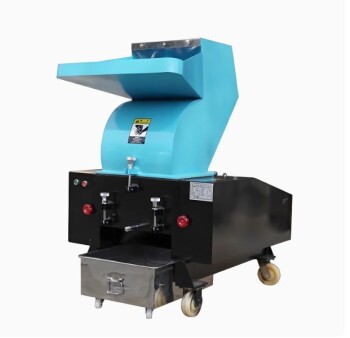
Precision in the crushing and sieving stage is the foundation of high-yield alumina production. At KINTEK, we specialize in providing high-performance crushing and milling systems and sieving equipment designed to maximize the specific surface area of your bauxite ore, ensuring optimal efficiency during alkaline pressure leaching.

Our comprehensive laboratory and industrial portfolio also includes high-temperature furnaces (muffle, vacuum, CVD), hydraulic presses, and high-temperature high-pressure reactors to support your entire material science workflow.

Ready to optimize your extraction yield and process stability? Contact our technical experts today to find the perfect equipment solution for your laboratory or production facility.

References

  1. Ata Akçıl, Seydou Dembele. Overview on Hydrometallurgical Recovery of Rare-Earth Metals from Red Mud. DOI: 10.3390/min14060587

This article is also based on technical information from Kintek Solution Knowledge Base .

Related Products

People Also Ask

Related Products

Engineering Advanced Fine Ceramics Aluminium Oxide Al2O3 Ceramic Washer for Wear-Resistant Applications

Engineering Advanced Fine Ceramics Aluminium Oxide Al2O3 Ceramic Washer for Wear-Resistant Applications

Alumina wear-resistant ceramic washer are used for heat dissipation, which can replace aluminum heat sinks, with high temperature resistance and high thermal conductivity.

Vacuum Induction Melting Spinning System Arc Melting Furnace

Vacuum Induction Melting Spinning System Arc Melting Furnace

Develop metastable materials with ease using our Vacuum Melt Spinning System. Ideal for research and experimental work with amorphous and microcrystalline materials. Order now for effective results.

1400℃ Laboratory High Temperature Tube Furnace with Alumina Tube

1400℃ Laboratory High Temperature Tube Furnace with Alumina Tube

Looking for a tube furnace for high-temperature applications? Our 1400℃ Tube Furnace with Alumina Tube is perfect for research and industrial use.

Laboratory Jaw Crusher

Laboratory Jaw Crusher

Discover the small jaw crusher for efficient, flexible, and affordable crushing in labs and small mines. Ideal for coal, ores, and rocks. Learn more now!

HFCVD Machine System Equipment for Drawing Die Nano-Diamond Coating

HFCVD Machine System Equipment for Drawing Die Nano-Diamond Coating

The nano-diamond composite coating drawing die uses cemented carbide (WC-Co) as the substrate, and uses the chemical vapor phase method ( CVD method for short ) to coat the conventional diamond and nano-diamond composite coating on the surface of the inner hole of the mold.

Engineering Advanced Fine Alumina (Al₂O₃) Ceramic Positioning Pin Straight Bevel for Precision Applications

Engineering Advanced Fine Alumina (Al₂O₃) Ceramic Positioning Pin Straight Bevel for Precision Applications

Alumina ceramic positioning pin has the characteristics of high hardness, wear resistance and high temperature resistance.

Inclined Rotary Plasma Enhanced Chemical Vapor Deposition PECVD Equipment Tube Furnace Machine

Inclined Rotary Plasma Enhanced Chemical Vapor Deposition PECVD Equipment Tube Furnace Machine

Upgrade your coating process with PECVD coating equipment. Ideal for LED, power semiconductors, MEMS and more. Deposits high-quality solid films at low temps.

Cylindrical Resonator MPCVD Machine System Reactor for Microwave Plasma Chemical Vapor Deposition and Lab Diamond Growth

Cylindrical Resonator MPCVD Machine System Reactor for Microwave Plasma Chemical Vapor Deposition and Lab Diamond Growth

Learn about Cylindrical Resonator MPCVD Machine, the microwave plasma chemical vapor deposition method used for growing diamond gemstones and films in the jewelry and semi-conductor industries. Discover its cost-effective advantages over traditional HPHT methods.

Engineering Advanced Fine Ceramics Aluminum Oxide Al2O3 Heat Sink for Insulation

Engineering Advanced Fine Ceramics Aluminum Oxide Al2O3 Heat Sink for Insulation

The hole structure of the ceramic heat sink increases the heat dissipation area in contact with the air, which greatly enhances the heat dissipation effect, and the heat dissipation effect is better than that of super copper and aluminum.

Square Lab Press Mold for Laboratory Applications

Square Lab Press Mold for Laboratory Applications

Create uniform samples easily with Square Lab Press Mold - available in various sizes. Ideal for battery, cement, ceramics, and more. Custom sizes available.

Laboratory Benchtop Water Circulating Vacuum Pump for Lab Use

Laboratory Benchtop Water Circulating Vacuum Pump for Lab Use

Need a water circulating vacuum pump for your lab or small-scale industry? Our Benchtop Water Circulating Vacuum Pump is perfect for evaporation, distillation, crystallization, and more.

Vacuum Sealed Continuous Working Rotary Tube Furnace Rotating Tube Furnace

Vacuum Sealed Continuous Working Rotary Tube Furnace Rotating Tube Furnace

Experience efficient material processing with our vacuum-sealed rotary tube furnace. Perfect for experiments or industrial production, equipped with optional features for controlled feeding and optimized results. Order now.

XRF & KBR plastic ring lab Powder Pellet Pressing Mold for FTIR

XRF & KBR plastic ring lab Powder Pellet Pressing Mold for FTIR

Get precise XRF samples with our plastic ring lab powder pellet pressing mold. Fast tableting speed and customizable sizes for perfect molding every time.

Vacuum Arc Induction Melting Furnace

Vacuum Arc Induction Melting Furnace

Discover the power of Vacuum Arc Furnace for melting active & refractory metals. High-speed, remarkable degassing effect, and free of contamination. Learn more now!

Small Vacuum Heat Treat and Tungsten Wire Sintering Furnace

Small Vacuum Heat Treat and Tungsten Wire Sintering Furnace

The small vacuum tungsten wire sintering furnace is a compact experimental vacuum furnace specially designed for universities and scientific research institutes. The furnace features a CNC welded shell and vacuum piping to ensure leak-free operation. Quick-connect electrical connections facilitate relocation and debugging, and the standard electrical control cabinet is safe and convenient to operate.

Cylindrical Press Mold with Scale for Lab

Cylindrical Press Mold with Scale for Lab

Discover precision with our Cylindrical Press Mold. Ideal for high-pressure applications, it molds various shapes and sizes, ensuring stability and uniformity. Perfect for lab use.

Glassy Carbon Sheet RVC for Electrochemical Experiments

Glassy Carbon Sheet RVC for Electrochemical Experiments

Discover our Glassy Carbon Sheet - RVC. Perfect for your experiments, this high-quality material will elevate your research to the next level.

Customer Made Versatile CVD Tube Furnace Chemical Vapor Deposition Chamber System Equipment

Customer Made Versatile CVD Tube Furnace Chemical Vapor Deposition Chamber System Equipment

Get your exclusive CVD furnace with KT-CTF16 Customer Made Versatile Furnace. Customizable sliding, rotating, and tilting functions for precise reactions. Order now!

Lab Blown Film Extrusion Three Layer Co-Extrusion Film Blowing Machine

Lab Blown Film Extrusion Three Layer Co-Extrusion Film Blowing Machine

Lab blown film extrusion is mainly used to detect the feasibility of film blowing of polymer materials and the colloid condition in the materials, as well as the dispersion of colored dispersions, controlled mixtures, and extrudates;


Leave Your Message