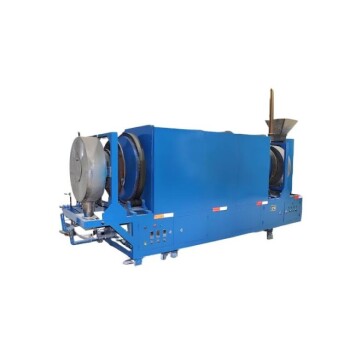
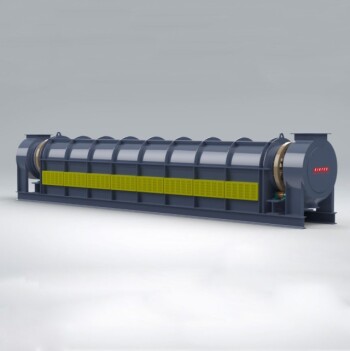
The primary function of high-temperature furnaces in this context is to drive the calcination process that chemically transforms waste shells into active biodiesel catalysts. By generating a thermal environment typically around 900°C, these furnaces facilitate the thermal decomposition of calcium carbonate (CaCO3) into calcium oxide (CaO), stripping away organic impurities and establishing the chemical structure required for catalysis.
High-temperature furnaces do not merely dry the material; they fundamentally alter its chemistry and physical structure. By controlling thermal decomposition, the furnace maximizes the catalyst’s specific surface area and basic site density, the two most critical factors for efficient biodiesel production.
The Mechanism of Calcination
Thermal Decomposition of Shells
The core task of the furnace is to facilitate thermal decomposition. Waste shells are primarily composed of calcium carbonate (CaCO3), which is not catalytically active for biodiesel production.
Formation of Active Species
Under the intense heat of approximately 900°C, the carbonate releases carbon dioxide to form calcium oxide (CaO). This transformation is essential, as CaO provides the necessary alkalinity to drive the transesterification reaction.
Removal of Organic Impurities
Waste shells naturally contain organic residues from the original organism. The high-temperature environment effectively incinerates these impurities, ensuring the final catalyst is pure and chemically predictable.
Enhancing Catalyst Performance
Increasing Specific Surface Area
The release of gases during decomposition creates a porous structure within the material. This significantly increases the specific surface area, providing more physical space for the biodiesel reactants to interact with the catalyst.
Boosting Basic Site Density
The effectiveness of a biodiesel catalyst depends on its alkalinity. The furnace treatment acts to maximize the density of basic sites on the catalyst's surface, which are the active centers responsible for converting oil into fuel.
Regeneration and Advanced Processing
Restoring Deactivated Catalysts
Beyond initial synthesis, furnaces play a vital role in the catalyst's lifecycle. Exposure to air or reaction cycles can deactivate CaO by forming hydroxides or carbonates; a heat treatment at 700°C removes these "poisons" and restores catalytic activity.
Facilitating Phase Transformation
In more complex synthesis methods like the sol-gel process, furnaces are used to apply precise heating profiles. This removes moisture and precursor residues while providing the energy needed to crystallize metal oxide nanoparticles.
Inducing Crystallization
For amorphous materials derived from sol-gel, the thermal energy induces crystallization. This step is critical for locking in a uniform pore structure and ensuring the stability of the active centers.
Understanding the Trade-offs
The Requirement for Precision
While heat is necessary, the application must be a controlled thermal treatment. Inconsistent heating can lead to incomplete decomposition (low activity) or structural collapse (reduced surface area).
Energy Considerations
Achieving and maintaining temperatures of 900°C requires significant energy input. This operational cost must be weighed against the efficiency gains provided by the high-performance catalyst.
Making the Right Choice for Your Goal
To maximize the effectiveness of your thermal treatment, align your furnace protocols with your specific objective:
- If your primary focus is synthesizing new catalyst from raw shells: Target a temperature of 900°C to ensure complete decomposition of calcium carbonate into active calcium oxide.
- If your primary focus is catalyst reusability: Implement a regeneration cycle at 700°C to remove absorbed moisture and carbonates without over-sintering the material.
- If your primary focus is advanced sol-gel synthesis: Use the furnace to drive phase transformation and crystallization to achieve a uniform pore structure.
Mastering the thermal profile is the difference between a raw waste material and a high-performance chemical tool.
Summary Table:
| Process Stage | Temperature | Primary Function | Chemical/Physical Result |
|---|---|---|---|
| Calcination | ~900°C | Thermal Decomposition | Transforms CaCO3 into active CaO; removes organics |
| Regeneration | ~700°C | Deactivation Recovery | Removes moisture/carbonates to restore catalytic activity |
| Crystallization | Varies | Phase Transformation | Locks in pore structure and stabilizes active centers |
| Pore Formation | High | Gas Release | Increases specific surface area and basic site density |
Elevate Your Sustainable Energy Research with KINTEK
Transforming waste into high-performance fuel requires precision heating and unwavering reliability. KINTEK specializes in advanced laboratory solutions designed for the rigorous demands of material science and catalyst development.
Whether you are performing large-scale calcination or intricate sol-gel synthesis, our comprehensive range of equipment empowers your lab:
- High-Temperature Furnaces: Muffle, tube, and atmosphere furnaces engineered for uniform thermal decomposition and crystallization.
- Material Processing: Crushing, milling systems, and sieving equipment to prepare your raw waste shells.
- Specialized Reactors: High-temperature high-pressure reactors and autoclaves for advanced biodiesel research.
- Lab Essentials: High-purity ceramics, crucibles, and PTFE products to maintain chemical integrity.
Ready to optimize your catalyst synthesis? Contact KINTEK today to discover how our high-precision furnaces and laboratory tools can enhance your research efficiency and output.
References
- Dhiraj Kumar, Gaurav Kumar. Advancement in the Utilization of Nanocatalyst for Transesterification of Triglycerides. DOI: 10.30799/jnst.111.18040302
This article is also based on technical information from Kintek Solution Knowledge Base .
Related Products
- 1700℃ Laboratory High Temperature Tube Furnace with Alumina Tube
- Vacuum Heat Treat and Pressure Sintering Furnace for High Temperature Applications
- High Temperature Muffle Oven Furnace for Laboratory Debinding and Pre Sintering
- 1400℃ Laboratory High Temperature Tube Furnace with Alumina Tube
- 1400℃ Muffle Oven Furnace for Laboratory
People Also Ask
- What functions does a laboratory high-temperature tube furnace perform? Master Catalyst Synthesis & Carbonization
- What roles does a high-temperature tube furnace play in the synthesis of N/O co-doped carbon? Master Precise Doping
- How does a laboratory tube furnace facilitate methane catalyst evaluation & regeneration? Optimize Thermal Performance
- What are the primary applications of muffle and tube furnaces in photocatalysts? Optimize Metal Loading & Support Synthesis
- Why is a high-temperature tube furnace required for the production of biochar from tobacco straw? Expert Pyrolysis Guide