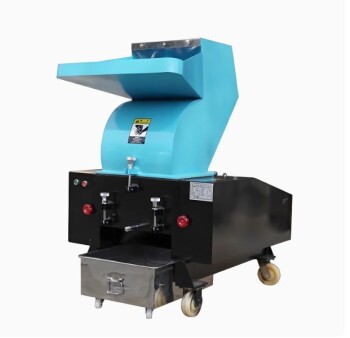
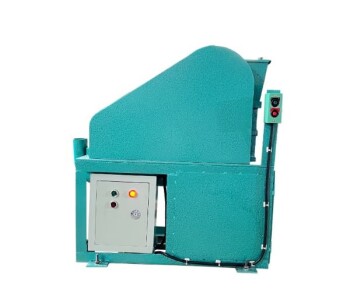
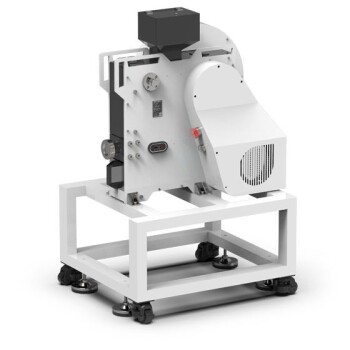
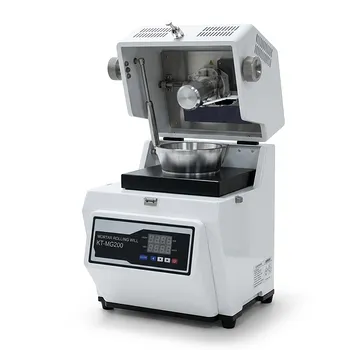
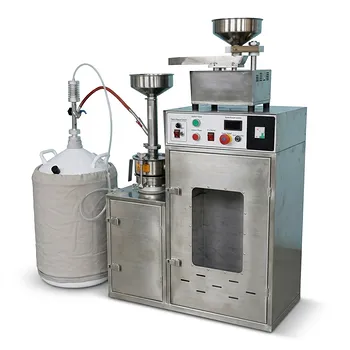
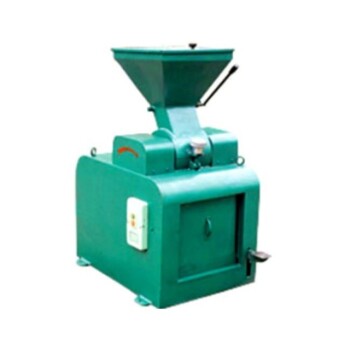
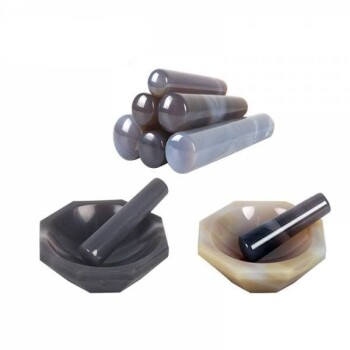
Industrial crushing and grinding equipment serves as the primary driver of mechanical activation in the Dry Mixing (DM) preparation of calcium-based adsorbents. These systems utilize intense mechanical shear and impact forces to simultaneously pulverize calcium oxide solids and additives, such as magnesium oxide. The result is a substantial reduction in particle size and the creation of a strictly homogeneous mixture essential for CO2 capture applications.
The core value of this equipment lies in establishing a physical foundation for the material; thorough pulverization and mixing are prerequisites for forming composite adsorbents that maintain stable structures during the subsequent calcination process.
The Mechanics of Preparation
Application of Force
The equipment operates by applying intense mechanical shear and impact forces to the raw materials.
This is not a passive blending process; it requires high-energy input to physically break down the solid components.
Simultaneous Pulverization
The machinery targets calcium oxide solids alongside specific additives like magnesium oxide.
By processing these materials together, the equipment ensures that size reduction occurs in tandem with the mixing process.
Achieving Structural Integrity
Physical Uniformity
The ultimate goal of the crushing and grinding phase is to achieve a physically uniform mixture.
Inconsistencies in the blend at this stage can lead to structural weaknesses in the final product.
Foundation for Calcination
This mechanical preparation acts as the critical precursor to the calcination process.
By ensuring a homogeneous mix, the equipment enables the formation of composite adsorbents that possess the necessary structural stability to withstand high-temperature operations.
Critical Process Considerations
The Requirement for Intensity
Effective preparation relies on the severity of the mechanical shear.
Insufficient force will fail to reduce the particle size adequately, compromising the reactivity of the final adsorbent.
Uniformity vs. Stability
There is a direct correlation between the thoroughness of the mixing and the stability of the final structure.
If the crushing equipment fails to create a uniform blend, the resulting composite may lack the durability required for repeated carbon capture cycles.
Making the Right Choice for Your Goal
To maximize the effectiveness of your calcium-based adsorbents, align your equipment usage with your specific processing objectives:
- If your primary focus is material reactivity: Prioritize equipment capable of generating high impact forces to maximize particle size reduction and surface area.
- If your primary focus is long-term durability: Ensure the grinding process yields a perfectly uniform mixture to guarantee structural stability during calcination.
Precise mechanical preparation is the essential first step in engineering high-performance carbon dioxide adsorbents.
Summary Table:
| Process Aspect | Role of Crushing & Grinding Equipment | Key Benefit |
|---|---|---|
| Particle Size | Intense mechanical shear and impact forces | Significant reduction & increased surface area |
| Material Blend | Simultaneous pulverization of CaO and MgO | Strictly homogeneous mixture for capture |
| Structural Basis | High-energy mechanical activation | Durable foundation for the calcination process |
| Performance | Engineering uniform physical properties | Enhanced reactivity and long-term cycle stability |
Elevate Your Material Preparation with KINTEK
Precise mechanical preparation is the cornerstone of high-performance carbon dioxide adsorbents. At KINTEK, we specialize in the advanced laboratory equipment necessary to achieve the perfect blend. Whether you are scaling your Dry Mixing (DM) preparation or conducting rigorous material research, our comprehensive range of crushing and milling systems, sieving equipment, and hydraulic pellet presses ensures your adsorbents possess the structural stability and reactivity required for demanding carbon capture cycles.
From high-temperature calcination in our muffle and tube furnaces to the precise mechanical activation of raw solids, KINTEK provides the tools that drive innovation in laboratory and industrial settings. Contact us today to find the ideal processing solution for your research!
References
- Donata Konopacka-Łyskawa, Andrzej Szefer. CaO-based high temperature CO2 sorbents – Literature review. DOI: 10.24425/cpe.2021.138938
This article is also based on technical information from Kintek Solution Knowledge Base .
Related Products
- Powerful Plastic Crusher Machine
- Sealed Jaw Crusher High Efficiency Environmental Protection Safe and Reliable
- Laboratory Jaw Crusher
- Laboratory Ball Mill Jar Mill with Metal Alloy Grinding Jar and Balls
- Laboratory Jar Mill with Agate Grinding Jar and Balls
People Also Ask
- What is the primary purpose of using an industrial-grade grinder for flax straw? Optimize Biomass Pretreatment Now
- What is the primary function of a crushing system? Optimize Rice Husk Fractionation with Precise Size Reduction
- What is the primary function of industrial crushers in battery dismantling? Optimize Your Recovery Feedstock
- What are the contaminants in plastic pyrolysis oil? Manage Impurities for Commercial Success
- Why is it necessary to use an ultrasonic cell disruptor before yeast flow cytometry? Ensure Data Accuracy