Electrochemical Impedance Spectroscopy (EIS) is a diagnostic technique used to quantify the efficiency of composite catalysts by measuring their opposition to electron flow. Performed by an electrochemical workstation, this test specifically calculates the charge transfer resistance at the catalyst interface. This metric serves as a direct indicator of the electron transport rate, allowing researchers to verify if structural designs, such as Z-scheme heterojunctions, have successfully enhanced the separation and movement of charge carriers.
EIS acts as a definitive gauge for catalytic efficiency by translating complex electrochemical behaviors into readable resistance values. A smaller semicircle radius in the resulting data proves that the catalyst's structure effectively lowers the energy barrier for electron transport.
Decoding the Nyquist Plot
The Significance of the Semicircle
The primary output of an EIS test is often a Nyquist plot, which visually represents the impedance characteristics of the system. The key feature to analyze here is the radius of the semicircle.
This radius is directly proportional to the charge transfer resistance of the catalyst. A smaller radius indicates lower resistance, signaling that electrons can move across the interface with greater ease.
Validating Z-Scheme Heterojunctions
For composite catalysts, specifically those aiming for a Z-scheme heterojunction, EIS is the standard verification tool. The goal of these structures is to improve charge separation efficiency.
If the EIS data shows a significantly reduced arc radius compared to individual components, it confirms that the Z-scheme construction is effective. This proves the material is facilitating faster electron transport and minimizing recombination losses.
Isolating Performance Variables
separating Resistance Types
Beyond simple charge transfer, an electrochemical workstation uses EIS to distinguish between different resistance sources within the system. It can separate ohmic resistance (from the electrolyte and contacts) from polarization and diffusion resistances.
Identifying Kinetic Bottlenecks
This separation capability allows you to identify exactly where performance is stalling. You can determine if limitations are caused by ion conduction in the electrolyte, catalytic activity at the electrode surface, or issues with gas transport.
Monitoring Surface Layers
EIS also helps analyze the influence of specific surface layers, such as SnO2, on electrode kinetics. This provides a physical basis for understanding how surface modifications impact overall stability and efficiency during long-term electrolysis.
Understanding the Trade-offs
Model Dependency
EIS data is not self-explanatory; it requires fitting to an equivalent electrical circuit model. If the circuit model chosen does not accurately reflect the physical system, the calculated resistance values will be incorrect.
Sensitivity to Experimental Conditions
The technique is highly sensitive to external variables, including solution resistance and temperature. Changes in the electrolyte composition or surface instabilities over time can introduce noise, making it critical to maintain controlled conditions to ensure the data reflects the catalyst, not the environment.
Making the Right Choice for Your Goal
To maximize the value of EIS testing for your specific application, consider the following:
- If your primary focus is material synthesis verification: Look for a reduction in the Nyquist plot semicircle radius to confirm that your Z-scheme heterojunction has effectively lowered charge transfer resistance.
- If your primary focus is system optimization: Use the frequency response to separate ohmic and diffusion resistances, allowing you to target specific bottlenecks in the electrolyte or electrode structure.
EIS transforms the abstract concept of "catalytic activity" into concrete, actionable resistance data.
Summary Table:
| Parameter | Significance in EIS Testing | Impact on Catalyst Evaluation |
|---|---|---|
| Semicircle Radius | Represents Charge Transfer Resistance ($R_{ct}$) | Smaller radius indicates faster electron transport and higher efficiency. |
| Nyquist Plot | Visual map of impedance characteristics | Validates successful formation of Z-scheme heterojunctions. |
| Ohmic Resistance | Resistance from electrolyte and contacts | Helps isolate system-wide losses from catalyst-specific performance. |
| Diffusion Resistance | Resistance related to mass transport | Identifies kinetic bottlenecks in gas or ion movement. |
| Frequency Response | Distinguishes between different resistance types | Provides a physical basis for structural and surface modifications. |
Elevate Your Electrochemical Research with KINTEK
Unlock deeper insights into your catalyst performance with KINTEK’s high-precision electrochemical workstations and specialized lab equipment. Whether you are validating Z-scheme heterojunctions or optimizing electrode kinetics, our comprehensive range of tools—from electrolytic cells and high-performance electrodes to high-temperature reactors and battery research consumables—is designed to meet the rigorous demands of advanced material science.
Why partner with KINTEK?
- Precision Engineering: Ensure accurate EIS data with stable, low-noise workstation environments.
- Complete Solutions: Access a full portfolio including furnaces, hydraulic presses, and specialized ceramics for electrode fabrication.
- Expert Support: Benefit from high-quality lab consumables like PTFE products and crucibles that maintain experimental integrity.
Ready to eliminate kinetic bottlenecks and accelerate your research? Contact KINTEK today to find the perfect equipment for your laboratory!
References
- Yi Li, Zhibao Liu. Visible-Light-Driven Z-Type Pg-C3N4/Nitrogen Doped Biochar/BiVO4 Photo-Catalysts for the Degradation of Norfloxacin. DOI: 10.3390/ma17071634
This article is also based on technical information from Kintek Solution Knowledge Base .
Related Products
- Lab Electrochemical Workstation Potentiostat for Laboratory Use
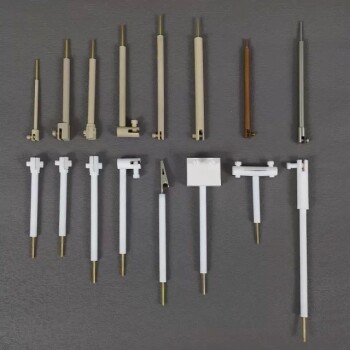
- Electrode Fixture for Electrochemical Experiments
- Glassy Carbon Electrochemical Electrode
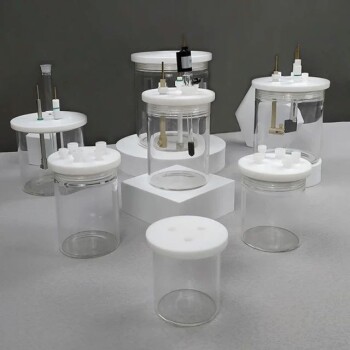
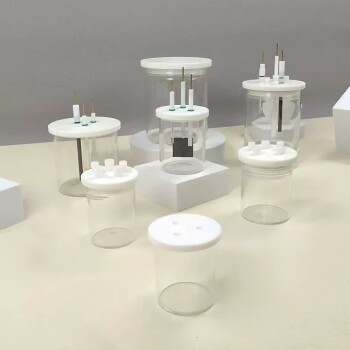
- Electrolytic Electrochemical Cell with Five-Port
- Sample Support Body for Electrochemical Tests
People Also Ask
- How does an electrochemical workstation assist in assessing corrosion resistance? Quantify Laser-Remelted Steel Performance
- How does an electrochemical testing system evaluate mesoporous oxide electrodes? Precision Analysis for Battery Research
- What are the primary functions of an electrochemical workstation (Potentiostat)? Expert Titanium Alloy Corrosion Analysis
- What is the primary function of a high-precision electrochemical workstation? Optimize Your Reactor Performance
- What role do electrochemical workstations play in researching the corrosion resistance of carbon coatings? Expert Guide