Knowledge What is the technical significance of reducing spinel particle size to below 0.06 mm? Enhance Corrosion Testing Accuracy
Author avatar

Tech Team · Kintek Solution

Updated 1 day ago

What is the technical significance of reducing spinel particle size to below 0.06 mm? Enhance Corrosion Testing Accuracy


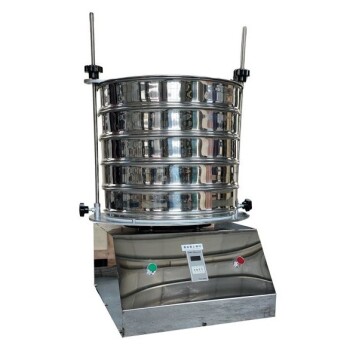
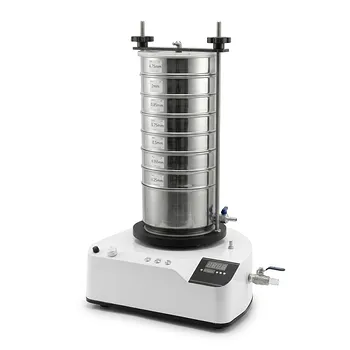
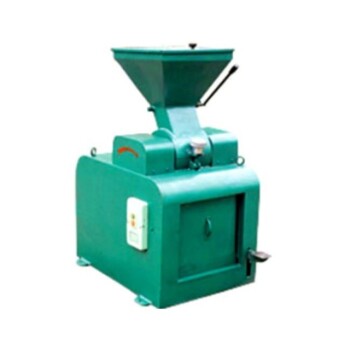
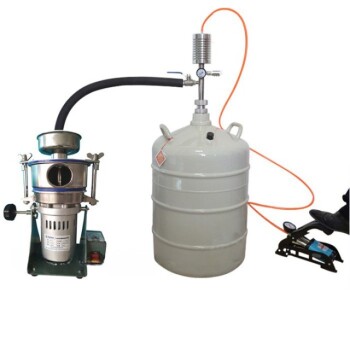
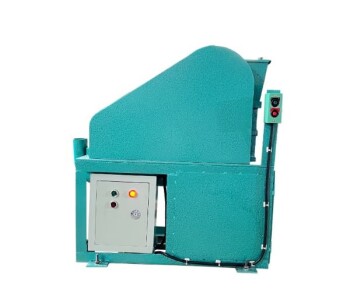
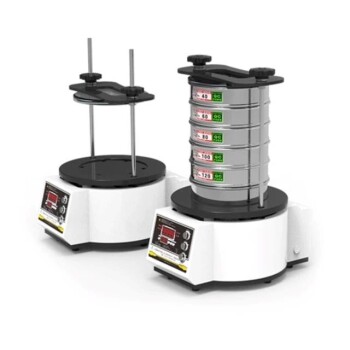
The reduction of spinel particle size to below 0.06 mm is a calculated preparation step designed to fundamentally alter the material's interaction with corrosive environments during testing. By utilizing laboratory crushing and sieving systems to achieve this specific granularity, researchers drastically increase the specific surface area of the sample. This physical transformation is the prerequisite for maximizing the contact interface between the solid spinel and corrosive sulfur oxide gases, specifically SO2 and SO3.

Reducing particle size is not merely about consistency; it is a method of time compression. By optimizing reaction kinetics through increased surface area, this process allows researchers to accurately simulate decades of industrial sulfate corrosion within a manageable laboratory timeframe.

The Mechanics of Surface Area Optimization

Increasing Specific Surface Area

The primary technical objective of grinding spinel samples to below 0.06 mm is to significantly increase the specific surface area.

When a bulk material is reduced to a fine powder, the amount of exposed surface relative to its volume rises exponentially. This exposes the maximum amount of material to the testing environment.

Maximizing Gas-Solid Contact

In the context of sulfate corrosion, the reaction is driven by the interaction between the solid material and gases.

Ensuring the particle size is below this threshold guarantees maximum contact between the spinel and sulfur oxide gases (SO2 and SO3). This eliminates diffusion barriers that might exist in larger, porous aggregates, ensuring the test focuses on chemical reactivity.

Enhancing Experimental Accuracy

Improving Reaction Kinetic Efficiency

The rate at which a chemical reaction occurs is often limited by the available surface area.

By optimizing the particle size, researchers improve reaction kinetic efficiency. This ensures that the corrosion reaction proceeds at a rate that is measurable and consistent, reducing the variability often seen with irregular chunk samples.

Simulating Long-Term Behavior

Industrial materials degrade over extended periods, often years or decades.

Reproducing this timeline in a lab is impossible without acceleration. The fine particle size accelerates the interaction, allowing scientists to accurately simulate long-term industrial sulfate corrosion behavior without waiting years for results.

Understanding the Trade-offs

Chemical Reactivity vs. Physical Permeability

While this method is excellent for testing chemical resistance, it isolates the material's chemistry from its physical structure.

Testing a powder does not account for physical permeation or structural density, which are factors in how a solid brick resists corrosion in the field. This method focuses strictly on the intrinsic chemical durability of the spinel phase.

Sample Homogeneity

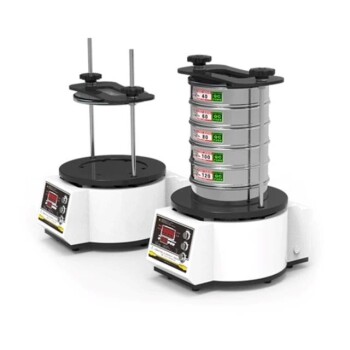
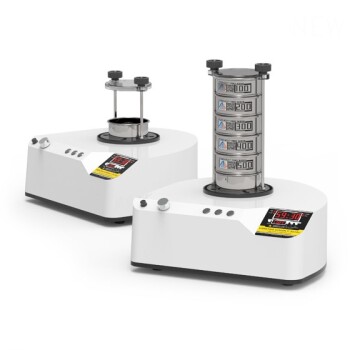
Achieving a particle size below 0.06 mm requires rigorous crushing and sieving.

If the sieving process is not uniform, inconsistent particle sizes can lead to variable reaction rates within the same sample batch. Precise adherence to the 0.06 mm threshold is vital for data reliability.

Making the Right Choice for Your Goal

To ensure your corrosion testing provides relevant data, align your sample preparation with your specific research objectives.

  • If your primary focus is Chemical Susceptibility: Prioritize grinding to <0.06 mm to maximize the reaction kinetics with SO2 and SO3 gases.
  • If your primary focus is Time-Compressed Simulation: Use this particle size reduction to mimic the cumulative effects of long-term industrial exposure in a short experiment.

By strictly controlling particle size, you transform a standard test into a high-fidelity simulation of industrial reality.

Summary Table:

Technical Parameter Impact of Particle Size < 0.06 mm Resulting Benefit
Specific Surface Area Exponentially increased Maximizes solid-gas reaction interface
Reaction Kinetics Higher efficiency Accelerates simulation of long-term corrosion
Gas-Solid Contact Minimized diffusion barriers Ensures uniform exposure to SO2 and SO3 gases
Data Reliability Enhanced homogeneity Reduces variability in chemical resistance data

Elevate Your Material Analysis with KINTEK Precision

Ensure the highest fidelity in your corrosion simulations by utilizing KINTEK’s industry-leading laboratory crushing and sieving systems. From achieving precise <0.06 mm granularity to supporting advanced thermal studies with our high-temperature furnaces and pellet presses, we provide the tools necessary to transform your research into industrial-grade insights.

Ready to optimize your sample preparation? Contact us today to discover how KINTEK's comprehensive range of laboratory equipment and consumables can enhance your lab's efficiency and experimental accuracy.

References

  1. Anna Gerle, Jacek Podwórny. Thermochemistry of MgCr2O4, MgAl2O4, MgFe2O4 spinels in SO2−O2−SO3 atmosphere. DOI: 10.2298/pac1601025g

This article is also based on technical information from Kintek Solution Knowledge Base .

Related Products

People Also Ask

Related Products

Laboratory Single Horizontal Jar Mill

Laboratory Single Horizontal Jar Mill

KT-JM3000 is a mixing and grinding instrument for placing a ball milling tank with a volume of 3000ml or less. It adopts frequency conversion control to realize timing, constant speed, direction change, overload protection and other functions.

High Energy Planetary Ball Mill for Laboratory Horizontal Tank Type Milling Machine

High Energy Planetary Ball Mill for Laboratory Horizontal Tank Type Milling Machine

KT-P4000H uses the unique Y-axis planetary motion trajectory, and utilizes the collision, friction and gravity between the sample and the grinding ball to have a certain anti-sinking ability, which can obtain better grinding or mixing effects and further improve the sample output.

High Energy Planetary Ball Mill Milling Machine for Laboratory

High Energy Planetary Ball Mill Milling Machine for Laboratory

The biggest feature is that the high energy planetary ball mill can not only perform fast and effective grinding, but also has good crushing ability

High Energy Planetary Ball Mill Milling Machine for Laboratory

High Energy Planetary Ball Mill Milling Machine for Laboratory

Experience fast and effective sample processing with the F-P2000 high-energy planetary ball mill. This versatile equipment offers precise control and excellent grinding capabilities. Perfect for laboratories, it features multiple grinding bowls for simultaneous testing and high output. Achieve optimal results with its ergonomic design, compact structure, and advanced features. Ideal for a wide range of materials, it ensures consistent particle size reduction and low maintenance.

Lab Vibration Mill

Lab Vibration Mill

Vibration Mill for Efficient Sample Preparation, Suitable for Crushing and Grinding a Variety of Materials with Analytical Precision. Supports Dry / Wet / Cryogenic Grinding and Vacuum/Inert Gas Protection.

Laboratory Ten-Body Horizontal Jar Mill for Lab Use

Laboratory Ten-Body Horizontal Jar Mill for Lab Use

The Ten-body horizontal jar mill is for 10 ball mill pots (3000ml or less). It has frequency conversion control, rubber roller movement, and PE protective cover.

Laboratory Planetary Ball Mill Rotating Ball Milling Machine

Laboratory Planetary Ball Mill Rotating Ball Milling Machine

KT-P400E is a desktop multi-directional planetary ball mill with unique grinding and mixing capabilities. It offers continuous and intermittent operation, timing, and overload protection, making it ideal for various applications.

Electric Split Lab Cold Isostatic Press CIP Machine for Cold Isostatic Pressing

Electric Split Lab Cold Isostatic Press CIP Machine for Cold Isostatic Pressing

Split cold isostatic presses are capable of providing higher pressures, making them suitable for testing applications that require high pressure levels.

High-Energy Omnidirectional Planetary Ball Mill Milling Machine for Laboratory

High-Energy Omnidirectional Planetary Ball Mill Milling Machine for Laboratory

The KT-P4000E is a new product derived from the vertical high-energy planetary ball mill with a 360° swivel function. Experience faster, uniform, and smaller sample output results with 4 ≤1000ml ball mill jars.

Benchtop Laboratory Freeze Dryer for Lab Use

Benchtop Laboratory Freeze Dryer for Lab Use

Premium benchtop laboratory freeze dryer for lyophilization, preserving samples with ≤ -60°C cooling. Ideal for pharmaceuticals & research.

Automatic Heated Hydraulic Press Machine with Heated Plates for Laboratory Hot Press 25T 30T 50T

Automatic Heated Hydraulic Press Machine with Heated Plates for Laboratory Hot Press 25T 30T 50T

Efficiently prepare your samples with our Automatic Heated Lab Press. With a pressure range up to 50T and precise control, it's perfect for various industries.

Manual High Temperature Heated Hydraulic Press Machine with Heated Plates for Lab

Manual High Temperature Heated Hydraulic Press Machine with Heated Plates for Lab

The High Temperature Hot Press is a machine specifically designed for pressing, sintering and processing materials in a high temperature environment. It is capable of operating in the range of hundreds of degrees Celsius to thousands of degrees Celsius for a variety of high temperature process requirements.

Small Injection Molding Machine for Lab Use

Small Injection Molding Machine for Lab Use

The small injection molding machinehas fast and stable movements; good controllability and repeatability, super energy saving; the product can be automatically dropped and formed; the machine body is low, convenient for feeding, easy to maintain, and no height restrictions on the installation site.

VHP Sterilization Equipment Hydrogen Peroxide H2O2 Space Sterilizer

VHP Sterilization Equipment Hydrogen Peroxide H2O2 Space Sterilizer

A hydrogen peroxide space sterilizer is a device that uses vaporized hydrogen peroxide to decontaminate enclosed spaces. It kills microorganisms by damaging their cellular components and genetic material.

Custom PTFE Teflon Parts Manufacturer for Conductive Glass Substrate Cleaning Rack

Custom PTFE Teflon Parts Manufacturer for Conductive Glass Substrate Cleaning Rack

The PTFE conductive glass substrate cleaning rack is used as the carrier of the square solar cell silicon wafer to ensure efficient and pollution-free handling during the cleaning process.

Precision Machined Zirconia Ceramic Ball for Engineering Advanced Fine Ceramics

Precision Machined Zirconia Ceramic Ball for Engineering Advanced Fine Ceramics

zirconia ceramic ball have the characteristics of high strength, high hardness, PPM wear level, high fracture toughness, good wear resistance, and high specific gravity.

Electric Rotary Kiln Continuous Working Small Rotary Furnace Heating Pyrolysis Plant

Electric Rotary Kiln Continuous Working Small Rotary Furnace Heating Pyrolysis Plant

Efficiently calcine and dry bulk powder and lump fluid materials with an electric heating rotary furnace. Ideal for processing lithium ion battery materials and more.

CVD Diamond Cutting Tool Blanks for Precision Machining

CVD Diamond Cutting Tool Blanks for Precision Machining

CVD Diamond Cutting Tools: Superior Wear Resistance, Low Friction, High Thermal Conductivity for Non-Ferrous Materials, Ceramics, Composites Machining

Graphite Vacuum Furnace IGBT Experimental Graphitization Furnace

Graphite Vacuum Furnace IGBT Experimental Graphitization Furnace

IGBT experimental graphitization furnace, a tailored solution for universities and research institutions, with high heating efficiency, user-friendliness, and precise temperature control.

Electric button battery sealing machine

Electric button battery sealing machine

The electric button battery sealing machine is a high-performance packaging equipment designed for mass production of button batteries (such as CR series, LR series, SR series, etc.), suitable for electronic manufacturing, new energy research and development, and industrial automation production lines.


Leave Your Message