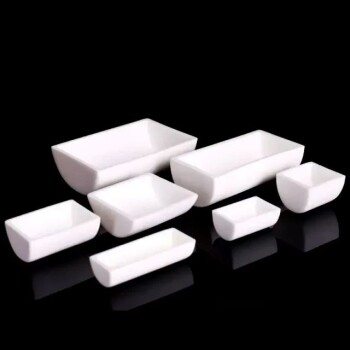
The technical significance of separating reaction and cooling crucibles lies in the ability to decouple the high-temperature combustion phase from the delicate alloying process. This split architecture allows engineers to precisely control the liquid-phase residence time of the melt, which is the defining factor in regulating carbon dissolution and preventing defects in Fe-Cr-Mn-Mo-N-C systems.
Core Takeaway
In complex thermite synthesis involving carburizing agents, a single reaction vessel often leads to uncontrolled carbon reduction and structural flaws. The dual-crucible design serves as a "regulatory break," moving the melt away from the reaction zone to manage carbon uptake, thereby ensuring chemical stability and eliminating porosity defects.
The Mechanics of the Dual-Crucible System
The Role of the Reaction Crucible
The primary function of the reaction crucible is to contain the self-propagating reaction.
Its design is focused on thermal containment, allowing the initial exothermic reaction to reach the temperatures necessary to fully liquefy the metal constituents.
The Role of the Cooling Crucible
The cooling crucible is designed specifically to receive the resulting metal melt after the reaction phase.
This vessel acts as the control chamber for solidification and alloying, specifically managing the environment in which the liquid metal interacts with additives.
Addressing the Carbon Challenge
Regulating Dissolution Degree
The separation of vessels is vital when adding carburizing agents to the alloy system.
By physically moving the melt to a cooling crucible, operators can control exactly how long the liquid metal remains in a molten state (liquid-phase residence time). This precise timing dictates the dissolution degree of carbon, ensuring the final alloy meets strict compositional requirements.
Preventing Composition Instability
If the carbon addition occurred solely during the high-energy reaction phase, the extreme unpredictability of the combustion temperature would lead to composition instability.
The dual-crucible system stabilizes the process by performing the sensitive alloying chemistry away from the chaotic combustion zone.
Eliminating Porosity Defects
A major technical risk in this synthesis is excessive carbon reduction.
When carbon reduction occurs uncontrolled at high reaction temperatures, it generates gas byproducts that become trapped in the solidifying metal. The dual-crucible method mitigates this, effectively preventing the porosity defects that compromise the structural integrity of the final alloy.
Understanding the Trade-offs
Complexity vs. Quality Control
While a single-crucible setup is mechanically simpler, it lacks the requisite control for complex Fe-Cr-Mn-Mo-N-C systems.
The trade-off for the dual-crucible design is an increase in process setup complexity and equipment requirements. However, this complexity is the "cost" of achieving a defect-free microstructure in alloys requiring precise carbon content.
Thermal Management Requirements
Using two crucibles requires careful management of the transfer between vessels.
If the transfer is delayed or the cooling crucible is too cold, the melt may solidify prematurely; if the residence time is too long, the microstructure may coarsen. Success depends entirely on the precise calibration of this transfer.
Making the Right Choice for Your Goal
To optimize the synthesis of Fe-Cr-Mn-Mo-N-C systems, align your process parameters with your specific quality targets:
- If your primary focus is Compositional Accuracy: Prioritize the dual-crucible method to strictly regulate the liquid-phase residence time for consistent carbon uptake.
- If your primary focus is Structural Integrity: Use the separate cooling crucible to isolate the melt from high-temperature reduction reactions, effectively minimizing porosity.
Control the residence time, and you control the quality of the alloy.
Summary Table:
| Feature | Reaction Crucible | Cooling Crucible |
|---|---|---|
| Primary Function | High-temp thermal containment | Controlled solidification & alloying |
| Key Process Role | Self-propagating combustion | Liquid-phase residence time management |
| Effect on Carbon | Initial liquefaction | Regulated dissolution degree |
| Quality Impact | Enables full material melting | Prevents porosity and composition instability |
Elevate Your Material Synthesis with KINTEK Expertise
Precision in Fe-Cr-Mn-Mo-N-C alloy production requires the right equipment and technical mastery. KINTEK specializes in advanced laboratory solutions designed to handle the most demanding thermal processes. From high-temperature furnaces (vacuum, tube, and atmosphere) and crucibles to precision crushing, milling, and hydraulic press systems, we provide the tools you need to control every phase of synthesis.
Whether you are managing delicate carbon dissolution or scaling up battery research, our high-performance consumables and laboratory equipment ensure chemical stability and structural integrity. Partner with KINTEK today to optimize your lab's performance—contact our specialists here!
References
- Konovalov Maksim, Ovcharenko Pavel. Effect of Carbon on Wear Resistance, Strength and Hardness of a Composite with a Matrix of the Fe-Cr-Mn-Mo-N-C System. DOI: 10.15350/17270529.2023.1.8
This article is also based on technical information from Kintek Solution Knowledge Base .
Related Products
- Engineering Advanced Fine Ceramics Alumina Crucibles (Al2O3) for Thermal Analysis TGA DTA
- High Purity Pure Graphite Crucible for Evaporation
- High Purity Pure Graphite Crucible for Electron Beam Evaporation
- Boron Nitride (BN) Crucible for Phosphorous Powder Sintered
- Electron Beam Evaporation Coating Tungsten Crucible and Molybdenum Crucible for High Temperature Applications
People Also Ask
- Why Use Alumina Crucibles for TGA of Bicyclic Carbonates? Ensure Data Purity & Chemical Inertness
- Why are alumina crucibles and mother powder essential for LATP sintering? Optimize Your Solid Electrolyte Performance
- Why are high-purity alumina crucibles used for liquid lead corrosion experiments? Ensure Data Accuracy at 550°C
- What is the primary purpose of using alumina crucibles for LLTO ceramics? Optimize Your High-Temperature Sintering
- Why Use Alumina Crucibles & Powder Burial for NaSICON? Ensure Phase Purity and Prevent Elemental Volatilization