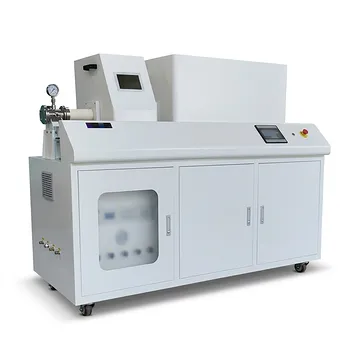
Ultra-High Vacuum Chemical Vapor Deposition (UHVCVD) is a specialized deposition process used to create solid materials from volatile chemical compounds under extremely low atmospheric pressures.
While standard Chemical Vapor Deposition (CVD) can occur at various pressures, UHVCVD is distinct because it operates in the region of $10^{-6}$ Pascals (approximately $10^{-8}$ Torr). This extreme vacuum environment is critical for minimizing background contamination, ensuring the deposited material achieves exceptional purity and structural integrity.
Core Takeaway UHVCVD is not just about lowering pressure; it is about maximizing purity. By conducting chemical deposition in an environment nearly void of atmospheric contaminants, this process enables the growth of high-precision material layers essential for advanced semiconductor and nanotechnology applications.
The Principles of Operation
The CVD Foundation
At its core, UHVCVD relies on the fundamental principles of Chemical Vapor Deposition.
The process utilizes volatile chemical compounds (precursors) that react or decompose. These reactions deposit a non-volatile solid film onto a suitable substrate, such as a silicon wafer.
The Vacuum Difference
The defining feature of UHVCVD is the pressure regime.
Operating at $10^{-6}$ Pascals places the process in the "Ultra-High Vacuum" range. In this state, the density of gas particles is drastically reduced compared to standard low-pressure CVD.
This reduction minimizes the mean free path collisions between gas molecules and virtually eliminates the presence of unwanted atmospheric gases like oxygen or water vapor during the deposition.
Managing the Environment
Controlling Contaminants
Achieving and maintaining this level of vacuum requires strict environmental controls.
As noted in vacuum engineering standards, chambers operating in this range typically utilize heaters to "bake out" the system. This heating process drives off moisture and other surface contaminants that might otherwise outgas and ruin the vacuum level.
System Maintenance
The hardware required for UHVCVD is complex and sensitive.
To maintain the integrity of the process, the chamber liners—which protect the vessel walls from accumulating deposition material—must be regularly cleaned and replaced. This ensures that the vacuum chamber itself does not become a source of contamination over time.
Understanding the Trade-offs
Process Speed vs. Purity
The primary trade-off in UHVCVD is between throughput and quality.
Achieving a pressure of $10^{-6}$ Pascals requires significant pumping time and sophisticated vacuum equipment. This generally makes the process slower and more expensive than atmospheric or low-pressure CVD methods.
Operational Complexity
The requirement for extreme vacuum adds layers of operational complexity.
Operators must manage bake-out cycles and strict maintenance schedules for chamber liners. The system has very low tolerance for leaks or contamination, making it less robust for high-volume, lower-precision manufacturing.
Making the Right Choice for Your Project
While UHVCVD offers superior film quality, it is not the correct solution for every application.
- If your primary focus is material purity: UHVCVD is the necessary choice. The ultra-high vacuum is essential for preventing oxidation and ensuring high-quality crystal growth for advanced devices.
- If your primary focus is throughput and cost: Standard Low-Pressure CVD (LPCVD) or Atmospheric CVD may be more appropriate, as they avoid the time-consuming pump-down cycles and expensive hardware of UHV systems.
Select UHVCVD when the performance of the final device relies on atomic-level precision and the absolute minimization of background impurities.
Summary Table:
| Feature | UHVCVD Specification / Detail |
|---|---|
| Operating Pressure | Approximately $10^{-6}$ Pascals ($10^{-8}$ Torr) |
| Primary Objective | Maximizing material purity and structural integrity |
| Contamination Control | Uses system bake-outs to eliminate moisture and oxygen |
| Best Used For | Advanced semiconductors and nanotechnology |
| Key Advantage | Minimal background impurities and precise crystal growth |
Precision Material Growth with KINTEK
Elevate your semiconductor and nanotechnology research with KINTEK’s industry-leading laboratory solutions. Whether you require advanced CVD, PECVD, or MPCVD systems, high-temperature vacuum furnaces, or high-pressure reactors, we provide the controlled environments necessary for atomic-level success.
Why Partner with KINTEK?
- Comprehensive Range: From muffle and tube furnaces to crushing systems and hydraulic presses, we cover all your material preparation needs.
- Specialized Tools: High-quality electrolytic cells, battery research consumables, and ULT freezers designed for precision.
- Essential Consumables: Durable PTFE products, ceramics, and crucibles to maintain your system's integrity.
Ready to optimize your deposition process and achieve unmatched purity? Contact our technical experts today to find the perfect equipment tailored to your laboratory's unique requirements.
Related Products
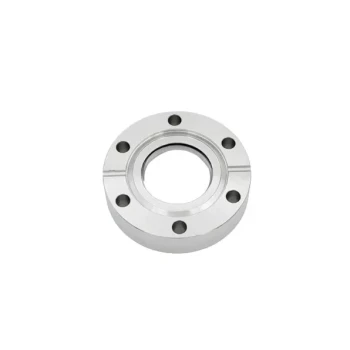
- CF Ultra-High Vacuum Observation Window Stainless Steel Flange Sapphire Glass Sight Glass
- Ultra-High Vacuum Flange Aviation Plug Glass Sintered Airtight Circular Connector for KF ISO CF
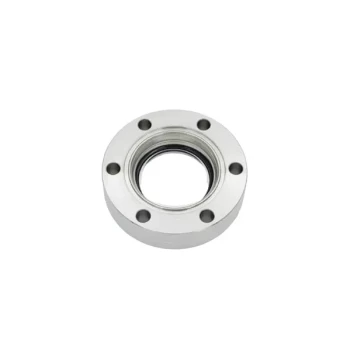
- CF Ultra-High Vacuum Observation Window Window Flange High Borosilicate Glass Sight Glass
- KF Ultra-High Vacuum Observation Window Stainless Steel Flange Sapphire Glass Sight Glass
- HFCVD Machine System Equipment for Drawing Die Nano-Diamond Coating
People Also Ask
- What is high vacuum used for? Essential for Particle Beams and Advanced Lab Instruments
- Why Use High-Pressure Reactors with Sapphire Windows in Photothermal Catalysis? Enhance Yields & Control
- What function do baffle plates serve inside a reaction vessel? Enhance Photovoltaic Backsheet Recycling Efficiency
- Is Sputter Tint good? Premium Heat Rejection & Long-Term Durability Explained
- What is a reducing atmosphere? Key Applications and Benefits for Industrial Processes