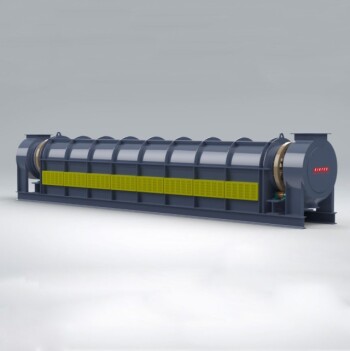
Auxiliary heaters in Hybrid FAST/SPS systems are engineered to solve critical thermal uniformity issues. They specifically target and eliminate the radial temperature gradients that inevitably occur when processing large-diameter samples. Additionally, these heaters provide the precise preheating required to initiate advanced processing techniques like Flash Sintering.
Standard FAST/SPS systems often struggle to maintain uniform heat across larger volumes due to edge-cooling effects. Hybrid systems utilize auxiliary heaters to mitigate these gradients, ensuring homogenous densification for large components and enabling precise control for advanced experimental regimes.
Overcoming Radial Temperature Gradients
The Challenge of Scaling Up
When scaling up from small laboratory specimens to large-diameter samples, standard Field Assisted Sintering Technology (FAST) faces a physical limitation.
While the current generates heat internally, the outer edges of a large sample tend to cool faster than the center due to radiation. This creates significant radial temperature gradients, leading to uneven sintering and potential structural defects.
Restoring Thermal Uniformity
Auxiliary heaters address this issue by introducing an external heat source.
Technologies such as induction coils or Molybdenum Disilicide (MoSi2) resistance elements surround the tooling. These elements provide supplementary heat to the sample's periphery, effectively counteracting the heat loss at the edges.
The result is a significantly improved temperature field uniformity across the entire diameter of the sample.
Enabling Advanced Sintering Regimes
Facilitating Flash Sintering
Beyond simple uniformity, auxiliary heaters play a pivotal role in Flash Sintering experiments.
This technique relies on a sudden, non-linear increase in conductivity known as a "current avalanche." However, this phenomenon only occurs once the material reaches a specific threshold temperature.
Precise Preheating
Auxiliary heaters allow operators to preheat samples to the exact temperature required to trigger this event.
By decoupling the initial heating phase from the sintering current, researchers can create the precise thermal conditions necessary to initiate the current avalanche reliably.
Understanding the Operational Context
The Hybrid Approach
It is important to recognize that adding these heaters changes the system from a pure current-assisted setup to a "Hybrid" system.
This integration combines the rapid heating benefits of electric current (FAST/SPS) with the stability of conventional external heating.
System Complexity
While beneficial for large parts, this approach introduces additional variables to the sintering process.
Operators must manage two distinct heat sources simultaneously, ensuring that the external heat from the auxiliary elements is balanced correctly against the internal Joule heating generated by the current.
Making the Right Choice for Your Goal
Whether you need auxiliary heating depends largely on the scale and nature of your materials processing.
- If your primary focus is producing large-diameter components: Auxiliary heaters are essential to eliminate radial gradients and ensure the material densifies uniformly from center to edge.
- If your primary focus is Flash Sintering research: You require auxiliary heaters to accurately preheat the sample to the specific threshold needed to trigger the current avalanche effect.
By mitigating thermal gradients, auxiliary heaters bridge the gap between small-scale lab success and viable large-scale manufacturing.
Summary Table:
| Issue Addressed | Impact on Sintering | Auxiliary Heater Solution |
|---|---|---|
| Radial Temperature Gradients | Uneven densification & structural defects in large samples | External heat source (Induction/MoSi2) counteracts edge heat loss |
| Scaling Limitations | Edge-cooling effects in large-diameter specimens | Provides supplemental periphery heating for thermal uniformity |
| Flash Sintering Thresholds | Difficulty reaching current avalanche trigger point | Precise preheating to decoupling initial heating from sintering current |
| Thermal Inconsistency | Heterogeneous material properties | Creates a balanced, stable temperature field across the entire sample |
Elevate Your Materials Research with KINTEK Precision
Don't let thermal gradients compromise your large-scale manufacturing or advanced sintering experiments. KINTEK specializes in high-performance laboratory equipment, offering a comprehensive range of Hybrid FAST/SPS solutions, high-temperature furnaces (muffle, vacuum, and tube), and specialized crushing systems designed for the most demanding research environments.
Whether you are scaling up to large-diameter components or exploring the frontiers of flash sintering, our technical experts provide the tools you need—from high-pressure reactors to customized ceramics and crucibles—to ensure uniform densification and reliable results.
Ready to optimize your thermal processing? Contact KINTEK today for a consultation and discover how our advanced heating solutions can drive your innovation.
Related Products
- Spark Plasma Sintering Furnace SPS Furnace
- Vacuum Heat Treat and Pressure Sintering Furnace for High Temperature Applications
- Laboratory Rapid Thermal Processing (RTP) Quartz Tube Furnace
- Controlled Nitrogen Inert Hydrogen Atmosphere Furnace
- 600T Vacuum Induction Hot Press Furnace for Heat Treat and Sintering
People Also Ask
- What is SPS sintering method? A Guide to High-Speed, High-Performance Material Fabrication
- Why are Spark Plasma Sintering (SPS) furnaces or hot presses utilized in the preparation of Li3PS4 solid electrolytes?
- What is the difference between spark plasma sintering and flash sintering? A Guide to Advanced Sintering Methods
- What technical advantages does a Spark Plasma Sintering (SPS) furnace offer for LZP ceramics? Enhance Ionic Conductivity
- What is the theory of spark plasma sintering? A Guide to Rapid, Low-Temperature Densification