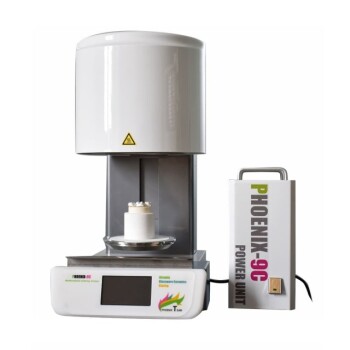
Tube and muffle furnaces are essential tools used to resolve the dual challenge of achieving physical contact while maintaining chemical stability during co-sintering. specifically, they address the poor interfacial connection between cathode materials and LLZO (Lithium Lanthanum Zirconium Oxide) by enabling precise heating around 700°C, which fuses the materials without triggering detrimental side reactions.
The core function of these furnaces is to establish a high-quality physical interface between the active cathode and solid-state electrolyte while strictly preventing the formation of insulating phases that impede ion transport.
Solving the Physical Interface Challenge
Overcoming Poor Solid-Solid Contact
The primary issue in solid-state battery fabrication is the inherent difficulty of creating a continuous path for ions between solids.
Tube and muffle furnaces address this by facilitating co-sintering or annealing. This thermal treatment promotes the physical bonding required to establish a high-quality contact interface between the active cathode materials and the LLZO electrolyte.
Optimizing the Contact Area
Without this thermal processing step, the contact between the cathode and electrolyte remains weak.
By subjecting the mixed materials to sustained heat, the furnace ensures the solids settle and bond effectively. This maximizes the active area available for lithium-ion movement during battery operation.
Preventing Detrimental Chemical Reactions
Controlling Insulating Phase Formation
A critical risk during co-sintering is the chemical instability of LLZO at elevated temperatures.
If the temperature is uncontrolled, side reactions occur that produce La2Zr2O7 (lanthanum zirconium oxide). This specific phase is insulating and acts as a barrier, significantly impeding ion transport and reducing battery performance.
The Necessity of Precision
Standard heating methods may lack the accuracy required to navigate this narrow thermal window.
Tube and muffle furnaces provide the precise temperature control necessary to stay near the optimal 700°C range. This precision ensures the material bonds physically without crossing the thermal threshold that triggers the formation of resistive byproducts.
Critical Trade-offs in Thermal Processing
The Temperature Balancing Act
The use of these furnaces requires navigating a strict trade-off between mechanics and chemistry.
If the sintering temperature is too low, the physical interface will be poor, leading to high resistance. However, if the temperature drifts too high, chemical degradation creates insulating layers that block ion flow.
Surface Purity Considerations
While co-sintering occurs at lower temperatures (~700°C), it is worth noting that furnaces are also used at higher temperatures (e.g., 1000°C) for pre-treatment.
This allows for the removal of residual carbon or graphite impurities from manufacturing molds. Ensuring a clean surface via high-temperature annealing is often a prerequisite for successful co-sintering later in the process.
Making the Right Choice for Your Goal
When configuring your thermal processing workflow for LLZO-based cathodes, consider your specific bottleneck:
- If your primary focus is Ion Conductivity: Prioritize precise temperature regulation (around 700°C) to prevent the formation of the insulating La2Zr2O7 phase.
- If your primary focus is Mechanical Integrity: Ensure the dwell time in the furnace is sufficient to establish a robust physical interface between the cathode and the electrolyte.
Success in co-sintering lies in using the furnace to find the exact thermal "sweet spot" where physical bonding maximizes and chemical degradation is zero.
Summary Table:
| Challenge | Role of Tube/Muffle Furnaces | Desired Outcome |
|---|---|---|
| Physical Interface | Facilitates thermal bonding and annealing | High-quality solid-solid contact area |
| Ion Transport | Maintains precise temperature control (~700°C) | Prevents formation of insulating La2Zr2O7 phase |
| Chemical Stability | Navigates the narrow thermal window | Elimination of detrimental side reactions |
| Surface Purity | High-temperature pre-treatment (up to 1000°C) | Removal of residual carbon and impurities |
Elevate Your Solid-State Battery Research with KINTEK
Achieving the perfect thermal 'sweet spot' for LLZO co-sintering requires uncompromising precision. KINTEK specializes in advanced laboratory equipment designed for the rigorous demands of battery material synthesis. Whether you need high-precision tube or muffle furnaces for interface optimization, or vacuum/atmosphere furnaces for controlled environments, our solutions ensure your research avoids insulating phases and maximizes ion conductivity.
From crushing and milling systems for precursor preparation to high-pressure reactors and battery research consumables, KINTEK provides the end-to-end tools necessary for next-generation energy storage innovation.
Ready to optimize your sintering process? Contact our technical experts today to find the ideal thermal solution for your lab.
Related Products
- Vacuum Heat Treat and Molybdenum Wire Sintering Furnace for Vacuum Sintering
- Multi-zone Laboratory Tube Furnace
- High Temperature Muffle Oven Furnace for Laboratory Debinding and Pre Sintering
- Rotary Tube Furnace Split Multi Heating Zone Rotating Tube Furnace
- 2200 ℃ Tungsten Vacuum Heat Treat and Sintering Furnace
People Also Ask
- What is the pressure for vacuum sintering? Achieve Optimal Material Purity and Density
- What is vacuum hardness? Unlock Superior Material Performance with Vacuum Processing
- What are the critical functions of the vacuum system in a sintering furnace for Cu/Ti3SiC2/C/MWCNTs composites?
- What critical process conditions does a vacuum sintering furnace provide for titanium? Expert Diffusion Bonding Guide
- How does a vacuum environment benefit the purification of matrix powders? Optimize Diamond Tool Sintering Efficiency