The analysis of powder samples in infrared spectroscopy relies on four established techniques: the KBr pellet method, the Nujol method, the diffuse reflection method, and the attenuated total reflection (ATR) method. While the KBr and Nujol techniques represent classical approaches to transmission spectroscopy, the diffuse reflection and ATR methods have gained prominence with the widespread adoption of Fourier Transform Infrared (FTIR) spectroscopy.
The optimal measurement method is not universal; it is dictated by the physical form of your sample and the specific chemical data you need to extract. Balancing the convenience of sample preparation against the type of spectral information required is key to a successful analysis.
Classical Transmission Methods
The KBr Pellet Method
This is a foundational technique in infrared spectroscopy. It involves mixing a small amount of the sample powder with potassium bromide (KBr) powder.
The mixture is then pressed under high pressure to form a transparent pellet. This pellet is placed in the path of the infrared beam to measure the transmission spectrum.
The Nujol Method
Also known as the mull technique, this method is another classical approach used when pellet formation is difficult or undesirable.
The powder sample is ground and mixed with Nujol (a mineral oil) to form a suspension or paste. This paste is then applied to salt plates for measurement.
Modern Reflection Methods
Diffuse Reflection
With the prevalence of FTIR technology, the diffuse reflection method has become a widely used standard for powders.
Instead of transmitting light through a sample, this method analyzes the light scattered off the surface of the powder particles. It is particularly effective for rough surfaces and loose powders.
Attenuated Total Reflection (ATR)
The ATR method represents a significant shift toward ease of use and efficiency. It allows for the direct measurement of powder samples.
By simply pressing the powder against a high-refractive-index crystal, you can obtain a spectrum without the extensive preparation required by classical methods.
Understanding the Trade-offs
While modern methods offer speed, classical methods offer specific spectral characteristics. It is critical to understand the limitations of each approach before proceeding.
Preparation vs. Throughput
The KBr and Nujol methods are labor-intensive. They require precise sample preparation skills to avoid artifacts, such as moisture absorption in KBr or interfering peaks from the Nujol oil itself.
In contrast, ATR minimizes preparation time significantly. However, because it relies on surface contact, the quality of the spectrum depends heavily on how well the powder is pressed against the crystal.
Sample Integrity
Diffuse reflection is excellent for preserving the sample in its native state. However, the resulting spectra can sometimes differ in appearance from classical transmission spectra, requiring mathematical corrections (like the Kubelka-Munk transformation) for direct comparison.
Making the Right Choice for Your Goal
To select the most appropriate method for your specific application, consider your priorities regarding throughput and spectral type.
- If your primary focus is speed and minimal workflow disruption: Choose the ATR method to measure samples directly without complex preparation steps.
- If your primary focus is analyzing rough surfaces using modern FTIR standards: Utilize the diffuse reflection method, which is optimized for scattering samples.
- If your primary focus is obtaining traditional transmission spectra: Rely on the KBr pellet or Nujol methods, provided you have the time and skill for proper sample preparation.
The right method bridges the gap between your raw material and the actionable data you need to move forward.
Summary Table:
| Method | Type | Sample Preparation | Key Advantage |
|---|---|---|---|
| KBr Pellet | Transmission | High (Mixing & Pressing) | Standard classical transmission spectra |
| Nujol Mull | Transmission | Medium (Grinding with Oil) | Ideal when pellet pressing is difficult |
| Diffuse Reflection | Reflection | Low (Direct or Diluted) | Excellent for scattering & rough surfaces |
| ATR | Reflection | Minimal (Direct Contact) | Fastest workflow with no sample prep |
Elevate Your Spectroscopic Accuracy with KINTEK
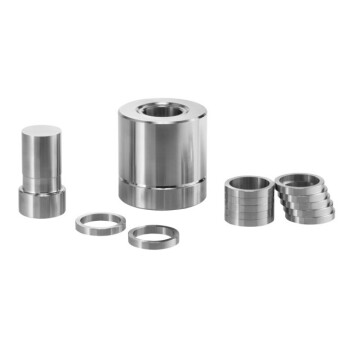
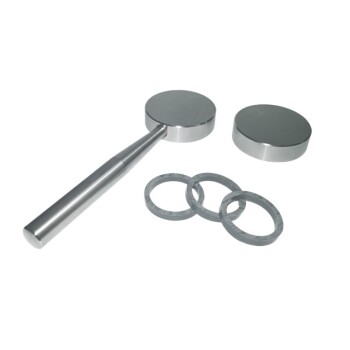
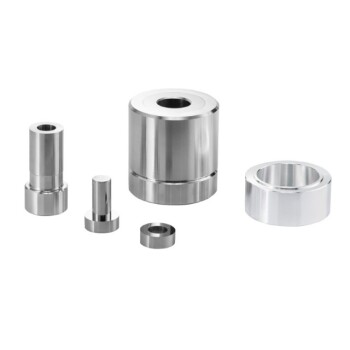
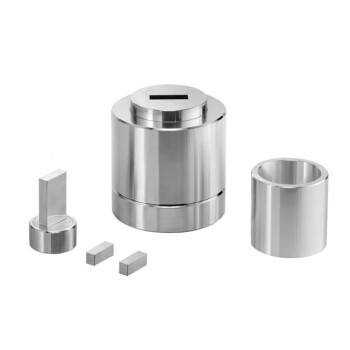
Precise sample preparation is the foundation of reliable infrared spectroscopy. At KINTEK, we specialize in providing high-performance laboratory equipment to streamline your analytical workflow. Whether you need robust hydraulic presses (pellet, hot, isostatic) for creating perfect KBr pellets, advanced crushing and milling systems for uniform powder consistency, or high-quality ceramics and crucibles, we have the tools to ensure your data is accurate and reproducible.
From battery research tools to specialized consumables like PTFE products, KINTEK supports the diverse needs of modern material science and chemical analysis. Contact us today to discover how our comprehensive range of laboratory solutions can enhance your lab's efficiency and research outcomes!
Related Products
- kbr pellet press 2t
- Laboratory Hydraulic Pellet Press for XRF KBR FTIR Lab Applications
- Automatic Laboratory Hydraulic Press for XRF & KBR Pellet Press
- XRF & KBR steel ring lab Powder Pellet Pressing Mold for FTIR
- XRF & KBR plastic ring lab Powder Pellet Pressing Mold for FTIR
People Also Ask
- How do you prepare samples for IR spectroscopy? A Step-by-Step Guide for Solids, Liquids, and Gases
- Why KBr is used in IR spectrophotometry? A Key to Transparent Sample Analysis
- How are a KBr pellet press and mortar utilized in FTIR analysis of activated carbon? Expert Sample Prep Guide
- How do you prepare KBr pellets for FTIR analysis? Master the Technique for High-Quality IR Spectra
- Why we use KBr pellets in IR? Unlock Clear Sample Analysis with Infrared-Transparent Matrix