In the synthesis of Ca3Co4O9 via solid-state reaction, grinding and milling systems act as the fundamental mechanical drivers for mixing and refining the raw precursor materials, specifically Calcium Carbonate (CaCO3) and Cobalt Oxide (Co3O4). By applying significant mechanical force, these systems reduce the particle size of the powder mixture to prepare it for thermal treatment.
Core Takeaway The primary function of grinding and milling is to drastically increase the specific surface area of the reactant powders. This mechanical refinement is the prerequisite for efficient solid-state diffusion, directly enabling the formation of a uniform and pure Ca3Co4O9 polycrystalline phase during high-temperature sintering.
The Mechanics of Precursor Preparation
Establishing Stoichiometric Ratios
The process begins with the raw materials, CaCO3 and Co3O4. Grinding systems are used to blend these materials according to precise stoichiometric ratios.
This initial mixing stage is critical to ensure that the cobalt and calcium atoms are distributed as homogeneously as possible before any heat is applied.
Mechanical Particle Size Reduction
The core mechanism of these systems is the application of mechanical force. As the milling media impacts the raw powder, it physically fractures the particles.
This process transforms coarse raw materials into a fine, consistent powder. The reduction in particle size is not merely cosmetic; it is a functional requirement for the chemical reaction that follows.
Maximizing Reaction Contact Area
The direct consequence of reducing particle size is a significant increase in the reaction contact area.
In solid-state chemistry, reactants do not mix on a molecular level as they do in liquids. Therefore, the total surface area available for contact between CaCO3 and Co3O4 particles dictates the potential for chemical interaction.
Driving the Solid-State Reaction
Promoting Solid-State Diffusion
Once the milled powder acts as a precursor, it undergoes high-temperature treatment. Here, the work performed by the milling system pays off by promoting solid-state diffusion.
Diffusion is the movement of atoms through the solid lattice. By maximizing the contact area through milling, the distance atoms must travel is minimized, and the reaction pathways are multiplied.
Ensuring Phase Uniformity
The ultimate goal of this mechanical preparation is the formation of a uniform Ca3Co4O9 polycrystalline phase.
Without the intimate mixing and surface area expansion provided by milling, the resulting material would likely suffer from phase segregation or incomplete reaction. The milling process ensures the final product is chemically consistent throughout.
Understanding the Process Dependencies
The Consequence of Inadequate Milling
While the primary reference highlights the benefits of milling, it implies a critical dependency: reaction efficiency is bound by particle size.
If the mechanical force applied is insufficient, the particle size remains too large. This results in limited contact area between the calcium and cobalt sources.
The Risk to Phase Purity
Insufficient milling leads to sluggish diffusion kinetics at high temperatures.
Consequently, instead of achieving a uniform polycrystalline structure, the synthesis may yield a material with unreacted precursors or secondary phases. The uniformity of the Ca3Co4O9 phase is strictly reliant on the quality of the initial mechanical refinement.
Making the Right Choice for Your Synthesis
To ensure the successful preparation of Ca3Co4O9, you must align your milling parameters with your specific structural goals.
- If your primary focus is Phase Purity: Ensure your milling protocol applies sufficient mechanical force to maximize surface area, as this directly correlates to the completeness of the solid-state reaction.
- If your primary focus is Reaction Efficiency: Prioritize particle size reduction to shorten the diffusion distances required during the high-temperature stage.
Effective grinding is not just a preparation step; it is the control lever for the diffusive mechanics that define the final material's quality.
Summary Table:
| Process Stage | Function of Grinding/Milling | Impact on Ca3Co4O9 Synthesis |
|---|---|---|
| Pre-Reaction | Stoichiometric Blending | Ensures homogeneous distribution of CaCO3 and Co3O4 atoms. |
| Mechanical Treatment | Particle Size Reduction | Increases specific surface area for maximum reactant contact. |
| Sintering Stage | Promoting Diffusion | Minimizes atomic travel distance, accelerating reaction kinetics. |
| Final Product | Phase Uniformity | Prevents phase segregation and ensures high chemical purity. |
Elevate Your Material Synthesis with KINTEK Precision
Achieving the perfect Ca3Co4O9 polycrystalline phase requires more than just high temperatures—it demands meticulous mechanical preparation. KINTEK specializes in high-performance crushing and milling systems designed to provide the precise mechanical force needed for optimal precursor refinement.
Whether you are focusing on high-temperature solid-state reactions or advanced battery research, our comprehensive portfolio—including high-temperature furnaces (muffle, vacuum, tube), pellet presses, and specialized ceramics—ensures your lab is equipped for excellence.
Ready to optimize your reaction efficiency and phase purity? Contact KINTEK Today to Find the Right Milling Solution!
Related Products
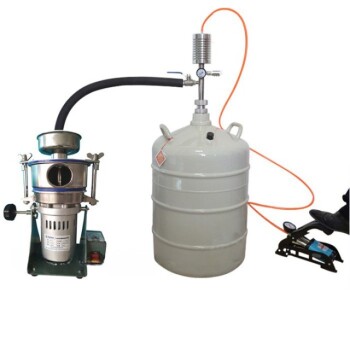
- Small Cryogenic Grinder Cryomill Cryogrinder with Liquid Nitrogen for Laboratory Use
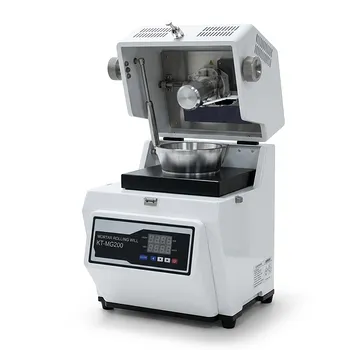
- Laboratory Jar Mill with Agate Grinding Jar and Balls
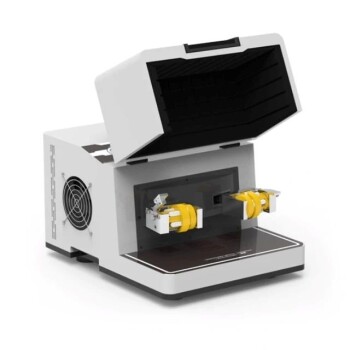
- Laboratory Hybrid Tissue Grinding Mill
- Laboratory Ball Mill Jar Mill with Metal Alloy Grinding Jar and Balls
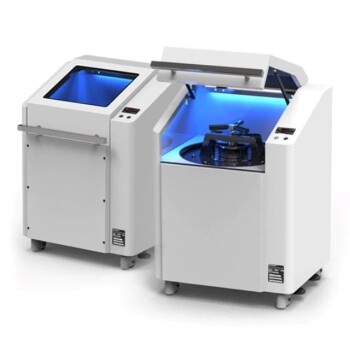
- Vibrating Disc Mill Small Laboratory Grinding Machine
People Also Ask
- What are the advantages of using a cryogenic grinder? Achieve Nanoscale Precision for All-Solid-State Battery Cathodes
- Why is a cryogenic grinder required for cured alkyd resin HRMAS NMR? Ensure Structural Integrity & Sample Precision
- What is the role of a cryogenic grinder in PET recycling? Transform Waste into High-Reactive Micron Powders
- What is cryogenic grinding of crumb rubber? Achieve Fine, High-Quality Rubber Powder
- What food is cryogenic grinding? The Ultimate Guide to Preserving Flavor & Aroma