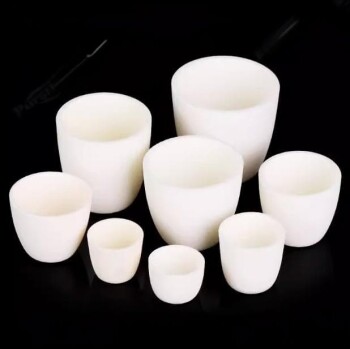
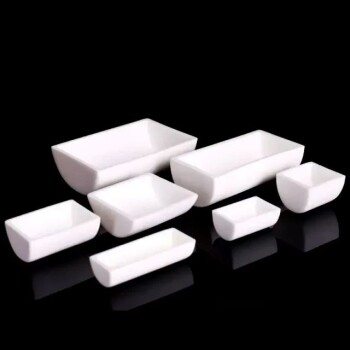
High-Purity Alumina Crucibles serve as the foundational containment vessels in the molten salt electrolytic deoxygenation process. Their primary role is to hold aggressive molten salts, specifically Calcium Chloride (CaCl2), while maintaining absolute structural integrity at operating temperatures reaching 1173 K.
The success of electrolytic deoxygenation relies on maintaining a pristine chemical environment. High-Purity Alumina Crucibles provide the necessary chemical stability to contain reactive molten salts at high heat without introducing contaminants that would compromise the electrolytic process.
The Critical Engineering Requirements
Thermal Endurance at Extreme Temperatures
The electrolytic deoxygenation process requires maintaining the electrolyte in a molten state.
To achieve this, the crucible must withstand sustained operating temperatures of approximately 1173 K. High-Purity Alumina is selected specifically because it maintains mechanical strength and does not soften or deform under this intense thermal load.
Chemical Inertness Against Molten Salts
Molten salts, such as Calcium Chloride (CaCl2), are highly reactive solvents.
The crucible functions as a barrier that must not chemically interact with the salt it holds. High-Purity Alumina provides exceptional chemical stability, preventing the container walls from eroding or reacting with the molten electrolyte during the process.
Preserving Electrolyte Purity
The ultimate goal of this process is deoxygenation, which requires a strictly controlled chemical environment.
If the crucible material were to degrade, it would introduce foreign impurities into the melt. By resisting reaction, the crucible ensures the purity of the electrolytic environment remains compromised only by the target oxides, not the container itself.
The Operational Environment
Synergy with Inert Atmospheres
While the crucible protects the melt from below, it operates within a broader protective system.
A high-purity argon protection system is typically employed to create an inert atmosphere around the crucible. This isolates the melt from atmospheric oxygen and moisture.
Protecting Sensitive Materials
This combination of an inert alumina crucible and an argon atmosphere is critical for synthesis.
It prevents the degradation of the melt and protects susceptible substrate materials, such as molybdenum plates or carbon steel, from oxidizing. This dual-layer protection ensures the phase purity of synthesized products like molybdenum carbide or gadolinium boride.
Understanding the Constraints
The Necessity of "High Purity"
It is critical to distinguish between standard alumina and High-Purity Alumina.
Standard ceramics often contain binders or silica impurities that can leach into molten salts at 1173 K. Using lower-grade crucibles risks contaminating the electrolyte and causing container failure, making the "High-Purity" designation a non-negotiable requirement for this specific application.
Making the Right Choice for Your Goal
To ensure the success of your electrolytic deoxygenation setup, select your containment materials based on your specific process parameters.
- If your primary focus is process stability: Ensure your crucible is rated for continuous operation significantly above 1173 K to prevent thermal deformation.
- If your primary focus is product purity: Verify the specific alumina purity grade to guarantee zero chemical reactivity with Calcium Chloride (CaCl2).
By selecting the correct High-Purity Alumina vessel, you eliminate the variable of container degradation, allowing you to focus entirely on the efficiency of the deoxygenation process.
Summary Table:
| Feature | Requirement | Role in Electrolytic Deoxygenation |
|---|---|---|
| Material Purity | High-Purity Alumina | Prevents contamination and leaching into the molten salt. |
| Thermal Stability | Operating at 1173 K | Resists deformation and maintains strength under intense heat. |
| Chemical Inertness | Resistance to CaCl2 | Functions as a non-reactive barrier against aggressive salts. |
| Atmospheric Synergy | Argon Compatibility | Works with inert systems to prevent oxidation of substrate materials. |
Maximize Your Research Precision with KINTEK
Don't let container degradation compromise your electrolytic deoxygenation results. KINTEK specializes in high-performance laboratory solutions, offering premium high-purity alumina crucibles and ceramics designed to withstand the most aggressive molten salt environments.
Whether you are synthesizing advanced materials like molybdenum carbide or conducting critical battery research, our comprehensive portfolio—from high-temperature furnaces and vacuum systems to electrolytic cells and high-pressure reactors—is engineered to meet the rigorous demands of modern material science.
Ready to elevate your lab's performance? Contact our technical experts today to find the perfect high-purity consumables and equipment tailored to your specific application.
Related Products
- Arc-Shaped Alumina Ceramic Crucible High Temperature Resistant for Engineering Advanced Fine Ceramics
- Engineering Advanced Fine Alumina Al2O3 Ceramic Crucible for Laboratory Muffle Furnace
- Engineering Advanced Fine Ceramics Alumina Al2O3 Crucible With Lid Cylindrical Laboratory Crucible
- Engineering Advanced Fine Ceramics Alumina Crucibles (Al2O3) for Thermal Analysis TGA DTA
- Alumina Al2O3 Ceramic Crucible Semicircle Boat with Lid for Engineering Advanced Fine Ceramics
People Also Ask
- Why Use Alumina Crucibles & Powder Burial for NaSICON? Ensure Phase Purity and Prevent Elemental Volatilization
- What is the primary purpose of using alumina crucibles for LLTO ceramics? Optimize Your High-Temperature Sintering
- Why are alumina crucibles and mother powder essential for LATP sintering? Optimize Your Solid Electrolyte Performance
- Why are high-purity alumina crucibles used for liquid lead corrosion experiments? Ensure Data Accuracy at 550°C
- Primary considerations for choosing alumina crucibles and quartz tubes in indium intercalation: Ensure Material Purity