Laboratory heaters and thermocouples function as a cohesive unit to establish and maintain the precise thermal environment required for low-temperature nitriding. While the heaters raise the alloy matrix to specific reaction temperatures (such as 673 K) to initiate the process, embedded thermocouples constantly monitor the base for temperature fluctuations to prevent thermal drift.
Core Takeaway This equipment creates a "closed-loop" control system essential for processing multicomponent alloys. This system balances two competing needs: providing enough activation energy for nitrogen diffusion while strictly limiting heat to prevent grain coarsening or alloy decomposition.
The Mechanics of Thermal Control
Providing Precise Activation Energy
Precision laboratory heaters are responsible for raising the alloy matrix to exact target temperatures.
In low-temperature nitriding, achieving a specific temperature, such as 673 K, is critical. This thermal input provides the necessary activation energy to allow nitrogen atoms to diffuse effectively into the alloy surface.
Real-Time Monitoring
Thermocouples serve as the sensory mechanism for the process, embedded directly into the base of the setup.
Their primary role is to detect temperature fluctuations in real-time. By measuring the actual temperature at the reaction site, they provide the data necessary to adjust the heater output instantly.
Establishing Closed-Loop Stability
The interaction between the heater and the thermocouple creates a closed-loop control system.
This ensures that the temperature remains constant throughout extended processing times, such as 14.4 ks. Without this feedback loop, the process would be susceptible to thermal drift, leading to inconsistent results across the alloy surface.
Understanding the Trade-offs
Balancing Diffusion and Decomposition
The primary challenge in nitriding multicomponent alloys is providing enough heat for reaction without degrading the material.
If the temperature drops too low, there is insufficient energy for nitrogen diffusion. However, if the temperature spikes due to poor control, it can cause the decomposition of alloy elements, compromising the material's integrity.
Preventing Microstructural Damage
Precise temperature maintenance is the only defense against grain coarsening.
Overheating triggers the grains within the alloy to grow, which negatively impacts the mechanical properties of the final product. The heater-thermocouple system acts as a safeguard, ensuring the alloy stays within a safe low-temperature range to preserve its microstructure.
Making the Right Choice for Your Process
Successful nitriding relies on the rigorous application of this thermal control system.
- If your primary focus is process efficiency: Ensure your heaters can reach reaction temperatures (e.g., 673 K) quickly to maximize the activation energy available for diffusion.
- If your primary focus is material integrity: Prioritize high-sensitivity thermocouples to detect micro-fluctuations and prevent the overheating that leads to grain coarsening.
Precise thermal regulation is not merely an operational detail; it is the defining factor between a hardened surface and a degraded alloy.
Summary Table:
| Component | Primary Function | Impact on Nitriding |
|---|---|---|
| Laboratory Heaters | Provide Activation Energy | Enables nitrogen diffusion into the alloy surface at specific targets (e.g., 673 K). |
| Thermocouples | Real-Time Monitoring | Detects micro-fluctuations and prevents thermal drift during long processing cycles. |
| Closed-Loop System | Thermal Stability | Maintains a precise environment to prevent alloy decomposition and grain coarsening. |
Elevate Your Materials Research with KINTEK
Precision thermal control is the difference between a high-performance hardened surface and a degraded alloy. KINTEK specializes in advanced laboratory solutions designed for the rigorous demands of multicomponent alloy processing.
Our extensive portfolio includes:
- High-Temperature Furnaces: Muffle, tube, vacuum, and atmosphere furnaces for precise reaction environments.
- Thermal Control & Monitoring: High-sensitivity thermocouples and heating systems for closed-loop stability.
- Specialized Equipment: From CVD/PECVD systems to high-pressure reactors and autoclaves.
- Essential Consumables: High-quality ceramics, crucibles, and PTFE products to ensure experimental integrity.
Whether you are conducting low-temperature nitriding or complex battery research, KINTEK provides the reliability and precision your lab deserves. Contact us today to discuss your specific equipment needs and discover how our expertise can optimize your results.
References
- Tatsuhiko Aizawa. Micro-/Meso-Structure Control of Multi-Hostmetal Alloys by Massive Nitrogen Supersaturation. DOI: 10.3390/ma17061294
This article is also based on technical information from Kintek Solution Knowledge Base .
Related Products
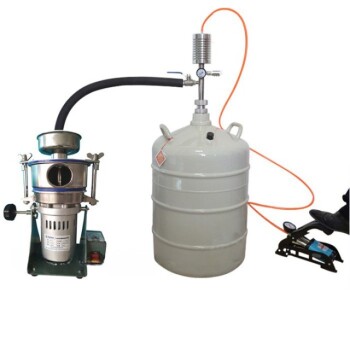
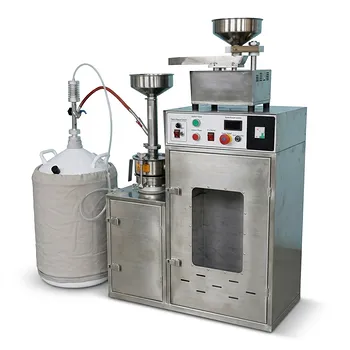
- Small Cryogenic Grinder Cryomill Cryogrinder with Liquid Nitrogen for Laboratory Use
- lab cryogenic grinding use liquid-nitrogen for pulverizing plastic raw materials and heat sensitive materials
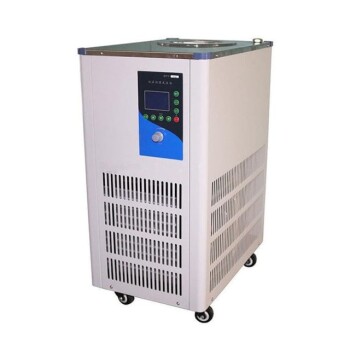
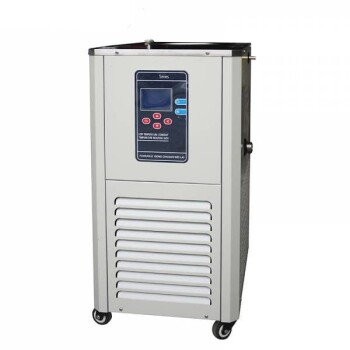
- 40L Chiller Water Bath Cooling Circulator Low Temperature Constant Temperature Reaction Bath
- Advanced Engineering Fine Ceramics Low Temperature Alumina Granulation Powder
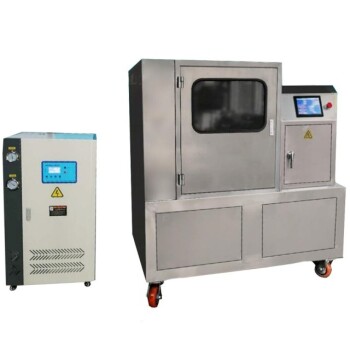
- Low-Temperature Water-Cooled Touchscreen Vibratory Ultrafine Pulverizer
People Also Ask
- What are the advantages of using a cryogenic grinder? Achieve Nanoscale Precision for All-Solid-State Battery Cathodes
- Why is a cryogenic grinder required for cured alkyd resin HRMAS NMR? Ensure Structural Integrity & Sample Precision
- What is the role of a cryogenic grinder in PET recycling? Transform Waste into High-Reactive Micron Powders
- What is cryogenic grinding of crumb rubber? Achieve Fine, High-Quality Rubber Powder
- What food is cryogenic grinding? The Ultimate Guide to Preserving Flavor & Aroma