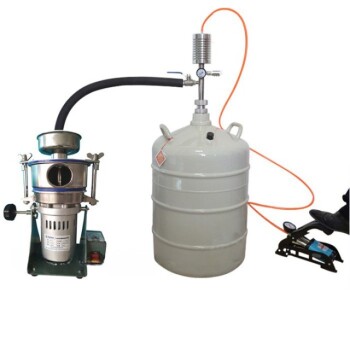
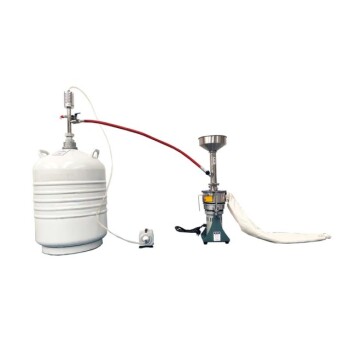
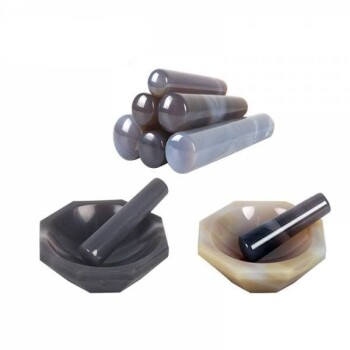
The primary role of a grinder in this process is to mechanically pulverize dried, lumpy tungsten trioxide aggregates into a uniform powder with a particle size of less than 0.044 mm. This step transforms the physical state of the material from coarse granules into a refined dust, setting the essential baseline for successful chemical processing.
While drying removes moisture, it leaves behind coarse aggregates that inhibit reaction efficiency. Grinding breaks these aggregates down to increase the material's specific surface area, which is the critical factor for ensuring thorough carbonization and high-quality final products.
Mechanical Transformation of the Material
Breaking Down Aggregates
After the initial drying phase, tungsten trioxide naturally exists in uneven granular or lumpy forms. The grinder applies specific mechanical force to shatter these cohesive structures.
Achieving Target Particle Size
The objective of this stage is precise: reducing the material to a particle size smaller than 0.044 mm. This threshold is not arbitrary; it represents the maximum size allowable for efficient processing in later stages.
Improving Uniformity
Beyond simple size reduction, the grinding process homogenizes the powder. This ensures that the material exhibits consistent physical characteristics throughout the entire batch.
Enhancing Downstream Chemical Reactions
Increasing Effective Contact Area
The most significant chemical benefit of grinding is the drastic increase in surface area. By pulverizing the lumps, the grinder maximizes the effective contact area of the tungsten trioxide.
Facilitating Carbonization
This increased surface area is vital for subsequent reactions, specifically carbonization (such as carbon monoxide reduction). A larger surface area allows the reduction gases to interact more readily with the solid particles.
Ensuring Reaction Thoroughness
Without the exposure provided by grinding, chemical reactions would be surface-level and inefficient. The grinder ensures the carbonization process is thorough, penetrating the material fully rather than just reacting with the outer shell of a lump.
The Criticality of Proper Sizing
Linking Precursor to Final Quality
The physical state of the tungsten trioxide directly dictates the quality of the final output. Proper grinding is the prerequisite for producing fine-grained tungsten carbide.
Consequences of Insufficient Grinding
If the grinder fails to reduce aggregates below 0.044 mm, the effective contact area drops. This results in incomplete chemical reactions and a coarser, lower-quality final product.
Optimizing Preparation for Quality Results
To ensure the highest quality tungsten carbide, you must view grinding not just as sizing, but as surface area activation.
- If your primary focus is reaction efficiency: Ensure the grinder consistently achieves the sub-0.044 mm threshold to maximize the contact area available for reduction gases.
- If your primary focus is product uniformity: Monitor the output strictly for uncrushed aggregates, as these will lead to uneven carbonization and defects in the final grain structure.
By rigorously controlling the grinding stage, you guarantee the necessary surface conditions for superior chemical reactivity and material performance.
Summary Table:
| Process Parameter | Target/Requirement | Impact on Final Product |
|---|---|---|
| Particle Size | < 0.044 mm | Ensures fine-grained tungsten carbide |
| Material State | Pulverized uniform dust | Eliminates unreacted coarse aggregates |
| Surface Area | High specific surface area | Maximizes gas-solid contact for carbonization |
| Reaction Goal | Thorough reduction | Uniform chemical properties and structural integrity |
Elevate Your Powder Processing with KINTEK Precision
High-quality tungsten carbide starts with superior material preparation. KINTEK specializes in advanced crushing and milling systems and sieving equipment designed to achieve the precise particle size distributions required for ultra-fine tungsten trioxide and other specialty powders.
Whether you are refining precursors or performing high-temperature reactions, our comprehensive range of muffle furnaces, planetary ball mills, and rotary kilns ensures your lab achieves maximum reaction efficiency and product uniformity. Our experts are ready to help you select the ideal tools for your specific material needs—from PTFE consumables to high-pressure reactors.
Ready to optimize your production quality? Contact KINTEK today for a customized solution!
References
- E. A. Mazulevsky, N. M. Seidakhmetova. Production of fine-dispersed tungstic acid. DOI: 10.17580/nfm.2022.02.06
This article is also based on technical information from Kintek Solution Knowledge Base .
Related Products
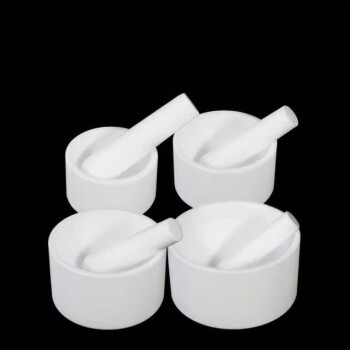
- Custom PTFE Teflon Parts Manufacturer Grinding Bowl
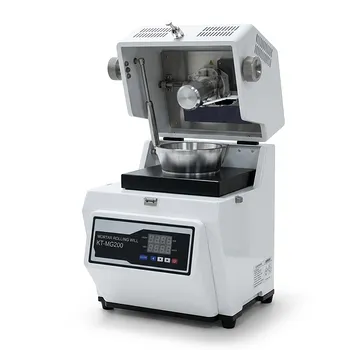
- Laboratory Grinding Mill Mortar Grinder for Sample Preparation
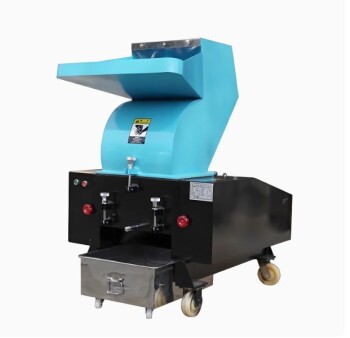
- Powerful Plastic Crusher Machine
- Laboratory Jaw Crusher
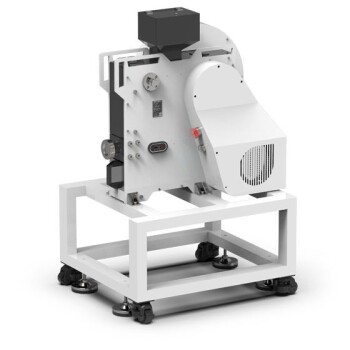
- Small Cryogenic Grinder Cryomill Cryogrinder with Liquid Nitrogen for Laboratory Use
People Also Ask
- What is the purpose of using a grinding bowl? Achieve Perfect Electrode Slurry Homogeneity
- How is PTFE utilized for insulation in Alloy 22 corrosion setups? Ensure Signal Purity & Accuracy
- What are the specific applications of PTFE in micro-batch slug flow systems? Enhance Your Microfluidic Reaction Purity
- Is PTFE corrosion resistant? Discover the Ultimate Chemical Resistance for Your Lab
- What is the primary function of PTFE in Gas Diffusion Electrodes (GDE)? Ensure Peak Electrochemical Performance