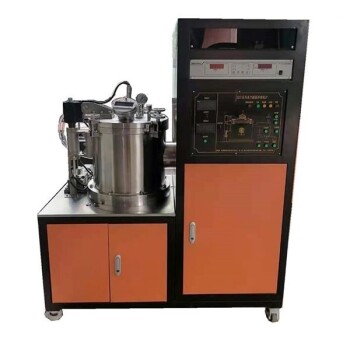
A high-performance vacuum furnace serves as the critical reaction chamber for converting standard titanium oxide into highly conductive Magnéli phase materials. By utilizing a controlled mixture of hydrogen and argon at relatively low temperatures (around 550 °C), the furnace facilitates the chemical reduction necessary to create specific phases like Ti4O7 while preserving the physical architecture of the nanoparticles.
The core function of the vacuum furnace is to achieve a precise balance: inducing the chemical changes required for metallic-like conductivity without triggering the thermal damage or sintering that usually accompanies heat treatment.
The Mechanism of Phase Transformation
Controlling the Reduction Atmosphere
The primary role of the furnace is to maintain a specific, reducing environment. By introducing a precise mixture of hydrogen and argon, the furnace strips oxygen atoms from the titanium oxide lattice.
This controlled reduction is what drives the material to transition from a standard oxide into specific Magnéli phases, such as Ti4O7.
Achieving Metallic-Like Conductivity
Through this reduction process, the material undergoes a fundamental electronic shift. The treatment moves the titanium oxide from a semiconducting state to a state of metallic-like conductivity.
This electronic improvement is the direct result of the thermal structural improvements induced by the furnace environment.
Preserving Material Integrity
Low-Temperature Processing
A defining feature of this process is the operating temperature, which is kept relatively low, generally around 550 °C.
High-performance furnaces maintain this temperature with high stability. This specific thermal window is energetic enough to drive the chemical reduction but not hot enough to melt or degrade the material structure.
Preventing Sintering and Morphological Change
In many heat treatments, high temperatures cause nanoparticles to clump together (sinter), drastically reducing their surface area.
The vacuum furnace process described allows for the formation of conductive phases without altering nanoparticle morphology. It effectively decouples the chemical benefits of reduction from the physical downsides of sintering.
Understanding the Trade-offs
The Precision Requirement
While this process prevents sintering, it relies heavily on the furnace's ability to maintain strict uniformity.
If the temperature fluctuates significantly above the 550 °C target, you risk triggering sintering mechanisms that will destroy the nanoparticle surface area.
Balancing Conductivity and Structure
The process is a compromise between chemical alteration and physical preservation.
Insufficient reduction (poor atmosphere control) will fail to produce the highly conductive Ti4O7 phase, leaving the material as a semiconductor. Conversely, aggressive heating to force reduction will compromise the structural integrity of the nanoparticles.
Making the Right Choice for Your Goal
To maximize the utility of Magnéli phase titanium oxide, you must align your furnace parameters with your specific material requirements.
- If your primary focus is electrical conductivity: Prioritize the precise control of the hydrogen/argon atmosphere to ensure the complete formation of the Ti4O7 phase.
- If your primary focus is surface area and structure: strictly limit the processing temperature to approximately 550 °C to prevent sintering and preserve nanoparticle morphology.
Success relies on using the furnace to navigate the narrow window between effective chemical reduction and physical thermal degradation.
Summary Table:
| Feature | Function in Magnéli Phase Reduction | Benefit |
|---|---|---|
| Atmosphere Control | Hydrogen/Argon mixture regulation | Precise oxygen stripping for Ti4O7 formation |
| Temperature Stability | Low-temperature processing (~550 °C) | Prevents sintering and maintains surface area |
| Vacuum Environment | High-purity reaction chamber | Ensures clean, metallic-like conductivity shifts |
| Thermal Uniformity | Consistent heat distribution | Decouples chemical reduction from structural damage |
Elevate Your Material Research with KINTEK
Are you looking to achieve precise phase transformations without compromising material integrity? KINTEK specializes in advanced laboratory solutions designed for the most demanding thermal processes. Our high-performance vacuum, atmosphere, and tube furnaces provide the strict atmospheric control and temperature stability required for the synthesis of Magnéli phase materials and other sophisticated chemical reductions.
From high-temperature high-pressure reactors to specialized crushing and milling systems, we offer a comprehensive portfolio tailored for battery research, catalysis, and advanced materials science. Partner with KINTEK to secure the precision your lab deserves.
Contact Our Experts Today to Find Your Ideal Furnace Solution
References
- Aditya Farhan Arif, Kikuo Okuyama. Highly conductive nano-sized Magnéli phases titanium oxide (TiOx). DOI: 10.1038/s41598-017-03509-y
This article is also based on technical information from Kintek Solution Knowledge Base .
Related Products
- Vacuum Heat Treat and Molybdenum Wire Sintering Furnace for Vacuum Sintering
- 2200 ℃ Tungsten Vacuum Heat Treat and Sintering Furnace
- 600T Vacuum Induction Hot Press Furnace for Heat Treat and Sintering
- Graphite Vacuum Furnace Bottom Discharge Graphitization Furnace for Carbon Materials
- Small Vacuum Heat Treat and Tungsten Wire Sintering Furnace
People Also Ask
- What is the pressure for vacuum sintering? Achieve Optimal Material Purity and Density
- What is vacuum hardness? Unlock Superior Material Performance with Vacuum Processing
- How does a vacuum environment benefit the purification of matrix powders? Optimize Diamond Tool Sintering Efficiency
- What are the critical functions of the vacuum system in a sintering furnace for Cu/Ti3SiC2/C/MWCNTs composites?
- What critical process conditions does a vacuum sintering furnace provide for titanium? Expert Diffusion Bonding Guide